
The strongest vacation rental markets for 2026 combine high average daily rates ($250–$500+ a night for well-positioned properties), durable occupancy (often 55–70% in established leisure markets), a workable regulatory environment, and an acquisition cost the income can actually support. This guide covers eight of the best markets to buy in — and the three factors that should drive the decision: income strength, regulatory stability, and peril-adjusted cost.
What Makes a Market Worth Buying Into for 2026
Before the market list, the three factors that separate a strong STR purchase from a weak one.
Income strength is ADR multiplied by occupancy — not either one alone. A high nightly rate with thin occupancy can lose to a moderate rate that books year-round. Tools like AirDNA track both at the submarket level, and AirDNA’s vacation rental data is the standard starting point for current figures.
Regulatory stability is whether the market welcomes STRs or is moving against them. Dedicated leisure markets where STR tourism drives the local economy tend to be stable; major cities are far more likely to restrict. Our state-by-state STR permit guide covers how to check.
Peril-adjusted cost is the carrying cost after insurance, taxes, and management — and in coastal and wildfire markets, insurance is a real number that has to be in the model before closing. Rental income also carries specific tax treatment, outlined in IRS Topic 415 on renting residential and vacation property. We work with investors who price the insurance during due diligence; the ones who skip it are the ones surprised at closing.
Smoky Mountains, Tennessee (Gatlinburg and Pigeon Forge)
One of the densest cabin STR markets in the country, and consistently one of the strongest performers. Gatlinburg, Pigeon Forge, and Sevierville draw year-round leisure demand, peaking in the October leaf season and the summer.
Well-positioned cabins typically see ADRs in the $250–$450 range with occupancy often in the 55–65% band. Entry prices frequently run $400K–$800K. The regulatory environment in the Sevier County cabin core is relatively permissive. Peril exposure is wildfire in the higher terrain and the standard inland mix — see our Tennessee STR cost guide for the insurance picture.
Outer Banks, North Carolina
A long-established beach market — Corolla, Duck, Nags Head, Hatteras — with strong, summer-concentrated demand and large-home appeal for group travel.
Beach homes here can command high peak-season ADRs, often $400–$700+ for larger properties, with occupancy concentrated in a tighter season. Entry prices commonly run $700K to well over $1.5M. The peril profile is the headline cost factor: Atlantic hurricane wind, often placed through the North Carolina Beach Plan, plus coastal flood. Our North Carolina STR cost guide covers what that means for premiums.
Destin / 30A, Florida
The Emerald Coast — Destin and the 30A corridor — is one of the premier beach STR markets in the Southeast, with high ADRs and a long shoulder season that extends demand beyond summer.
Larger beach properties can see ADRs of $400–$800+ in season, with entry prices commonly $700K to several million. Florida’s coastal peril stack — named-storm wind, flood — drives premiums and percentage deductibles; our Florida STR cost guide breaks down the numbers. Price the wind and flood layers before you buy.
Park City, Utah
A premier ski market with strong winter ADRs and a meaningful summer season. Park City pairs high nightly rates with a recognizable brand that supports occupancy.
Ski-market properties command some of the highest ADRs in this list — often $400–$800+ in peak season — at entry prices that start higher than most cabin markets. The cost factors are wildfire exposure in canyon areas and the ski-season income concentration covered in our Utah STR cost guide. A mountain cabin coverage program is built for this profile.
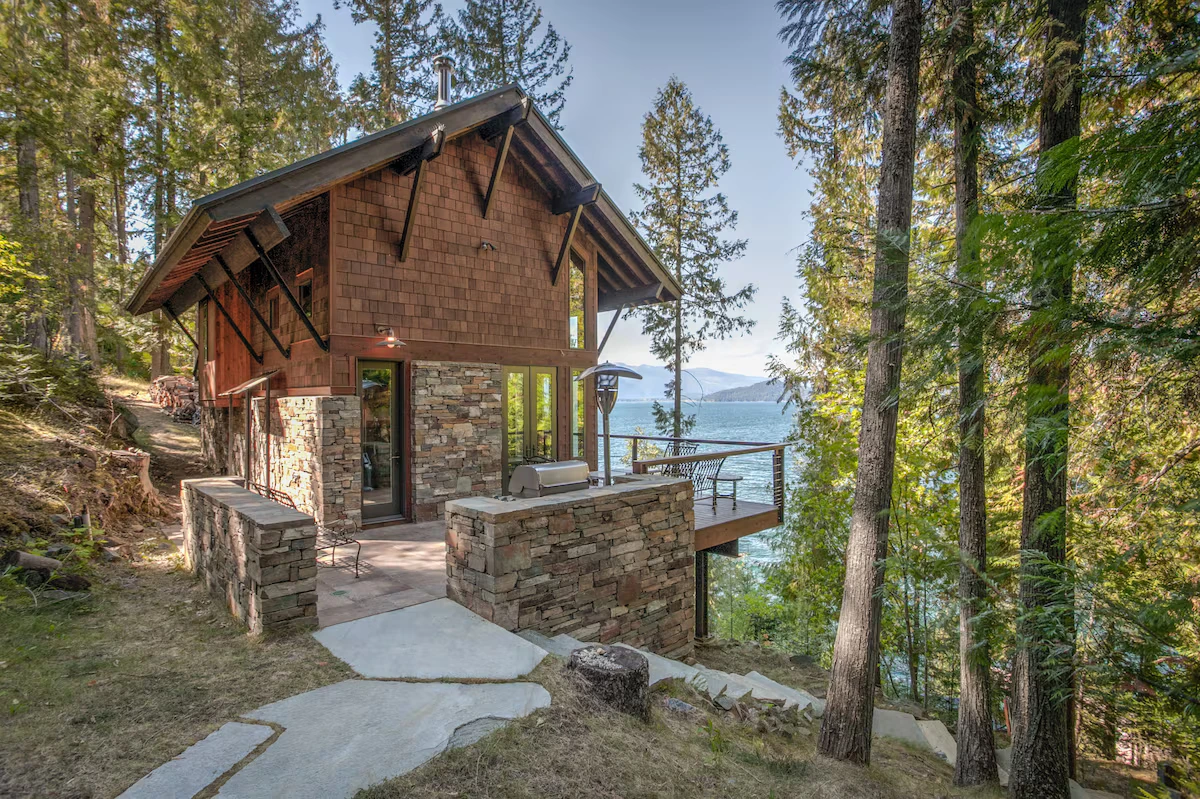
North Georgia Mountains (Blue Ridge)
The Blue Ridge and Helen area is a strong, lower-entry-cost cabin alternative to the Smokies, drawing Atlanta-metro weekend demand plus leaf-season and summer tourism.
Cabins here often see ADRs in the $250–$400 range with entry prices frequently $350K–$700K — among the more accessible markets on this list. The regulatory environment in the North Georgia cabin counties is generally permissive; peril exposure is the inland mix with some wildfire in the higher terrain. See our Georgia STR cost guide.
Texas Hill Country
Fredericksburg, Wimberley, and the broader Hill Country pair wine-and-weekend tourism with proximity to Austin and San Antonio, supporting steady demand.
Hill Country properties commonly see ADRs in the $250–$500 range, with entry prices broadly $400K–$900K. The peril factors are the hailstorm corridor and Hill Country flash flooding — flood is a separate policy that has to be in the model. Our Texas STR cost guide covers it.
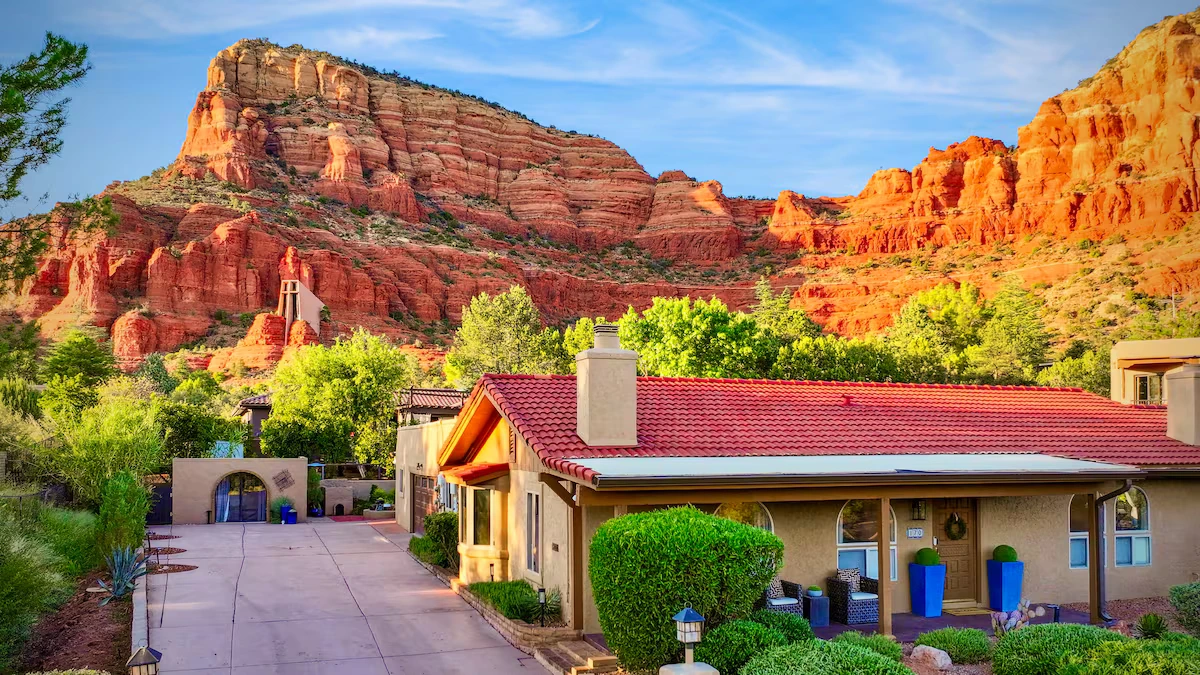
Sedona, Arizona
A high-demand red-rock tourism market with year-round appeal and premium ADRs, supported by Sedona’s status as a destination in its own right.
Sedona properties can command strong ADRs — often $350–$600+ — at entry prices that run higher than the desert metro markets. Sedona operates an STR licensing program, so verify the permit path; peril exposure includes monsoon flash flooding and high-country wildfire, detailed in our Arizona STR cost guide.
Joshua Tree, California
Joshua Tree has grown into one of California’s standout STR markets — design-forward desert properties drawing strong leisure demand from the Los Angeles metro and beyond.
Well-styled properties can see ADRs in the $250–$500 range, with entry prices that, while high by national standards, sit below California’s coastal markets. The cost factors are California’s insurance market and wildfire exposure in the surrounding high desert — our California STR cost guide explains the FAIR Plan dynamics that can apply.
Don’t Skip the Insurance Math
Every market on this list carries a peril profile, and in coastal and wildfire markets the insurance cost is large enough to change the return. Beach markets carry hurricane wind and flood; mountain and high-desert markets carry wildfire; the Hill Country carries flash flood. In our experience, the investors who run into trouble are not the ones who bought in a high-peril market — they are the ones who modeled the purchase without the real insurance number.
The fix is simple: get an STR insurance quote during due diligence, before closing. It takes a property address and basic details, and it converts “insurance” from a guess into a line in the model. See our property and dwelling coverage overview, or our beach house coverage for coastal markets. As you compare markets, the platform host resources — Airbnb’s hosting resources and the VRBO Help Center — help in understanding each platform’s expectations in the markets you’re weighing.
Scenario: Modeling a Smoky Mountain Cabin Purchase
We recently worked with an investor evaluating a $650K, 3-bedroom cabin near Pigeon Forge. Using submarket data, they modeled an ADR around $310 and occupancy near 62%, projecting roughly $70,000 in gross annual revenue. Against that, they ran realistic expenses: debt service on the financed purchase, cleaning and turnover, platform fees, utilities, maintenance, and STR insurance budgeted at about $4,000 a year for a multi-amenity cabin.
The insurance line was the one they had nearly left out. At $4,000, it was a manageable share of revenue — but it was real money that moved the projected first-year net, and it would have been a worse surprise discovered at closing. The cabin penciled out, and they bought it. The lesson generalizes across every market on this list: model the insurance during due diligence, and the market choice becomes a decision based on real numbers rather than optimistic ones. Once you’ve chosen a market, our guide to setting up your first Airbnb covers the launch.
Frequently Asked Questions
What’s the best market to buy a vacation rental in 2026?
There is no single best market — the right one depends on your budget, risk tolerance, and management plan. The strongest 2026 markets combine high average daily rates, durable occupancy, a workable regulatory environment, and an acquisition cost the income can support. The Smoky Mountains, the Outer Banks, the Destin/30A corridor, and the North Georgia mountains all score well across those factors.
How much does it cost to buy an STR in a top vacation rental market?
It varies widely by market. Cabin markets like the Smoky Mountains and North Georgia often have entry points in the $400K–$800K range; beach markets like Destin/30A and the Outer Banks commonly run $700K to well over $1.5M; premier ski markets like Park City start higher still. The right question is not the sticker price but whether the market’s ADR and occupancy support the carrying cost.
What’s the average ADR for a vacation rental in these markets?
Average daily rates vary by market, property size, and season, and they move year to year — current figures should be checked against live market data. As a general guide, the strong leisure markets in this list typically see ADRs in the $250–$500+ range for well-positioned properties, with cabin and beach markets at the higher end in peak season.
Which markets have the most restrictive STR regulations?
Within popular destinations, regulation is usually tightest in major cities — Nashville, Austin, New York City, and San Francisco all heavily restrict short-term rentals. Dedicated leisure and resort markets tend to be more permissive because STR tourism is part of the local economy, but rules still vary by county and town. Always verify the specific jurisdiction before buying.
Should I buy a vacation rental in a fire-prone or hurricane-prone state?
You can — many of the strongest STR markets carry real catastrophe exposure — but price the insurance before you buy, not after. Coastal wind, wildfire, and flood markets carry higher premiums and percentage deductibles that change the return math. In our experience, investors who get an insurance quote during due diligence avoid unpleasant surprises at closing.
How long does it take to break even on a vacation rental purchase?
Break-even depends on financing, the down payment, the market’s net income, and how the property is managed. Many well-chosen, well-run STRs cover their operating costs and debt service from year one, while full return of the down payment and setup investment typically takes several years. The break-even math is far more sensitive to occupancy and expense control than to the nightly rate alone.
What’s the difference between investing in a cabin market and a beach market?
Cabin markets like the Smoky Mountains and North Georgia generally have lower entry prices and wildfire and winter-weather exposure; beach markets like Destin/30A and the Outer Banks have higher entry prices and hurricane wind and coastal flood exposure that drive higher premiums and percentage deductibles. Both can perform well — the difference is the capital required and the peril profile you are underwriting.
The Bottom Line on Choosing a Vacation Rental Market for 2026
The best vacation rental market for 2026 is the one where average daily rate, occupancy, regulation, and acquisition cost line up for your budget and risk tolerance — not the one with the highest headline nightly rate. The Smoky Mountains, Outer Banks, Destin/30A, Park City, North Georgia, the Texas Hill Country, Sedona, and Joshua Tree all score well, each with a distinct peril and regulatory profile.
Whichever market you choose, price the insurance during due diligence — coastal wind, wildfire, and flood exposure change the return math, and a quote before closing prevents surprises. To model the insurance cost for a property you’re evaluating, submit a quote or call 317-942-0549. We respond in 1–2 hours during business hours and write STR coverage in 48 states.