When a guest damages your short-term rental, the claim sequence is what determines how much you recover: document the damage immediately, file with the booking platform first, then file with your STR insurance to cover the gap. Filing in the wrong order — or too late — costs hosts real money. The three most common mistakes are late documentation, accepting a platform settlement without an insurance consultation, and missing the deductible relationship between platform programs and dedicated coverage.
Step 1: Document Everything in the First 24 Hours
The claim is built — or lost — the moment you or your cleaner discovers the damage. Before anything is moved, cleaned, or repaired, document it completely.
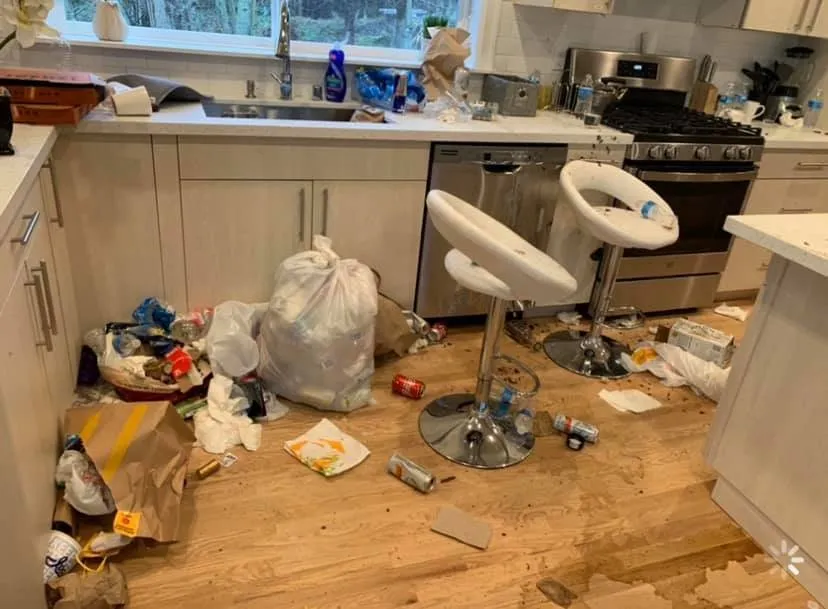
Take timestamped photos and video from multiple angles, in good light, with wide shots establishing the room and close-ups establishing the detail. If you have listing photos or earlier turnover photos showing the item intact, save those too — a before-and-after comparison is the strongest evidence there is. Photograph anything related: a broken lock, an unauthorized number of people in security-camera footage of common areas (where lawful and disclosed), trash volume that indicates a party.
Then build the valuation file. Get written repair or replacement estimates — two estimates for any large item — and pull receipts or your contents inventory to establish what damaged furnishings were worth. Do not dispose of or repair damaged property until your claim is documented and, for an insurance claim, until the adjuster has released it; discarded evidence is recovery you cannot get back. Note the date and time you discovered the damage. This file is what both the platform and your insurer will use, so make it thorough the first time.
Step 2: Communicate With the Guest — Inside the Platform
Contact the guest about the damage promptly and professionally — and do it inside the booking platform’s messaging system, never by personal text, call, or email. Platform messaging creates a timestamped, retrievable record, and that record is what Airbnb or VRBO reviews if the guest disputes the claim.
Keep the tone factual. Describe the damage, attach photos, and state the documented cost. Some guests acknowledge the damage and agree to pay; many do not, and some dispute responsibility outright. Either way, your job is the same: a clear, calm, evidence-based record. Do not negotiate yourself down before you know your full damages, and do not threaten — let the platform process and, if needed, your insurance carry the weight. In our experience, the hosts who recover fully are the ones who kept every exchange inside platform messaging; if the guest later disputes responsibility, that record and the documentation from Step 1 are what resolve it.
Step 3: File With Airbnb’s Resolution Center
For an Airbnb-booked stay, guest damage runs through the Resolution Center under AirCover for Hosts. The Airbnb Resolution Center is where a host submits a request for reimbursement; AirCover’s Host damage protection is the program that funds it.
The mechanics that matter:
- File within 14 days of the responsible guest’s checkout — and, where possible, before the next guest checks in, so there is no question about who caused the damage.
- Submit through the request-money flow in the Resolution Center, with your photos, video, and estimates attached.
- The guest has 24 hours to respond. They can pay, partially pay, or decline.
- If the guest declines or does not respond, Airbnb’s AirCover team reviews the request and your documentation and makes a determination.
AirCover Host damage protection can reimburse up to a stated $3 million for guest-caused damage, with no deductible to the host — which is exactly why it is filed first. But read it for what it is: a reimbursement program with its own depreciation, exclusions, and limits. We cover its boundaries in what AirCover actually covers.
Step 4: File With VRBO’s Claim Process
For a Vrbo-booked stay, the process runs through VRBO’s damage tools rather than Airbnb’s. Depending on the listing’s setup, that means a damage deposit claim or a claim under a Property Damage Protection Plan, filed from the host dashboard against the specific reservation. VRBO’s help article on filing a damage deposit claim walks through the steps, and the window is generally 14 days after the stay.
The principle is identical to Airbnb’s: file on the platform that hosted the booking, file fast, and attach complete documentation. A host listing on both platforms simply uses whichever channel matches the reservation — and still needs one STR insurance policy underneath both, because the platform programs have gaps neither one closes. We detail VRBO’s specifically in the VRBO liability insurance gaps guide.
Step 5: When and How to File With Your STR Insurance
The platform program is the first layer; your STR insurance policy is what covers the gap. File an insurance claim when any of these is true:
- The platform denied the claim, or paid materially less than the documented loss.
- The damage exceeds the platform program’s limits or runs into its exclusions (some categories of property, certain causes of loss).
- The loss includes structural damage to the building — drywall, flooring, fixtures — which belongs on the property and dwelling policy, with damaged furnishings on contents coverage.
- The event also produced a liability exposure — a guest or neighbor was injured — which is a general liability matter, not a damage claim.
Guest-caused damage is generally covered on an STR property policy as vandalism or malicious mischief, subject to your deductible. That deductible is the reason order matters: a platform program that pays with no deductible should be exhausted first, so your policy only handles the genuine gap. We typically see hosts get this backwards — filing the insurance claim first on a guest-caused loss and burning a deductible the platform program would have absorbed. Notify your carrier promptly even if you are still working the platform claim — “prompt notice” is a policy condition. And if a covered loss takes the property offline for repairs, loss of rents coverage may replace the income lost during the closure.
Step 6: Working With the Adjuster
If the claim goes to your insurer, an adjuster — staff or independent — will be assigned to investigate and value the loss. Make their job easy: hand over the documentation file you built in Step 1, walk the property with them, and let them establish the scope of loss before any repairs begin.
A few practical points. Keep the damaged property available until the adjuster releases it. Get the carrier’s estimate in writing and compare it to your contractor’s estimates — if there is a gap, that is a conversation to have before you accept payment, not after. If the carrier issues a reservation of rights letter, it means they are investigating coverage; respond with documentation rather than alarm. State insurance regulators publish consumer claim resources explaining your rights in the process. Do not accept a final settlement you believe is short — once signed, a release is hard to reopen.
Step 7: Special Cases — Theft, Vandalism, and Criminal Damage
Not every guest “damage” claim is ordinary breakage. Three categories need different handling:
- Theft. A guest takes furnishings, electronics, appliances, or décor. This is a crime — file a police report (Step 8), then claim it through the platform program and, for the gap, your contents coverage.
- Deliberate vandalism. Damage that is plainly intentional rather than accidental. It is still typically covered as vandalism or malicious mischief on the property policy, but document the deliberateness — it strengthens both the platform claim and any pursuit of the guest.
- Party damage. An unauthorized party is the large-loss version of a guest damage claim — broken furniture, structural damage, neighbor complaints, sometimes injuries. Document the scale (guest count, trash, noise records), because party damage often crosses from a simple damage claim into liability and loss of rents at the same time.
Step 8: When to Involve Law Enforcement
Involve law enforcement whenever a crime has likely occurred: theft of your property, deliberate vandalism, an unauthorized party that became a public-safety problem, or any threat to you, a cleaner, or a neighbor. Call the non-emergency line for a past event, or 911 for one in progress.
File a police report and get the report number. Both platform programs and insurance policies expect a police report for theft and vandalism, and the report number is frequently required to process the claim. A police report also creates an independent, official record of the event — which carries weight if the guest later disputes responsibility. Reporting a crime is not an overreaction; it is a routine, expected step in the claim.
Scenario: An Unauthorized Party in a 3-Bedroom STR
We recently worked a claim with a host whose 3-bedroom single-family STR was booked for two guests on a two-night stay. The guests threw an unauthorized party — roughly 40 people. The cleaner arrived to a 65-inch TV cracked off its mount, a stained and torn sectional, a shattered glass table, two holes punched in drywall, a ruined mattress, and trampled landscaping. Documented across two contractor estimates: about $9,200, plus five lost nights while the property was repaired.
The host did it right. Photos and video before anything was touched, all guest contact kept in Airbnb messaging, and an AirCover Host damage protection request filed within 14 days with the full documentation file. AirCover reimbursed about $7,400 — it depreciated the older TV and sectional and excluded part of the landscaping. The host then filed the remaining roughly $1,800 gap on the STR property policy as vandalism and malicious mischief; with a $1,000 deductible, the policy paid $800. Net result: about $8,200 of the $9,200 recovered, with the $1,000 deductible the only real out-of-pocket — and loss of rents coverage addressed the lost nights. Filed late or documented poorly, the same host could have recovered a fraction of that.
Common Mistakes That Reduce Claim Recovery
The errors that shrink a guest damage recovery are predictable:
- Filing too late. Miss the 14-day platform window and the strongest channel closes. Document the day you discover the damage.
- Thin documentation. No before photos, no written estimates, no inventory — every weak spot becomes a deduction.
- Communicating off-platform. A personal text is not a record Airbnb or VRBO will weigh; keep everything in platform messaging.
- Accepting a partial settlement too soon. Do not sign a platform or insurance settlement before you know your full damages and what each layer should pay.
- Repairing or discarding too early. Fix or throw out damaged property before it is documented and released, and you have erased the evidence.
- Ignoring the deductible relationship. Going to insurance first on a guest-caused loss burns a deductible the no-deductible platform program would have covered.
Handled in order — document, communicate in-platform, file with the platform, then file the gap with your STR policy — most guest damage claims resolve cleanly. The hosts who struggle are almost always the ones who moved too slowly or skipped a step. For coverage built to back up the platform programs, see our single-family STR coverage, and pair good claim habits with good operating habits — including the pricing and length-of-stay strategy that reduces how often a problem booking reaches your door.
Frequently Asked Questions
How do I file a damage claim against an Airbnb guest?
Document the damage with timestamped photos, video, and written repair or replacement estimates, then file a reimbursement request through Airbnb’s Resolution Center under AirCover for Hosts. File within 14 days of the responsible guest’s checkout, ideally before the next guest checks in. The guest has 24 hours to respond; if they decline or do not respond, Airbnb’s AirCover team reviews the request and your documentation.
Does AirCover or my insurance pay first for guest damage?
For guest-caused damage, the booking platform’s program generally goes first. Airbnb’s AirCover Host damage protection and VRBO’s damage claim process can reimburse with no deductible to the host, so filing there first preserves your insurance deductible and claims history. Your STR insurance policy then covers the gap — amounts above what the platform pays, perils the platform excludes, or the claim entirely if the platform denies it.
What documentation do I need for an STR damage claim?
You need timestamped photos and video of the damage, ideally with before-and-after comparison; written repair or replacement estimates, and two estimates for larger items; receipts or an inventory establishing the value of damaged furnishings; all guest communication kept inside the booking platform’s messaging; and a police report number for any theft or vandalism. Thorough documentation is the single biggest factor in how much you recover.
Can I bill an Airbnb guest directly for damage?
You should not bill an Airbnb guest with an outside invoice. Reimbursement runs through Airbnb’s Resolution Center request-money process under AirCover — that is the channel that preserves your claim if the guest disputes it and Airbnb has to step in. A direct demand outside the platform has no enforcement behind it and can undercut your AirCover request. Keep the entire claim inside the platform.
What happens if Airbnb denies my damage claim?
If AirCover denies or underpays a claim, the loss does not disappear — it shifts to your STR insurance policy. Guest-caused damage is generally covered as vandalism or malicious mischief under a short-term rental property policy, subject to your deductible. Keep every piece of documentation from the platform process; your insurer will use the same photos, estimates, and communication records to adjust the claim.
How long do I have to file a guest damage claim?
Airbnb requires AirCover Host damage protection requests within 14 days of the responsible guest’s checkout, and ideally before the next guest checks in. VRBO’s damage claim window is similar — generally 14 days after the stay. Insurance policies allow longer but still require "prompt" notice. The practical rule: document the day you discover the damage and file within days, not weeks.
When should I involve law enforcement in an STR damage case?
Involve law enforcement whenever a crime has likely occurred — theft of your property or furnishings, deliberate vandalism, an unauthorized party that became a public-safety issue, or threats to you or a cleaner. File a police report and get the report number. Both platform programs and insurance policies expect a police report for theft and vandalism claims, and the report number is often required to process them.
The Bottom Line on Handling a Guest Damage Claim
A guest damage claim is won or lost in the first 24 hours. Document everything the moment you discover the damage — timestamped photos, video, written estimates — and keep every guest conversation inside the booking platform. Then file in the right order: the platform program first, because Airbnb AirCover and VRBO’s damage process can reimburse with no deductible, and your STR insurance second, to cover the gap.
The mistakes that cost hosts the most are filing too late, documenting too little, and accepting a partial platform settlement before anyone has looked at the full claim. Before you accept any settlement, know what your property and contents coverage would add. If you are not sure how your platform protection and your STR policy fit together, submit a quote or call 317-942-0549 — we coordinate this sequence with hosts constantly and respond in 1–2 hours during business hours.