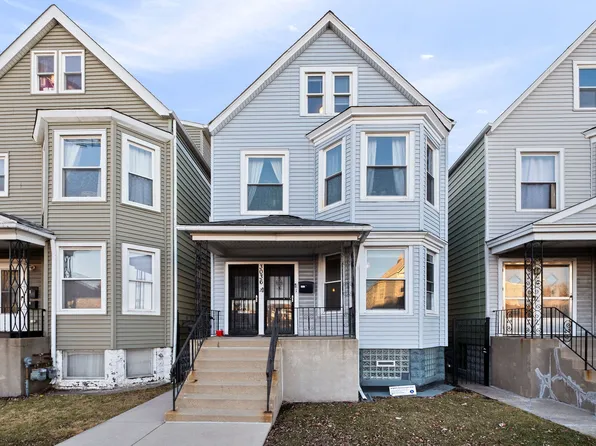
What Multi-Unit and Duplex STR Insurance Costs
Multi-unit and duplex STRs almost always require commercial habitational coverage rather than a residential dwelling form. The number of units, gross rental income, and whether the property carries mixed-use exposure (some units operated short-term, others on long-term leases) drive the form decision. III.org’s commercial general liability insurance overview outlines the broader framework; III.org’s renter and landlord insurance guidance addresses the tenant-side coverage on the mixed-use rental relationships most multi-unit STR operators carry. The coverage program a multi-unit STR owner typically needs runs across six lines:
- Commercial General Liability: Guest bodily injury and third-party property damage across all units. Premises liability in shared common areas (entrance, stairs, parking, shared yard) sits with the property owner. Typical limits $1,000,000 each occurrence / $2,000,000 aggregate. See General Liability for STR.
- Commercial Habitational Property: Building coverage on commercial habitational forms. Replacement cost valuation, special-form perils, separate named-storm or wind/hail deductibles in coastal markets. See Property / Dwelling coverage.
- Business Income (commercial equivalent of loss-of-rents): Rental income across all units during a covered loss. Extra-expense coverage included on most commercial habitational forms — funds relocation costs and operating-expense continuity. See Loss of Rents.
- Contents and Furnishings: Per-unit furnishings, electronics, kitchenware. Multi-unit STR contents replacement cost scales with unit count — a duplex with two fully-furnished STR units carries roughly double the unscheduled-contents exposure of a single-family STR. See Contents coverage.
- Ordinance & Law (with fire wall code compliance focus): Multi-unit structures must comply with fire wall and fire-separation requirements that single-family forms don’t contemplate. Older multi-unit properties built before current International Code Council fire-separation requirements face material code-upgrade exposure on rebuild. See Ordinance & Law.
- Umbrella / Excess: Higher liability limits over primary GL. Multi-unit properties with concentrated peak-week occupancy (8–20 simultaneous guests across units) benefit from umbrella stacking. See Umbrella coverage.
Premium varies by unit count, gross rental income, building age, mixed-use exposure (long-term tenants reduce STR premium slightly but complicate claim attribution), and location. Mixed-use properties — some STR units, some long-term — sit on commercial habitational forms designed to handle both exposures simultaneously.
Multi-Unit STR Regulation by State
Multi-unit STR regulation overlaps with both vacation rental rules and traditional landlord-tenant law. Most states regulate the insurance side at the department of insurance level; cities and counties handle zoning, occupancy, and STR-specific operating rules. The four states that drive most multi-unit STR volume have distinct frameworks worth highlighting.
- Florida: Vacation rentals, including multi-unit and duplex STR properties, must register with the Florida Department of Business and Professional Regulation (DBPR). Multi-unit registration handles each unit; condo-style buildings have their own framework.
- California: The California Department of Insurance regulates insurance; San Francisco, Los Angeles, and Santa Monica each have detailed multi-unit STR ordinances that interact with state-level landlord-tenant law in non-obvious ways. Mixed-use buildings (some units STR, some long-term) face the highest regulatory complexity.
- Tennessee: Nashville Metro’s Type 1 (owner-occupied, primary residence) vs. Type 2 (non-owner-occupied) classification applies to multi-unit STRs unit-by-unit, not building-wide. The Tennessee Department of Commerce and Insurance regulates carriers and rate filings.
- Texas: Austin, Houston, and Dallas-Fort Worth multi-unit STR markets each face city-specific licensing requirements. The Texas Department of Insurance regulates carrier appetite at the state level. The National Association of Home Builders covers the long-term-tenant and mixed-use multi-family side relevant to Texas multi-unit STR properties.
Mixed-use multi-unit STR properties (some units STR, some long-term) often require carrier coordination across two coverage lines: commercial habitational for the building and a tenant-occupied dwelling endorsement for the long-term-leased units. We work this coordination at policy bind.
What Makes Multi-Unit and Duplex STR Insurance Different
Multi-unit and duplex STRs occupy a coverage segment most residential and standard STR forms aren’t designed for: commercial habitational policies addressing per-unit exposure, mixed-use complexity, and fire-separation code compliance. Five specific underwriting realities matter.
1. Commercial habitational vs. residential dwelling form
Single-family STR coverage can sit on a DP-3 dwelling form. Multi-unit STR coverage almost always requires a commercial habitational policy — the form is built for buildings with multiple rental units, includes business-income coverage by default, and contemplates property-management operations rather than owner-operator residential use. The commercial habitational underwriter looks at gross rental income, unit count, claims experience across units, and operating model. The form decision affects everything from premium to claim handling.
2. Mixed-use exposure (some units STR, some long-term)
Many duplex and small multi-family operators run some units short-term and others on long-term leases. The mix creates underwriting complexity: STR units carry higher claim frequency and amenity exposure; long-term units sit in the landlord-coverage profile with different exclusions and additional-insured requirements. Carriers willing to write mixed-use properties typically charge a blended premium reflecting the heavier STR exposure across the building, even on units that don’t generate it directly.
3. Fire wall and building code compliance
Multi-unit structures must comply with fire wall and fire-separation requirements set by the prevailing building code (typically the IRC or IBC, depending on unit count). Older duplexes and triplexes built before current fire-separation requirements face material code-upgrade exposure on rebuild. The International Code Council publishes the model codes most jurisdictions adopt; tracking which version your locality uses tells you what a post-loss rebuild will require. Ordinance and law coverage at the 25% or 50% tier matters on older properties.
4. Occupancy concentration during peak weeks
A duplex with two 4-bedroom STR units operating at peak occupancy can host 16+ guests simultaneously on a holiday weekend. The concentration affects general liability exposure (more individuals on premises, more amenity use), septic and well system demand (in rural multi-unit properties), and noise/disturbance complaint frequency (which interacts with platform host-protection programs and city ordinance enforcement). Underwriters specifically rate per-occurrence exposure on multi-unit STR properties.
5. Different unit-level claim handling
Claims at multi-unit STR properties often span units — a fire originating in one unit damages adjacent units; a water-main failure affects every unit on a floor; an HVAC failure in a shared system cancels bookings across multiple units simultaneously. Commercial habitational forms are designed to handle these cross-unit losses with single per-occurrence limits; residential dwelling forms aren’t, which is part of why the form decision matters so much at the front end.
Common Multi-Unit and Duplex STR Claims We See
Fire spreads between duplex units
A kitchen fire in unit A of a duplex Airbnb listing spreads through inadequate fire-wall separation to unit B. Property responds for both units; commercial general liability addresses any guest injury claims; business-income coverage funds cancelled bookings across both units during rebuild. Older properties with non-compliant fire walls face ordinance and law upgrade exposure on rebuild — current IRC fire-separation requirements often exceed original construction. Severity routinely $80,000–$300,000+ on cross-unit fire losses.
Slip-and-fall in shared common area
A guest at a triplex VRBO listing slips on a shared exterior staircase between units. The shared-amenity nature complicates attribution — the entire stairway belongs to the property owner, but the guest reached it through one specific unit booking. Commercial general liability responds; settlements typically run $15,000–$75,000 with material defense costs on contested claims.
Boiler or HVAC failure affecting multiple units
A central boiler or HVAC system fails in a small multi-family STR building, taking heat or cooling offline across multiple units simultaneously during peak season. Equipment Breakdown responds to the system repair; business-income coverage funds the cancelled-booking exposure across affected units. The multi-unit concentration of impact is exactly why commercial habitational forms include broader business-income coverage than residential dwelling forms.
Multi-family theft and vandalism event
A coordinated theft or vandalism event at a multi-unit STR property — guests in one unit damage adjacent unit doors, theft of fixtures from common areas, vandalism to exterior systems — generates per-unit and shared-area claims. Property and contents respond; police-report and proof-of-loss documentation across affected units is essential. Severity $8,000–$40,000 typical depending on scope.
Tenant-vs-guest dispute requiring coverage clarification
In a mixed-use duplex — one unit STR, one unit long-term — a dispute between the long-term tenant and an STR guest (noise, common-area conflict, parking) escalates to a covered loss event. Commercial habitational coverage handles the property and liability sides; the long-term-tenant relationship adds an additional-insured layer that requires reading the policy carefully. Mixed-use properties are exactly the scenario this coverage was designed for.
Why Multi-Unit and Duplex STR Operators Choose STR Guard
We understand commercial habitational underwriting. The form decision (residential dwelling vs. commercial habitational) is the single biggest multi-unit STR underwriting question, and the carrier panel that writes commercial habitational well isn’t the same as the residential-dwelling panel. We work with carriers in the STR specialty market that have priced for small-multi-family STR operating models.
We work mixed-use coverage as a coordinated program. Properties with some STR units and some long-term tenants face overlapping coverage requirements. We coordinate the STR commercial habitational placement with the long-term-tenant coverage so the building is fully covered without double-paying for overlap.
We address fire wall and code compliance at policy bind. Older multi-unit properties face material code-upgrade exposure on rebuild. We confirm the building’s fire-separation status and size ordinance-and-law coverage accordingly, rather than discovering the gap at claim time.
We respond in 1–2 hours during business hours. Multi-unit STR quote requests submitted through the STR Guard quote form are typically returned within 1–2 hours during business hours. Commercial habitational placements that require carrier underwriting review may take longer, but you’ll hear back from us the same business day.