What Short-Term Rental Insurance Costs in South Carolina
South Carolina STR insurance pricing reflects two realities — a heavily exposed coastline (the Grand Strand from Myrtle Beach south through Pawleys Island and Georgetown, the Charleston-area barrier islands, the Lowcountry, and Hilton Head) and a comparatively lower-peril inland Upstate. The coastal market carries named-storm wind, storm surge, and the South Carolina Wind and Hail Underwriting Association (Wind Pool) framework that constrains standard-market wind availability. The Upstate prices closer to inland Southeast norms. The same dwelling cost can produce very different premiums depending on which side of the state the property sits on.
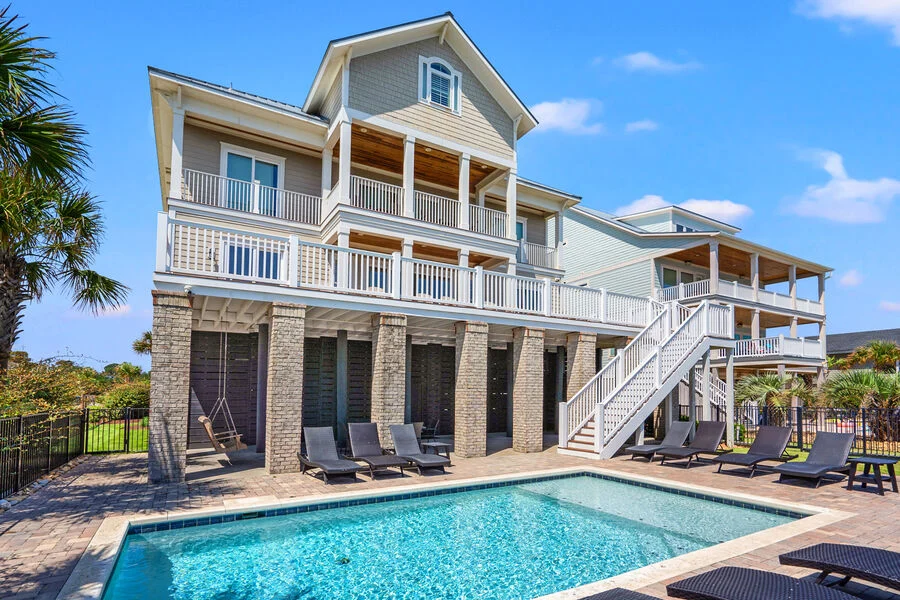
The drivers that move South Carolina STR premium most are property location relative to the coast, wind-mitigation construction features, replacement cost, claims history, amenity profile (pool, hot tub, dock, beachfront), and operating model. A beachfront Folly Beach VRBO with a pool sits in a different rate band than a Charleston historic-district condo or a Greenville urban STR. The typical South Carolina STR coverage program runs across five anchored lines:
- General Liability: Guest bodily injury and third-party property damage. Typical limits run $1,000,000 each occurrence / $2,000,000 aggregate; Myrtle Beach and Hilton Head amenity-driven properties frequently pull recommended limits higher. See General Liability for STR.
- Property / Dwelling: Written on DP-3 dwelling or commercial habitational depending on operating model. Coastal South Carolina property routinely pairs a Wind Pool wind policy with a non-wind property policy; named-storm deductibles run 2–10% of dwelling. See Property / Dwelling coverage.
- Loss of Rents: Rental income during a covered loss. South Carolina hurricane evacuations and the slow post-storm restoration cycle on the coast make civil-authority and ingress/egress endorsements particularly relevant. See Loss of Rents.
- Flood Insurance: Excluded from every standard property form. NFIP covers up to $250,000 dwelling / $100,000 contents through the National Flood Insurance Program; private flood layers above NFIP for higher-value coastal properties. See Flood Insurance.
- Ordinance & Law: The gap between rebuild cost and code-compliant rebuild cost. Material on Charleston-area historic-district properties (rebuild often triggers historic preservation review and modern wind code) and on coastal properties built before current wind code. See Ordinance & Law.
Premium varies by property location, structure type, wind-mitigation features, claims history, coverage form selection, and operating model. South Carolina’s coastal and inland sub-markets price independently, and we structure quotes through the specialty STR carrier panel against the actual property.
South Carolina Short-Term Rental Regulatory Framework
South Carolina regulates STR primarily at the city and county level. There is no statewide STR registration program. The state administers insurance regulation through the South Carolina Department of Insurance, collects accommodations and sales taxes through the Department of Revenue, and operates the South Carolina Wind and Hail Underwriting Association for coastal wind coverage. Cities and counties then layer permitting, occupancy, and zoning requirements that vary significantly between markets.
State-Level Regulation
The South Carolina Department of Insurance oversees insurance regulation across the state — carrier rate filings, market conduct, coastal wind availability through the Wind Pool, and consumer protection. The South Carolina Department of Revenue accommodations tax framework requires STR operators to collect and remit a 7% state accommodations tax (the state sales tax plus a 2% accommodations component) on rentals of fewer than 90 continuous days, plus local accommodations taxes that vary by jurisdiction. The South Carolina State House remains the source for current statutory changes affecting vacation rentals.
City-Level Regulation in Major Markets
Most operating-rule specificity sits at the city level, with material variation across markets:
- Charleston: One of the most-restricted STR markets in South Carolina. The city distinguishes between commercial short-term rentals and residential short-term rentals, with materially different zoning and permitting frameworks. Permits within the historic peninsula are tightly constrained, and the city has enforced violations aggressively. Whole-house STR is generally restricted to specific zoning districts.
- Hilton Head Island: Active municipal short-term rental permitting program administered by the Town of Hilton Head Island. The Town’s short-term rental program requires permits, parking compliance, and occupancy controls. Hilton Head is one of South Carolina’s most-formalized municipal STR frameworks.
- Myrtle Beach & Horry County: Business license framework administered through the City of Myrtle Beach and surrounding Horry County jurisdictions. Beachfront condo and house STR is generally permitted; party-prevention and noise ordinances have tightened in recent years given the market’s high-density tourism profile.
- Folly Beach & Isle of Palms: Both barrier-island municipalities maintain dedicated STR permit programs with caps on the number of active permits and registration renewal requirements. Beachfront placement on Folly and Isle of Palms requires both the municipal permit and the appropriate insurance form for non-owner-occupied transient use.
- Beaufort & Bluffton: Lowcountry STR market with municipal registration in Beaufort proper and varying county-level rules in surrounding Beaufort County. Historic district considerations affect older Beaufort properties materially.
Tax and Licensing
South Carolina STR operators owe a 7% state sales-plus-accommodations tax under the Department of Revenue framework, plus local accommodations taxes that vary by jurisdiction (commonly 1–3%). Some jurisdictions also impose a tourism-development assessment. Airbnb and VRBO collect and remit some — but not all — of these on behalf of hosts in many South Carolina jurisdictions; hosts remain responsible for any uncollected portion. Charleston, Hilton Head, Myrtle Beach, and the barrier-island municipalities each layer additional local rates on top of the state baseline.
Common Short-Term Rental Risks in South Carolina
STR exposure in South Carolina is shaped by the state’s coastline and tourism profile. The risks below appear more frequently or with more severity than national norms, and they cluster particularly on the coast.
1. Named-storm wind and tropical-storm exposure
South Carolina’s coast sits in an established hurricane corridor. Hugo (1989), Charleston-area tropical storms, and recurring named-storm activity define the wind underwriting environment. Coastal South Carolina STR properties commonly carry separate named-storm wind deductibles (2–10% of dwelling), and many beachfront and barrier-island placements require a South Carolina Wind and Hail Underwriting Association policy for wind coverage stacked with a non-wind property policy. Track active storm activity through the NOAA National Hurricane Center and the National Weather Service hurricane safety guidance.
2. Storm surge and coastal flood
Barrier islands, Lowcountry tidal corridors, and Charleston-area marsh-adjacent properties carry concentrated FEMA-mapped flood exposure. NFIP primary plus private excess flood is the standard placement for any meaningfully valuable coastal South Carolina STR. The NFIP $250,000 dwelling cap rarely reaches replacement cost on a Folly Beach or Isle of Palms beach house, and private flood layers above NFIP close the gap. See III.org’s flood insurance facts and statistics for the national flood-claim context.
3. Historic-district code-upgrade and reconstruction exposure
Charleston’s historic peninsula and downtown Beaufort host hundreds of pre-modern-code STR properties. Substantial damage to a historic-district property frequently triggers both modern wind-code requirements and historic preservation review on rebuild, materially increasing reconstruction cost above the structure’s pre-loss replacement value. Ordinance & Law coverage at 25% or 50% of dwelling is often necessary to close the gap, and we structure it as a default on historic-district placements.
4. Myrtle Beach party-house and high-density tourism liability
Myrtle Beach’s high-volume tourism profile produces concentrated party-house liability exposure. Spring-break and weekend bookings frequently include guests who exceed posted occupancy, hold unauthorized events, or violate noise ordinances. The resulting claim profile includes guest injury, property damage from over-occupancy, third-party noise complaints, and in some cases neighbor nuisance claims. Underwriters specifically rate party-prevention controls (noise monitors, occupancy caps, age screening) on Myrtle Beach placements.
5. Pool, hot tub, and beachfront-amenity liability
South Carolina coastal STR amenity profiles concentrate liability exposure. Pool drownings, hot tub injuries, deck slip-and-falls, dock incidents, and oceanfront access injuries all show up in the claim mix. Properties with pools and capacity for 8+ guests almost always require an umbrella layer over primary GL. The III.org spotlight on catastrophes and insurance issues consistently flags amenity-driven premises liability as among the highest-severity claim categories nationally.
Common South Carolina STR Claims We See
Coastal hurricane wind damage to roof and exterior
A named storm tracks the South Carolina coast and damages the roof, screens, and exterior decks of a Hilton Head VRBO villa. The replacement-cost claim runs $30,000–$140,000 depending on storm category and wind-code upgrade requirements. The Wind Pool policy responds to wind, subject to the wind deductible; the non-wind property policy responds to interior water damage. Ordinance & Law covers the code-upgrade gap on older structures.
Charleston historic-district pipe burst
A January freeze cracks a supply pipe in a Charleston historic-district Airbnb property. Structural water damage to original heart pine flooring, plaster walls, and finished basement totals $35,000–$95,000. Property responds; reconstruction in the historic district triggers preservation review and modern wind/electrical code requirements, and Ordinance & Law closes the resulting code-upgrade gap.
Myrtle Beach party-damage and over-occupancy claim
A booking at a Myrtle Beach single-family Airbnb turns into an unauthorized 40-person event. Interior damage, broken furnishings, exterior pool-area damage, and neighbor property damage total $12,000–$40,000; a guest injury at the event produces a separate liability claim. Property and General Liability respond, with material defense costs on contested cases.
Hilton Head hot-tub or pool-area injury
A guest at a Hilton Head VRBO villa slips exiting the hot tub and fractures a wrist. The claim alleges inadequate non-slip surfacing and posted-rule visibility. General Liability responds to medical and any negligence settlement. South Carolina pool and hot tub injury claims typically settle in the $25,000–$110,000 range; contested claims run materially higher in defense costs alone.
Isle of Palms storm-surge flood
Storm surge from a tropical system pushes water through the ground floor of an Isle of Palms VRBO beach house. NFIP responds up to the $250,000 building / $100,000 contents cap; private excess flood layers above to reach actual replacement cost. Combined claim severity on a substantially damaged barrier-island STR commonly runs $180,000–$500,000 between structural, contents, and code-upgrade exposure.
Why South Carolina Short-Term Rental Owners Choose STR Guard
We know SC Wind Pool coordination. Most coastal South Carolina STR placements involve a wind policy from the South Carolina Wind and Hail Underwriting Association stacked with a separate non-wind property policy. The two have to coordinate cleanly at claim time. We structure the layering and verify it works before bind, not after a storm.
We know Charleston historic-district code-upgrade exposure. Charleston peninsula and Beaufort historic-district properties carry meaningful reconstruction exposure that standard property forms don’t address. We structure Ordinance & Law at the right percentage of dwelling and verify it accommodates both modern wind code and historic preservation review.
We know the Myrtle Beach underwriting question. Myrtle Beach STR placements turn on party-prevention controls, occupancy caps, and screening rules. Carriers in the SC specialty market evaluate these explicitly, and we work with operators on the policy form and the operational controls that align with each carrier’s appetite.
We work with carriers actively writing South Carolina STR. The South Carolina coastal market is narrower than the national average — the specialty carrier panel that writes Hilton Head, Charleston-area barrier islands, and Myrtle Beach STRs is a distinct group, not the household names from a national quote engine. We shop placements through the specialty STR market for both admitted and surplus lines capacity.
We respond in 1–2 hours during business hours. South Carolina placement timelines often run against an already-populated booking calendar. Quote requests are typically returned within 1–2 hours during business hours (Mon–Fri 9 AM – 5 PM Eastern).
Major South Carolina Short-Term Rental Markets We Serve
STR Guard places coverage across South Carolina’s coastal, Lowcountry, and Upstate STR markets. The state’s STR map clusters heavily on the coast — Grand Strand, Charleston-area barrier islands, Hilton Head, and Lowcountry — with a meaningful inland Upstate sub-market. Pricing and coverage availability vary substantially by market because peril zones and city-level overlays differ.
Charleston & Mount Pleasant
Historic-district STR market with strict city-level permits, code-upgrade exposure on older structures, and tropical-storm wind underwriting.
Myrtle Beach & North Myrtle Beach
High-volume coastal tourism market with concentrated party-house liability exposure and named-storm wind on beachfront condos and houses.
Hilton Head Island
Resort-island STR market with active municipal short-term rental permitting and concentrated wind, flood, and amenity-driven liability exposure.
Folly Beach & Isle of Palms
Charleston-area barrier-island STR market with high-end beach houses, strict municipal STR caps, and elevated storm-surge exposure.
Beaufort & the Lowcountry
Historic Lowcountry STR market with marsh-adjacent flood exposure and unique heritage-property underwriting considerations.
Pawleys Island & Murrells Inlet
Grand Strand secondary markets with traditional vacation-rental tradition, named-storm wind, and storm-surge exposure.
Greenville & the Upstate
Inland urban STR market driven by Upstate tourism, business travel, and a comparatively lower coastal-peril profile.
Edisto Island
Family-oriented Atlantic-coast STR market with vacation rental tradition, barrier-island flood exposure, and quieter regulatory profile than Charleston-area beaches.