Short-term rental insurance in North Carolina runs roughly $2,000–$15,000+ per year — one of the widest cost spreads of any state, because North Carolina is really two markets. Three factors drive that spread: Outer Banks hurricane wind and the North Carolina Beach Plan that increasingly carries it, mountain flash-flood exposure that Hurricane Helene made impossible to ignore, and Asheville’s unusually restrictive STR regulation. Here are the real numbers.
The North Carolina-Specific Cost Drivers Other Guides Miss
Most STR cost guides quote one North Carolina number. That ignores how differently an Outer Banks beach house, an Asheville mountain cabin, and a Charlotte townhouse underwrite. The cross-state drivers behind all of that live in our national short-term rental insurance cost guide; North Carolina just spreads them unusually wide.
The first driver is Outer Banks hurricane wind and the North Carolina Beach Plan. The barrier islands — Corolla, Duck, Nags Head, Hatteras — sit fully exposed to Atlantic hurricane wind, and standard carriers have steadily reduced their appetite for writing wind there. When they won’t, coastal wind moves to the North Carolina Beach Plan, the residual market administered by the North Carolina Insurance Underwriting Association for the designated beach areas. A coastal STR’s program is often built with the Beach Plan as the wind layer, carrying a named-storm deductible set as a percentage of dwelling value — real out-of-pocket exposure that never shows up in the annual premium. The Insurance Information Institute’s hurricane facts document why coastal carriers price wind the way they do.
The second driver is mountain flash flood. Hurricane Helene brought catastrophic, historic flooding to western North Carolina in September 2024 — the Asheville area and surrounding mountain counties saw losses no one had priced for. Flood is excluded from every standard property policy, and Helene made the lesson concrete: a mountain STR hundreds of miles from any coast still has flood exposure, and it needs a separate flood policy. FloodSmart explains how that coverage is written.
The third driver is Asheville’s regulatory environment. Asheville is among the most restrictive STR markets in the country — whole-home short-term rentals are largely barred in residential zones, with only narrow exceptions for homestays and certain districts. That scarcity shapes which mountain properties can operate as STRs at all, and the North Carolina Department of Insurance regulates the carriers writing coverage for the ones that can.
Real Cost Ranges We See in North Carolina
In our experience placing North Carolina STR coverage, annual premium for a full program — general liability, dwelling, loss of rents, and contents — typically falls in these ranges:
- Inland urban STR (Raleigh-Durham, Charlotte): roughly $2,000–$4,500/year
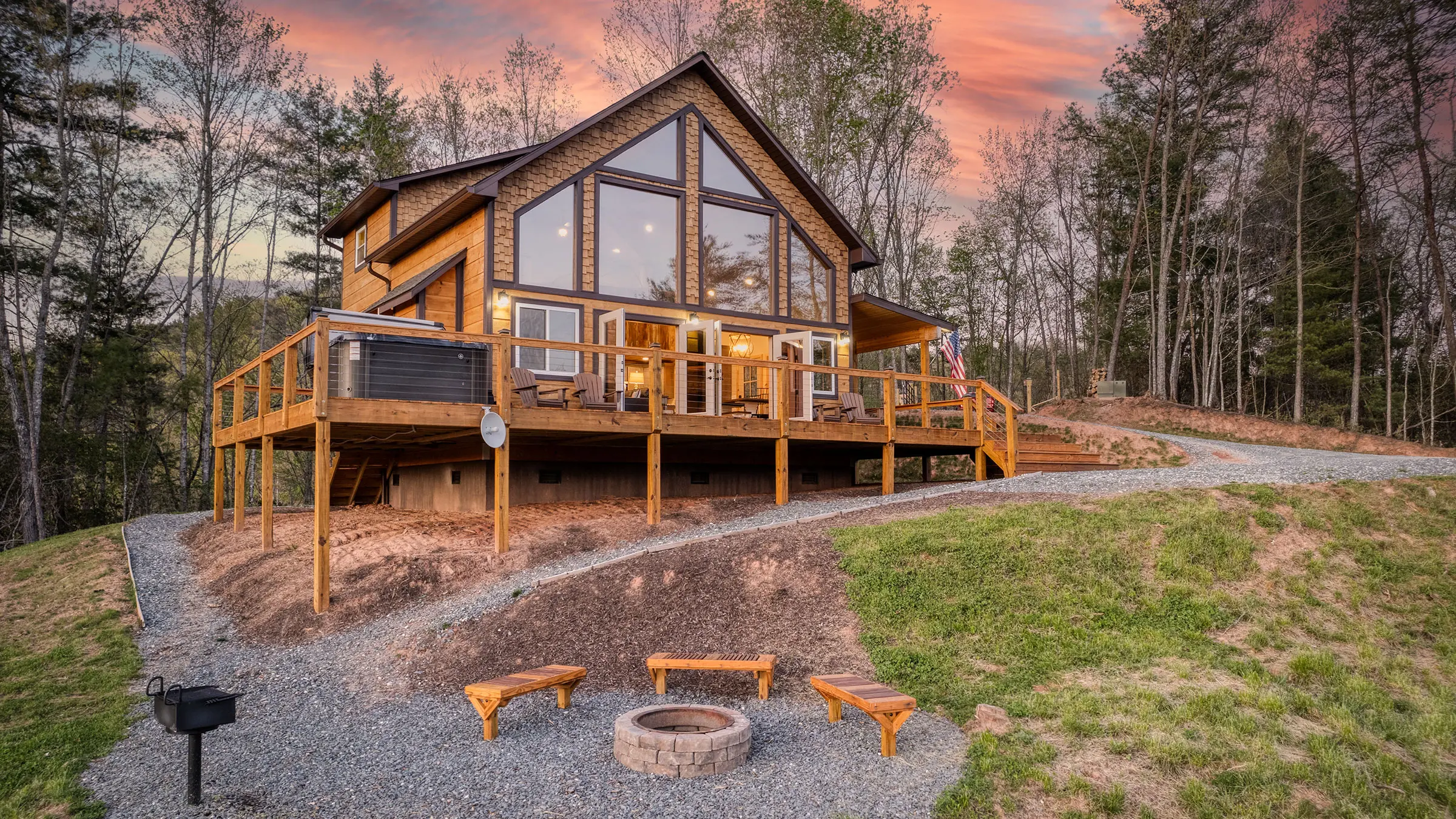
- Asheville and mountain STR: roughly $2,500–$5,500/year, plus a separate flood policy where exposed
- Wilmington and near-coast STR: roughly $4,000–$8,000/year
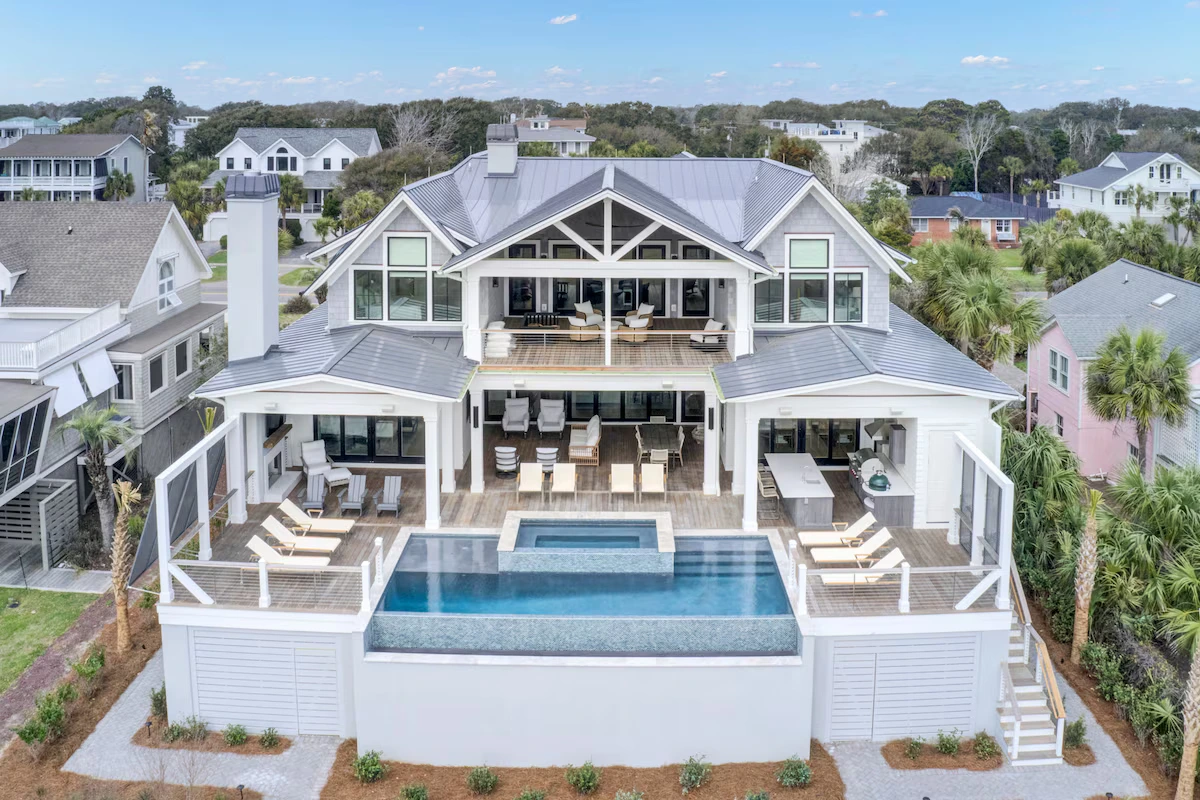
- Outer Banks beach house: frequently $6,000–$15,000+/year, including Beach Plan wind and a separate flood policy
- High-value oceanfront property: often $15,000+/year
These are program ranges, and on the Outer Banks the wind and flood layers can each cost as much as the rest of the policy combined. We don’t quote off a calculator — North Carolina placements run the property’s location, peril mix, construction, and operating model through the specialty carrier panel.
Scenario: $900K Outer Banks Beach House in Corolla
We recently helped a host with a $900K, 6-bedroom beach house in Corolla (Currituck County, on the northern Outer Banks) — 14-guest capacity, a private pool and hot tub, a short walk from the ocean. The property earns roughly $135K/year on Airbnb and VRBO, almost all of it in a concentrated summer season. The owner had it on a standard homeowners policy held over from before the home was listed, with a flat wind deductible and no coverage for the commercial rental use at all.
We rebuilt the program. Wind and hail went onto the North Carolina Beach Plan — the residual market that increasingly carries Outer Banks wind when standard carriers won’t — with a named-storm deductible structured as a percentage of dwelling value, real five-figure out-of-pocket exposure per hurricane. General liability, the dwelling, loss of rents, and contents went onto a specialty STR program, and we wrote flood separately. The all-in annual cost landed near $10,400 across the layers — well above the old homeowners policy, but coverage that actually responds to a barrier-island STR. The summer-concentrated income made the loss-of-rents layer, with an extended period of restoration, the piece we sized most carefully.
Cost by Coverage Type in North Carolina
A North Carolina STR program is built from several coverage lines, and on the coast those lines may sit on more than one policy.
General Liability
General liability covers third-party bodily injury and property damage from guest stays — typically $1M each occurrence / $2M aggregate. Pools, hot tubs, beach and water access, and large guest capacity drive the rate. See general liability for short-term rentals.
Property / Dwelling
The dwelling line covers the structure. Inland it is usually a standard dwelling form; on the coast it is often a specialty STR form with wind carved out to the Beach Plan. Replacement-cost accuracy matters — coastal rebuild costs are high. See property and dwelling coverage.
Wind — the Beach Plan
On the Outer Banks and other beach areas, wind and hail frequently come from the North Carolina Beach Plan rather than the standard market. This is the line carrying the percentage named-storm deductible, and its cost is a major share of a coastal program.
Flood
Flood is excluded from every property policy and written separately through the NFIP or a private market. Essential on the coast — and, after Helene, a real consideration for western mountain property too. See flood insurance.
Loss of Rents
Loss of rents replaces rental income while a covered loss makes the property unrentable. Outer Banks income is concentrated in summer; a hurricane that knocks the property out during peak season is a large loss. An extended period of restoration is worth pricing. See loss of rents coverage.
Umbrella / Excess
An umbrella stacks higher limits over primary GL — advisable for properties with pools and large guest capacity, and usually one of the most cost-efficient lines. See umbrella and excess liability.
Cost by Major North Carolina Market
North Carolina STR pricing varies by market more than any single statewide number can show.
Outer Banks
The barrier islands — Corolla, Duck, Nags Head, Hatteras. The highest-priced North Carolina market: hurricane wind, often through the Beach Plan, plus coastal flood. The wind and flood layers dominate the premium.
Asheville and the Mountains
A high-demand mountain market constrained by some of the strictest STR regulation in the country. Property pricing is moderate; post-Helene, flood is the line no mountain host should skip.
Wilmington
Coastal-but-mainland STR with hurricane exposure and steady tourism. Prices below the Outer Banks but above inland — wind and flood still matter.
Raleigh-Durham
Triangle urban STR — low catastrophe exposure, straightforward underwriting, prices toward the bottom of the range.
Charlotte
Inland metro STR with steady business and event demand. Moderate pricing; hail is the main weather variable to confirm.
For the full regulatory and peril picture, see our North Carolina short-term rental insurance page.
The Most Common North Carolina STR Coverage Gap We See
North Carolina has two common coverage gaps, one for each of its two markets.
On the coast, the gap is an Outer Banks beach house insured like an inland home. A host buys a barrier-island property, carries over a standard homeowners policy with a flat dollar wind deductible, skips flood, and lists it on Airbnb and VRBO. None of that holds up against a hurricane. Standard carriers increasingly won’t write the wind at all; the flat deductible isn’t how coastal wind is structured; flood — including storm surge — is excluded entirely. When a storm comes, the host discovers the policy was never built for a barrier island.
Inland, the gap is a mountain property with no flood coverage. For years, western North Carolina mountain hosts treated flood as a coastal problem. Hurricane Helene’s 2024 flooding ended that assumption — properties far from any shoreline took catastrophic, uninsured flood losses. In our experience, the mountain flood gap is now the single most important conversation to have with an Asheville-area host: flood is a separate policy, and the mountains are not exempt.
Both gaps share the underlying fix: a program built around where the property actually sits, with wind and flood treated as the deliberate, separately-placed layers they are.
How to Lower Your North Carolina STR Insurance Costs
North Carolina premium responds to several levers — and on the coast, to a few that don’t exist inland:
- Choose the wind deductible deliberately. A higher percentage named-storm deductible lowers premium; size it to what you could actually absorb after a hurricane.
- Document wind mitigation. A newer roof, hurricane straps, impact-rated openings, and other mitigation features can improve both pricing and insurability on coastal property.
- Right-size the dwelling limit. Insure to replacement cost — and on the coast, every extra dollar of limit also costs wind premium.
- Bundle the program with one carrier. GL, dwelling, loss of rents, and contents written together usually price better than scattered placements, though Beach Plan wind and flood are separate by design.
- Keep flood in force. The cheapest flood mistake is not having a policy at all — true on the Outer Banks, and now true in the mountains.
- Don’t drop coverage to chase a lower premium. Skipping flood or thinning wind limits isn’t saving money — it relocates the loss to claim time.
When You Should Get North Carolina Quotes Restructured
Re-shop or restructure your North Carolina STR coverage when any of these is true:
- Your coastal property still carries a flat wind deductible from a pre-listing homeowners policy. Coastal wind is structured differently — and may need to move to the Beach Plan.
- You have no separate flood policy and the property is on the coast or in the western mountains. That’s the gap to close first.
- You bought the policy before listing the property as an STR. A held-over homeowners policy doesn’t contemplate transient guests.
- You added a pool, hot tub, or guest capacity. The GL and umbrella exposure changed.
- It’s been more than a year since anyone reviewed the program. North Carolina coastal pricing and city ordinances both move.
If any of those apply, submit a quote and we’ll restructure the program around the property’s real North Carolina geography. The Outer Banks wind picture parallels the named-storm market in our Florida STR cost guide, and the western mountains share cost drivers with the cabin markets in our Georgia STR cost guide.
Frequently Asked Questions
How much does short-term rental insurance cost in North Carolina?
Most North Carolina STR properties run roughly $2,000–$15,000+ per year for a full program of general liability, dwelling, loss of rents, and contents. Inland urban listings in Raleigh-Durham and Charlotte sit at the low end; Outer Banks beach houses sit at the high end because of hurricane wind and coastal flood. North Carolina has one of the widest STR cost spreads of any state — it is really two markets, a coastal one and an inland one, and premium tracks which one the property sits in.
Why is North Carolina STR insurance more expensive on the coast than inland?
The North Carolina coast — the Outer Banks especially — carries hurricane wind and coastal flood exposure that inland markets simply don’t. Standard carriers have pulled back from writing wind on the barrier islands, so coastal wind increasingly moves to the North Carolina Beach Plan, the state’s residual wind market, with named-storm deductibles set as a percentage of dwelling value. Inland STR in the Triangle or Charlotte is covered on standard property forms at a fraction of the cost.
What is the North Carolina Beach Plan and does my STR need it?
The North Carolina Beach Plan, administered by the North Carolina Insurance Underwriting Association, is the state’s residual market for wind and hail coverage in the designated beach areas — the barrier islands and beach townships where standard carriers often won’t write wind. If your STR is on the Outer Banks or another beach-area property, the Beach Plan may be the wind layer underneath the rest of the program. An inland North Carolina STR generally does not need it.
Does North Carolina require special STR licensing or insurance?
North Carolina does not impose a single statewide STR insurance mandate, but cities and counties regulate short-term rentals locally, and the rules vary sharply. Asheville is among the most restrictive in the country — whole-home short-term rentals are largely barred in residential zones, with narrow exceptions. Outer Banks and coastal jurisdictions are far more permissive. The local permit classifies the property as a commercial lodging use, which standard homeowners policies exclude.
What’s the most common North Carolina STR coverage gap?
On the coast, the most common gap is a beach house insured on a standard homeowners policy with a flat wind deductible and no flood policy — a structure that can’t respond properly to a hurricane. Inland, after Hurricane Helene’s catastrophic 2024 flooding in the western mountains, the gap is a mountain property with no flood coverage. Both are fixed by matching the program to the property’s real geography: coastal wind and flood written deliberately, mountain flood never assumed away.
Are Airbnb’s AirCover and VRBO’s host protection enough for North Carolina properties?
No. Airbnb’s AirCover and VRBO’s host liability program are supplemental — they are not a substitute for a property’s own insurance policy, and they exclude major North Carolina exposures including hurricane wind damage to the structure, flood, and loss of rents during a coastal evacuation or closure. They also do not address Beach Plan wind placement. A North Carolina STR needs a dedicated policy that responds where the platform programs end.
How fast can STR Guard quote North Carolina short-term rental insurance?
We typically return North Carolina STR quote requests within 1–2 hours during business hours. Outer Banks placements that require Beach Plan wind plus a separate flood policy can take a little longer to assemble, but you will hear back the same business day. Submit the property details through the quote form and we structure a program from carriers actively writing North Carolina short-term rental coverage.
The Bottom Line on North Carolina STR Insurance Cost
North Carolina is two STR insurance markets in one state. Inland — the Triangle, Charlotte — premium is moderate and the underwriting is straightforward. On the coast, the Outer Banks especially, the program is an assembled one: Beach Plan wind, a separate flood policy, and a specialty STR dwelling form, with named-storm deductibles that carry real five-figure out-of-pocket exposure. And after Hurricane Helene, no western North Carolina mountain property should be insured as if flood can’t reach it. The hosts who match the program to the property’s real geography get coverage that responds.
If you’re shopping North Carolina STR coverage, submit a quote or call 317-942-0549. We respond in 1–2 hours during business hours and place coverage from 17+ carriers writing North Carolina short-term rental property — from an Outer Banks beach house to an Asheville-area mountain cabin.