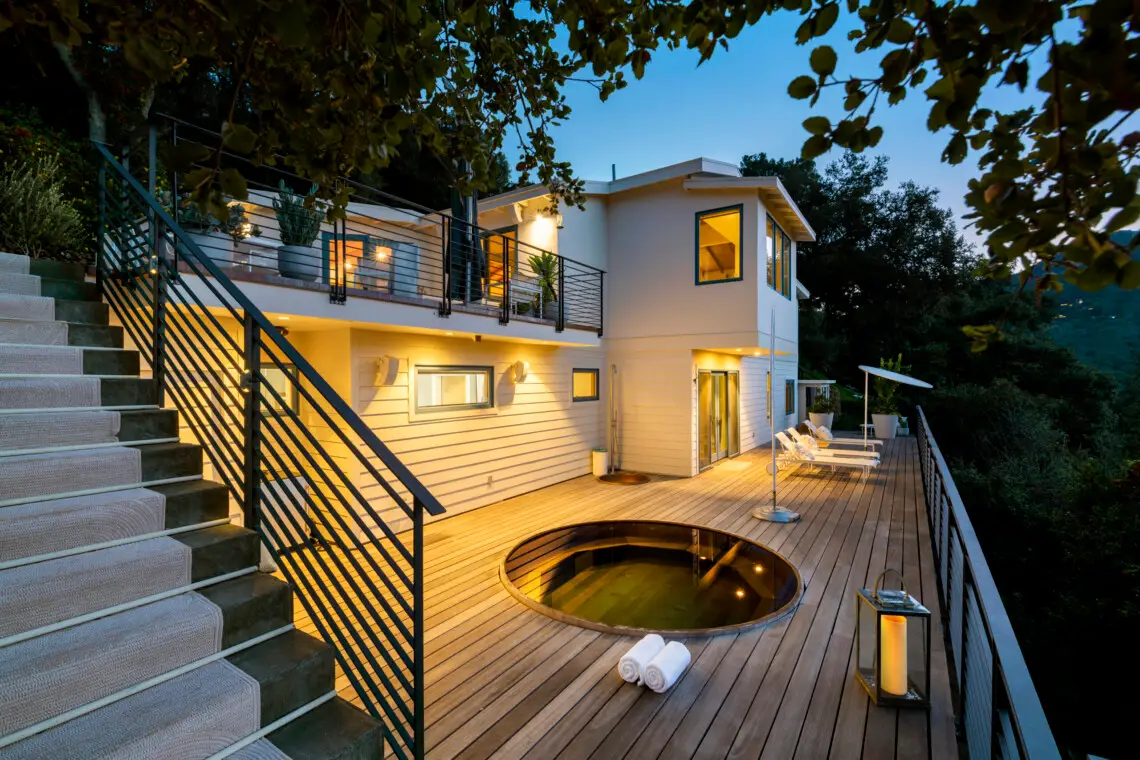
Short-term rental insurance in California runs roughly $3,000–$15,000+ per year, with wildfire-zone properties paying 2–4x more than low-risk urban listings. Three California-specific factors drive that spread: FAIR Plan placement for fire-zone dwellings, the Difference in Conditions (DIC) policy that layers liability and non-fire perils above the FAIR Plan, and the earthquake coverage that sits entirely outside the property policy. This guide breaks down the real numbers.
The California-Specific Cost Drivers Other Guides Miss
Most STR insurance cost guides treat California as a high-cost state and stop there. That misses how California property coverage is actually assembled. The national cost guide sets out the pieces common to every state; California is where they stack highest.
The first driver is the California FAIR Plan. The California FAIR Plan is the state’s insurer of last resort — it writes basic dwelling fire coverage on property the standard admitted market won’t take. As admitted carriers have pulled back from California’s Wildland-Urban Interface (WUI), a growing share of mountain, foothill, and Wine Country STR properties can only get fire coverage through the FAIR Plan. The FAIR Plan is not a full policy: it covers fire and a short list of related perils, and nothing else.
The second driver is the Difference in Conditions (DIC) policy. Because the FAIR Plan excludes liability, water damage, theft, and most non-fire perils, a fire-zone STR usually needs a DIC policy stacked on top to fill those gaps. In our experience, the DIC layer is where most California fire-zone hosts either get coverage right or leave a hole — the FAIR Plan and the DIC have to be structured so they coordinate, with no peril falling between them.
The third driver is market structure and regulation. California’s admitted property market is rate-regulated under Proposition 103, and carriers facing wildfire losses have responded by reducing appetite and non-renewing exposed property. Surplus lines markets fill some of the gap. The result: a California STR quote is often an assembled program — FAIR Plan plus DIC, or a surplus lines dwelling form — rather than a single admitted policy. And earthquake sits outside all of it: excluded from every property form and from the FAIR Plan, written separately through the California Earthquake Authority or a private earthquake market. The California Department of Insurance oversees the regulated side of this landscape.
Real Cost Ranges We See in California
In our experience placing California STR coverage, annual premium for a full program — general liability, dwelling, loss of rents, and contents — typically falls in these ranges:
- Low-fire-risk urban STR (Los Angeles flats, San Francisco, San Diego urban core): roughly $3,000–$6,000/year
- Suburban or foothill STR with moderate fire exposure: roughly $5,000–$10,000/year
- Wildfire-zone mountain, foothill, or Wine Country STR (FAIR Plan + DIC territory): roughly $9,000–$20,000+/year
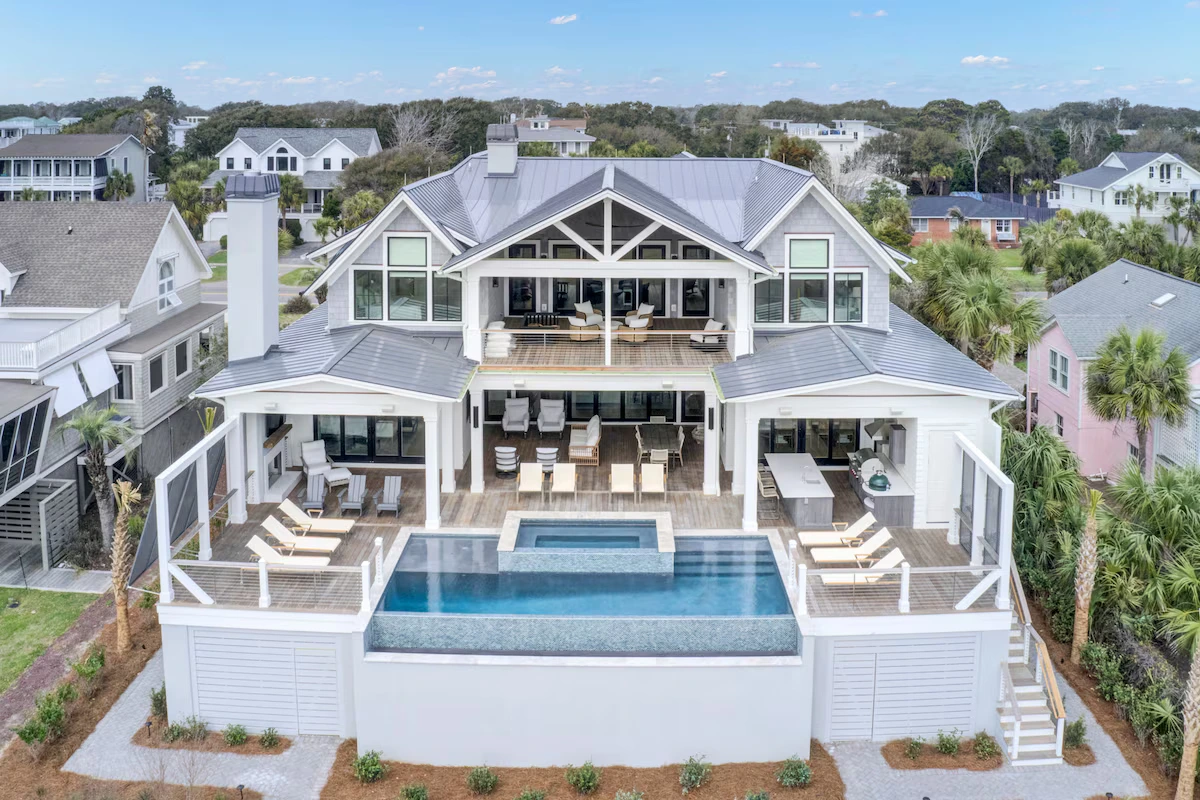
- High-value coastal or mountain property (large homes, multiple amenities, high replacement cost): frequently $20,000+/year
These are program ranges. Earthquake, where the host elects to carry it, is a separate line on top. Wildfire-zone properties also carry a wildfire deductible — often a percentage of dwelling value on the fire-covering policy — that operates much like the named-storm deductible on a coastal policy: real out-of-pocket exposure that doesn’t show up in the annual premium.
We don’t quote off a calculator. California placements run the property’s fire-hazard zone, defensible space, construction features, and operating model through the markets actually writing California STR, and price from real responses.
Scenario: $1.5M Mountain Cabin in Big Bear
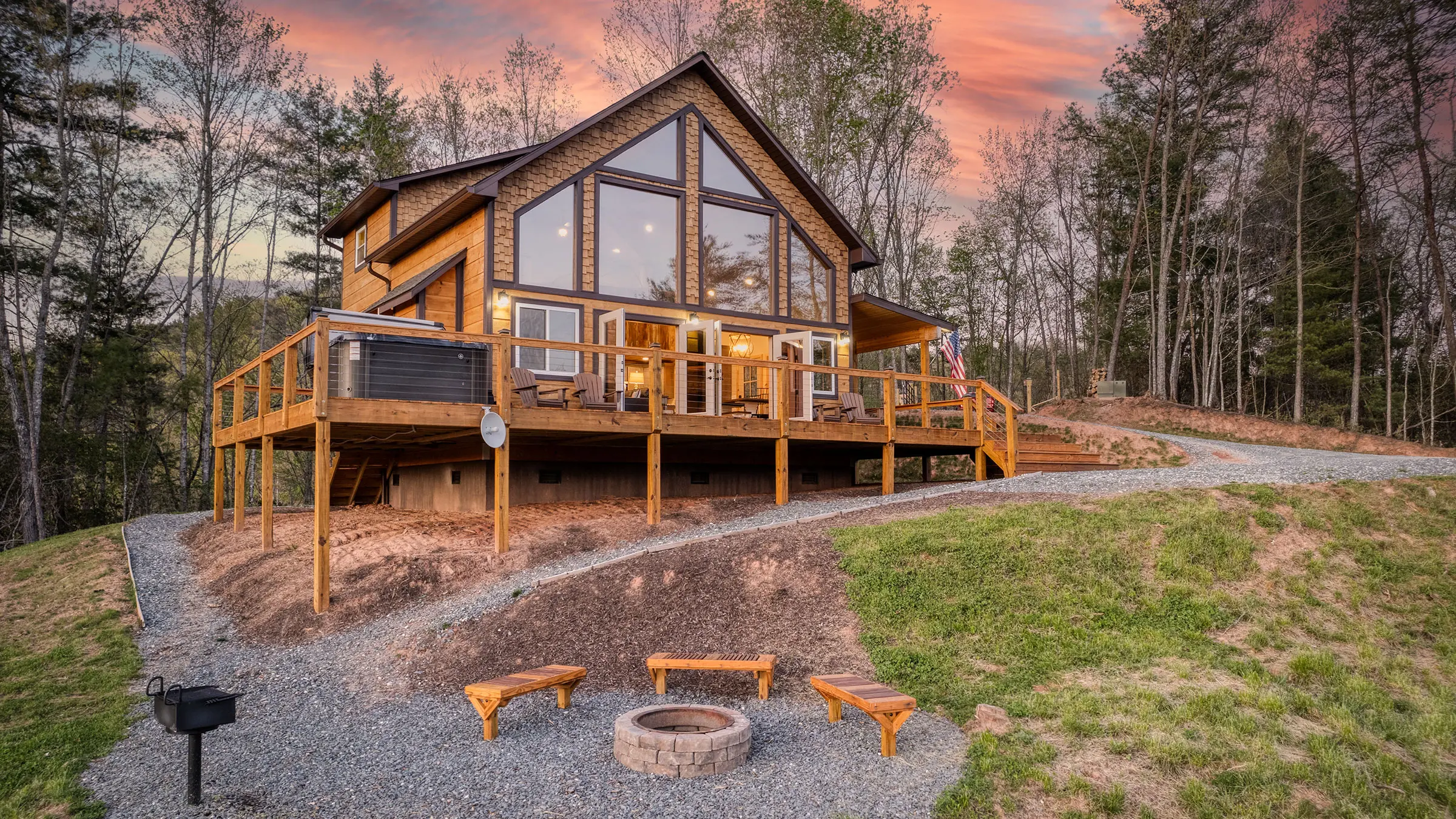
We recently helped a host with a $1.5M, 4-bedroom cabin in Big Bear (San Bernardino County) — 10-guest capacity, hot tub, in a mapped high fire-hazard zone. The property earns roughly $110K/year on Airbnb and VRBO. Their admitted homeowners carrier non-renewed after a regional fire season, and no admitted carrier would re-quote the property as a short-term rental.
We placed it as an assembled program: a California FAIR Plan policy for the dwelling fire coverage, and a Difference in Conditions policy layered on top for general liability, water damage, theft, and loss of rents. The FAIR Plan carried a wildfire deductible structured as a percentage of dwelling value. Combined annual premium across the FAIR Plan and DIC came to roughly $14,800 — well above a pre-wildfire-era homeowners policy, but coverage that actually responds, with the liability layer the FAIR Plan alone would never have provided. Earthquake was quoted separately and left to the host’s decision.
Cost by Coverage Type in California
A California STR program is built from several coverage lines. In fire-zone California, those lines may sit on more than one policy.
General Liability
General liability covers third-party bodily injury and property damage from guest stays. Typical limits are $1M each occurrence / $2M aggregate. On a fire-zone property placed through the FAIR Plan, GL does not come from the FAIR Plan — it comes from the DIC policy or a separate liability placement. See general liability for short-term rentals for how limits get structured for amenity-heavy properties.
Property / Dwelling
The dwelling line covers the structure. In low-risk areas it may be a standard admitted or surplus lines dwelling form; in fire zones it is frequently the FAIR Plan. This is the line carrying the wildfire deductible. Replacement-cost accuracy matters — California rebuild costs are high, and underinsuring the dwelling is a common, expensive error. See property and dwelling coverage.
Loss of Rents
Loss of rents replaces rental income while a covered loss makes the property unrentable. In California this line also matters for evacuation and utility shutoff — a property under an evacuation order or a Public Safety Power Shutoff may be unrentable without any physical damage. Confirm how the policy treats civil-authority and utility-interruption closures. See loss of rents coverage.
Wildfire — FAIR Plan + DIC
Wildfire isn’t a separate “policy” so much as a coverage structure. In fire-zone California, fire coverage commonly comes from the FAIR Plan and everything else from a DIC policy. The combined cost is the real number — and the two have to be structured to coordinate. The Insurance Information Institute’s wildfire facts document why California carriers price fire the way they do.
Earthquake
Earthquake is excluded from every California property form and from the FAIR Plan. It is a separate policy. Whether a California STR carries earthquake is a host decision; if elected, budget it as its own line.
Umbrella / Excess
An umbrella stacks higher limits over primary GL — strongly advisable for California properties with pools, hot tubs, or large guest capacity, and typically one of the most cost-efficient lines in the program. See umbrella and excess liability.
Cost by Major California Market
California is not one STR market. Premium for the same dwelling value swings widely by fire-hazard zone and region.
Los Angeles Metro
Urban LA listings in low-fire-risk flats price toward the bottom of the range; properties in the Santa Monica Mountains, the foothills, and other WUI-mapped areas price like fire-zone property. Two listings a few miles apart can quote very differently.
San Francisco Bay Area
Dense urban Bay Area listings carry low fire exposure and price accordingly; peninsula and East Bay hillside properties carry WUI exposure. Earthquake is the dominant secondary conversation here.
San Diego
Coastal San Diego urban STR prices toward the lower-to-middle range; inland San Diego County backcountry properties carry real wildfire exposure.
Lake Tahoe (California Side)
A concentrated mountain STR market with significant WUI exposure and a ski-and-summer operating cycle. Many Tahoe placements run FAIR Plan + DIC.
Big Bear and the Mountains
Big Bear, Idyllwild, the San Bernardino and San Gabriel mountain communities — concentrated wildfire-zone cabin STR. Expect FAIR Plan + DIC placement and the upper end of the range, as the scenario above shows.
Wine Country
Napa, Sonoma, and the surrounding counties — high-value STR property with severe wildfire exposure after multiple major fire seasons. Among the most challenging California STR placements.
Palm Springs and the Desert
Lower wildfire exposure than the mountains, but extreme-heat HVAC stress and concentrated pool-amenity liability shape pricing. Desert STR often prices in the middle of the California range.
For the full regulatory and peril picture, see our California short-term rental insurance page.
The Most Common California STR Coverage Gap We See
The most common — and most dangerous — California STR coverage gap is a hole between the FAIR Plan and the DIC layer.
Here’s how it happens. A host with a fire-zone property gets a FAIR Plan policy for the dwelling, assumes that’s “insurance,” and either skips the DIC layer or buys one that doesn’t line up. The FAIR Plan pays for fire damage to the structure — and nothing else. There’s no general liability. There’s no water-damage coverage for a burst pipe. There’s no theft coverage, no loss of rents. A guest injury claim, a pipe burst, a break-in — none of those are covered, because the FAIR Plan was never designed to cover them and no DIC policy was structured to fill the gap.
In our experience this is the failure mode behind most “I had FAIR Plan coverage and they still didn’t pay” stories. The FAIR Plan did exactly what it’s built to do. The missing piece was the DIC layer — properly structured so liability, water, theft, and loss of rents are all covered, with no peril falling between the two policies.
The second-most-common gap is the same one that plagues every state: undisclosed commercial use. A property insured on a standard homeowners policy and then listed on Airbnb or VRBO is operating outside what that policy was built for. When a claim reveals the commercial use, the claim is denied. The fix is a dwelling form — or a FAIR Plan + DIC program — placed with full knowledge that the property is a short-term rental.
How to Lower Your California STR Insurance Costs
California STR premium is high, but several levers genuinely move it:
- Defensible space and home hardening. Documented defensible space, ember-resistant vents, a Class A roof, and other wildfire-mitigation features can improve both pricing and insurability. In fire-zone California, mitigation is increasingly the difference between a placement and a decline.
- Right-size the dwelling limit. Insure to replacement cost — California rebuild costs are high, but paying premium on a number above the structure’s actual replacement cost is wasted money. Land doesn’t burn.
- Bundle the DIC and liability where possible. A DIC program that combines liability, water, theft, and loss of rents in one placement often prices better than scattered separate policies.
- Accept a higher wildfire deductible. As with coastal wind deductibles, moving to a higher percentage wildfire deductible lowers premium — at the cost of real out-of-pocket exposure if there’s a fire.
- Shop the markets that actually write California STR. A generic quote engine returns declines or inflated rates from carriers that don’t want California fire-zone risk. The markets actively writing it — including the FAIR Plan and the DIC carriers — price to cover the business.
- Don’t skip the DIC layer to save money. A FAIR Plan policy with no DIC isn’t cheaper insurance — it’s a dwelling-fire policy with no liability, and that gap surfaces at claim time.
When You Should Get California Quotes Restructured
Re-shop or restructure your California STR coverage when any of these is true:
- Your carrier non-renewed you — extremely common in fire-zone California, and the trigger to place the property correctly as a FAIR Plan + DIC program or a surplus lines STR form.
- You have a FAIR Plan policy but aren’t sure what else you have. If you can’t say where your liability coverage comes from, that’s the gap to close first.
- You bought the policy before listing the property as an STR. A pre-listing personal-lines policy doesn’t contemplate transient commercial occupancy.
- You added a pool, hot tub, or other amenity — the GL and umbrella exposure changed.
- Your fire-hazard zone was re-mapped. California fire-hazard mapping changes; a re-map can change both pricing and which markets will write the property.
- You’re carrying earthquake exposure you’ve never priced. Even if you choose not to buy earthquake, you should make that an informed decision, not a default.
If any of those apply, submit a quote and we’ll restructure the program around how the property actually operates. California’s fire-driven market is a different animal from the storm-driven coastal markets — compare it with our Texas STR cost guide and Florida STR cost guide to see how the cost drivers differ.
Frequently Asked Questions
How much does short-term rental insurance cost in California?
Most California STR properties run roughly $3,000–$15,000+ per year for a full program of general liability, dwelling, loss of rents, and contents. Low-fire-risk urban listings in Los Angeles, the Bay Area, and San Diego sit at the low end; wildfire-zone mountain and Wine Country properties sit at the high end. Earthquake coverage is a separate policy on top, and fire-zone dwellings often require a FAIR Plan policy paired with a Difference in Conditions policy rather than a single admitted-market form.
Why is California STR insurance more expensive than other states?
California combines severe wildfire exposure across its Wildland-Urban Interface with an admitted insurance market that has sharply reduced appetite for fire-zone property. Many mountain, foothill, and Wine Country STR properties can no longer be placed with a standard admitted carrier at all — they move to the FAIR Plan for fire coverage and to surplus lines or a Difference in Conditions policy for everything else. The premium reflects genuine catastrophe exposure plus the cost of assembling coverage from multiple markets.
What is the California FAIR Plan and do I need it for my STR?
The California FAIR Plan is the state’s insurer of last resort for property that cannot find coverage in the standard admitted market. It writes basic fire coverage on the dwelling but does not provide liability, water damage, theft, or many other perils. STR properties in higher-risk wildfire zones frequently need a FAIR Plan dwelling-fire policy paired with a Difference in Conditions (DIC) policy that fills the coverage the FAIR Plan leaves out. Whether you need it depends on the property’s fire-hazard zone and whether admitted carriers will write it.
Do I need earthquake insurance for a California short-term rental?
Earthquake is excluded from every standard California property policy and from the FAIR Plan. It is a separate policy — written through the California Earthquake Authority or a private earthquake market. Earthquake coverage is not legally required, but a California STR with no earthquake policy carries that exposure entirely uninsured. Whether to buy it is a risk decision; budget it as its own line if you do.
Does California require special STR licensing or insurance?
California does not impose a single statewide STR insurance mandate, but most cities and counties regulate short-term rentals through local ordinances — registration, permits, occupancy caps, and in many cases primary-residence rules. Los Angeles, San Francisco, San Diego, and most coastal and mountain jurisdictions each maintain distinct frameworks. The local permit classifies the property as a commercial use, which standard homeowners policies exclude.
Are Airbnb’s AirCover and VRBO’s host protection enough for California properties?
No. Airbnb’s AirCover and VRBO’s host liability program are supplemental — they are not a substitute for a property’s own insurance policy, and they exclude major California exposures including wildfire damage to the structure, earthquake, and loss of rents during an evacuation or utility-shutoff closure. They also generally do not cover the dwelling itself. A California STR needs a dedicated policy that responds where the platform programs end.
How fast can STR Guard quote California short-term rental insurance?
We typically return California STR quote requests within 1–2 hours during business hours. Wildfire-zone placements that require a FAIR Plan policy plus a Difference in Conditions layer can take longer to assemble, but you will hear back the same business day. Submit the property details through the quote form and we structure a program from carriers and markets actively writing California short-term rental coverage.
The Bottom Line on California STR Insurance Cost
California STR insurance pricing is driven by three factors most cost guides miss: the FAIR Plan placement that fire-zone dwellings increasingly require, the Difference in Conditions policy that layers liability and non-fire perils above the FAIR Plan, and the earthquake coverage that sits entirely outside the property policy. A wildfire-zone California STR is rarely a single-policy purchase — it is an assembled program, and the hosts who treat it as a commodity end up with gaps between the layers.
If you’re shopping California STR coverage, submit a quote or call 317-942-0549. We respond in 1–2 hours during business hours and place coverage from 17+ carriers and markets actively writing California short-term rental property — from an LA-area single-family listing to a Big Bear or Tahoe mountain cabin.