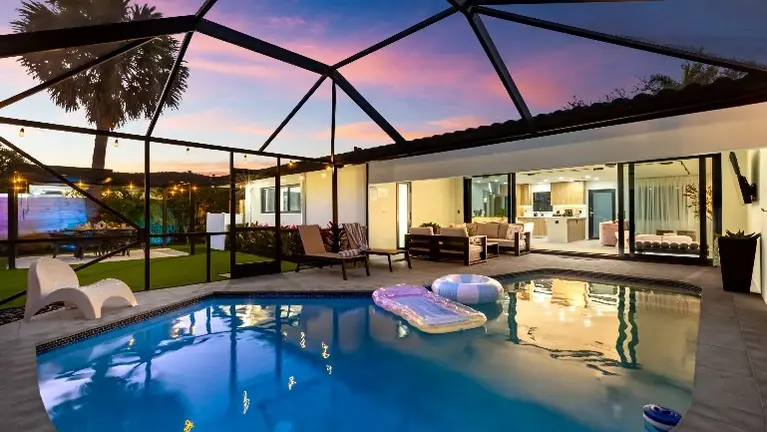
Short-term rental insurance in Florida runs roughly $2,000–$9,000+ per year for most single-family STR properties, and named-storm wind deductibles add a separate 2%–10% of dwelling value in out-of-pocket exposure per hurricane claim. Three Florida-specific factors drive that range: the named-storm wind deductible structure, the surplus lines placement most coastal properties require, and the state’s vacation-rental regulatory framework. This guide breaks down the real numbers.
The Florida-Specific Cost Drivers Other Guides Miss
Most STR insurance cost guides treat Florida like any other state — a base premium with a regional adjustment. That misses how Florida property insurance actually works. If you want the baseline that applies everywhere first, read the national guide to short-term rental insurance cost, then come back for the Florida layer.
The first driver is the named-storm wind deductible, which is structured completely differently from the all-other-perils (AOP) deductible. Your AOP deductible might be a flat $1,000 or $2,500. Your named-storm wind deductible is a percentage of dwelling value — typically 2%, 5%, or 10%. On a $600,000 dwelling, a 5% wind deductible means $30,000 out of pocket before the policy responds to hurricane damage. That number doesn’t show up in the annual premium, but it’s the single most important figure on a Florida STR policy.
The second driver is market structure. Florida’s admitted insurance market — carriers regulated for rate and form by the Florida Office of Insurance Regulation — has contracted sharply over the past several years. Many coastal STR properties can no longer be placed with admitted carriers at all. They move to surplus lines markets, which price for risk without the same rate regulation. Surplus lines placement isn’t a problem; it’s often the only realistic path to coverage on a coastal property. But it does mean premium reflects underwriting reality rather than a capped admitted rate.
The third driver is regulatory classification. Florida regulates vacation rentals as a category of public lodging under Chapter 509, Florida Statutes. A property licensed and operated as a transient public lodging establishment is a commercial use — and commercial use is precisely what standard homeowners forms exclude. The cost of doing it right is a dwelling form built for commercial habitational or transient occupancy. The cost of doing it wrong is a denied claim.
Real Cost Ranges We See in Florida
In our experience placing Florida STR coverage, annual premium for a full program — general liability, dwelling, loss of rents, and contents — typically falls in these ranges:
- Inland single-family STR (Orlando vacation corridor, central Florida): roughly $2,000–$4,000/year
- Coastal single-family STR (Panhandle, Gulf and Atlantic beaches): roughly $4,000–$8,500/year
- High-value or high-amenity coastal property (large beach houses, multiple pools/hot tubs, capacity above 10 guests): $8,500–$15,000+/year
- Florida Keys (Monroe County): typically the highest in the state — wind exposure plus limited carrier appetite pushes many placements past $10,000/year
These are program ranges, not single-line quotes. Flood is almost always a separate policy on top — see the coverage-type breakdown below. And the named-storm wind deductible sits behind all of it: a property at the low end of a premium range may still carry a 5%–10% wind deductible because that deductible is part of how the premium got to the low end.
Premium varies within every range by replacement cost, wind-mitigation construction features, claims history, distance to coast, and operating model. We don’t quote off a calculator — we take the property’s actual characteristics through the specialty carrier panel and price from real underwriter responses.
Scenario: 4-Bedroom Beach House in Destin
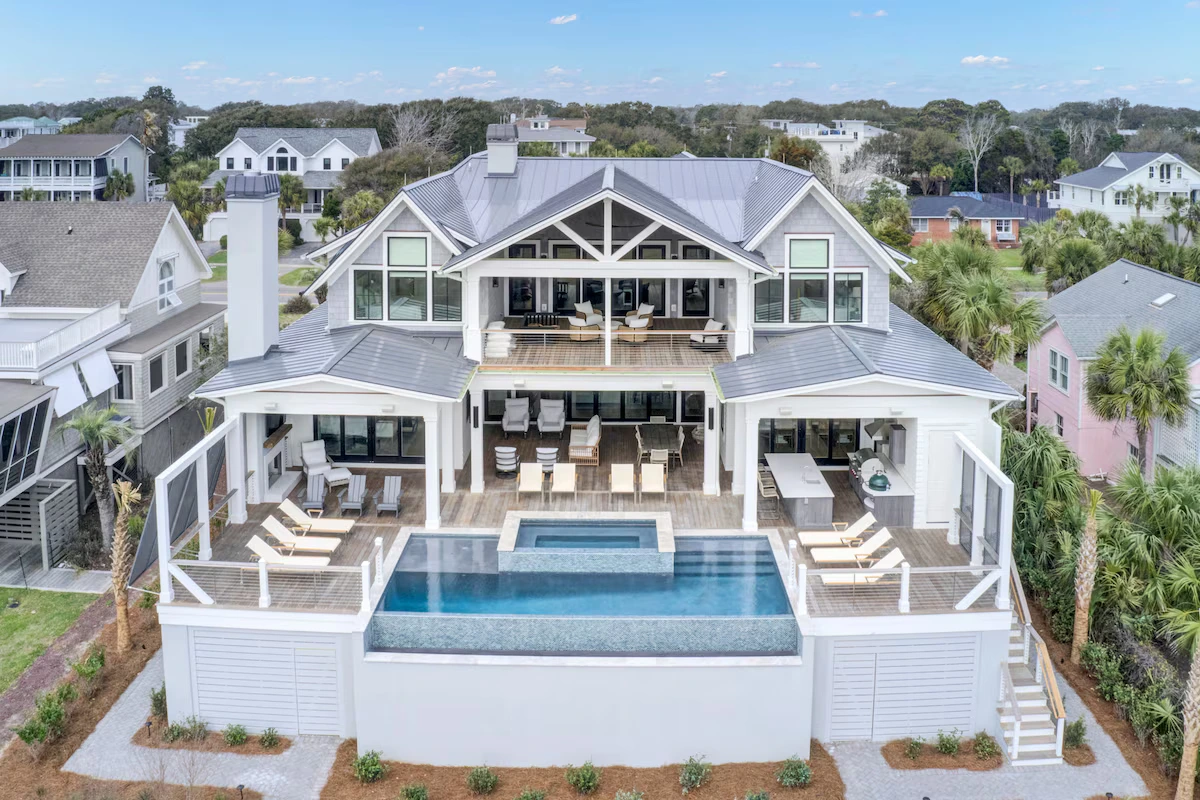
We recently helped a host with a $1.2M, 4-bedroom beach house in Destin (Walton County) — 8-guest capacity, private pool, roughly 200 yards from the Gulf. The property generates about $85K/year across VRBO and Airbnb. Their previous homeowners carrier non-renewed once the property went onto VRBO; the original agent never disclosed the commercial use, which is the most common reason Florida STR coverage fails at claim time.
We placed it with a surplus lines carrier that writes coastal Florida STR specifically. The named-storm wind deductible came in at 5% of dwelling value — about $60,000 out of pocket per hurricane claim. Annual premium across GL, dwelling, loss of rents, and contents was $5,400. Flood was a separate NFIP-plus-private layer. A lower 2% wind deductible was available but pushed the program past $7,800/year. The host kept the 5% deductible and the savings.
Cost by Coverage Type in Florida
A Florida STR program is built from several coverage lines, each priced on its own logic. Understanding the lines individually is how you tell a fair quote from an inflated one.
General Liability
General liability covers third-party bodily injury and property damage from guest stays — a guest injured on the pool deck, a slip on a wet stair, a dog bite. Typical limits are $1M each occurrence / $2M aggregate. GL is usually one of the smaller line items, but Florida amenity profiles push it up: a property with a pool and a hot tub and capacity above 8 guests is a different GL risk than a two-bedroom condo. See general liability for short-term rentals for how limits get structured.
Property / Dwelling
The dwelling line covers the structure itself, written on a DP-3 dwelling form or a commercial habitational form depending on operating model. This is where the named-storm wind deductible lives. In Florida this is often the largest line item, and it’s the line most sensitive to wind-mitigation features — a roof with hurricane straps, impact-rated openings, and a secondary water barrier prices materially better than one without. See property and dwelling coverage for the form-selection detail.
Loss of Rents
Loss of rents replaces rental income while a covered loss makes the property unrentable, capped by the period of restoration. Florida’s slow post-hurricane permitting and contractor backlog make this line genuinely important — a property out of service for an entire peak season is a large uninsured loss without it. An Extended Period of Restoration endorsement is worth pricing. See loss of rents coverage.
Flood
Flood is excluded from every standard property form and is almost always a separate policy. The National Flood Insurance Program caps at $250,000 building / $100,000 contents — see FloodSmart for the NFIP structure. On most Florida coastal STR properties, $250K doesn’t reach replacement cost, so a private excess flood layer goes on top of NFIP. Budget flood as its own line — commonly $700–$4,000+/year depending on flood zone and elevation. See flood insurance for STR properties.
Hurricane / Named-Storm Wind
Wind isn’t a separate policy in most Florida placements — it’s a covered peril on the dwelling form, but with its own percentage deductible. The premium “cost” of wind is baked into the dwelling premium; the real cost is the deductible you’ll pay if a named storm hits. Track active systems through the NOAA National Hurricane Center. Florida’s hurricane exposure is among the most concentrated in the country — the Insurance Information Institute’s hurricane facts document why.
Umbrella / Excess
An umbrella stacks higher limits over primary GL. For Florida properties with pools, hot tubs, docks, or guest capacity above 10, an umbrella is strongly advisable — and typically only $400–$1,200/year for a $1M layer. It’s one of the most cost-efficient lines in a Florida STR program. See umbrella and excess liability.
Cost by Major Florida Market
Florida is not one STR market. Premium for the same dwelling value swings widely by where the property sits relative to the coast and the named-storm corridor.
Miami-Dade
High-density beach condo and single-family STR with strict city-level registration. Coastal Miami-Dade properties carry full named-storm wind exposure; expect placement toward the upper half of the coastal range, with surplus lines common.
Orlando Vacation Corridor
The most affordable major Florida STR market. Inland Orange, Osceola, and Lake County vacation homes near the theme parks avoid the worst wind exposure — premiums commonly land in the $2,000–$4,000 band. Pools are nearly universal here, so GL and umbrella matter more than wind.
Florida Keys (Monroe County)
The most expensive STR market in the state. Named-storm wind, NFIP-zone flood, and a narrow carrier appetite combine to push many Keys placements past $10,000/year, with 10% wind deductibles common.
Panhandle / 30A
Destin, 30A, and the Northwest Florida Gulf beaches — a premium beach-house market with concentrated wind exposure and high replacement costs. Coastal Panhandle programs commonly run $4,000–$8,500+/year, as the Destin scenario above illustrates.
Tampa Bay
Mixed exposure — wind, storm surge, and inland flood across Pinellas, Hillsborough, and the bayfront. Pricing spans the full coastal range depending on whether the property is bayfront, beachfront, or a few miles inland.
Jacksonville / Northeast Florida
Atlantic coastal exposure with somewhat lower historical hurricane frequency than South Florida. Coastal Northeast Florida STR generally prices below Miami-Dade and the Keys but above the inland Orlando corridor.
For a fuller picture of the state’s regulatory and peril landscape, see our Florida short-term rental insurance page.
The Most Common Florida STR Coverage Gap We See
The single most common — and most expensive — Florida STR coverage gap is undisclosed commercial use on a personal-lines policy.
It happens like this: a host buys a Florida property, insures it on a standard homeowners policy (or a homeowners policy with a landlord endorsement), then lists it on Airbnb and VRBO. The policy was never built for transient commercial occupancy. Nothing goes wrong for a year or two. Then there’s a claim — a kitchen fire, a guest injury, hurricane damage — and the carrier’s investigation reveals the property was operating as a vacation rental. The claim is denied for material misrepresentation, and the policy is non-renewed.
In our experience this is the failure mode behind most “my insurance didn’t pay” stories from Florida hosts. The policy wasn’t underpriced — it was the wrong product. A standard homeowners form excludes the business activity that defines an STR. The fix is a dwelling form written for commercial habitational or transient occupancy from the start, placed with a carrier that knows the property is a short-term rental and priced it accordingly.
The second-most-common gap is flood treated as optional. A property outside a mapped high-risk flood zone still floods — and without a separate flood policy, the loss is uninsured. Florida flood claims are frequent and severe; the III flood insurance facts show how often non-high-risk-zone properties take flood losses.
How to Lower Your Florida STR Insurance Costs
Florida STR premium is real, but it’s not fixed. Several levers genuinely move the number:
- Wind mitigation. A current wind-mitigation inspection documenting hurricane straps, impact-rated openings, roof shape, and secondary water resistance can produce meaningful dwelling-premium credits. If your roof or openings have been upgraded, get the inspection — the credit often exceeds the inspection cost in year one.
- Accept a higher named-storm wind deductible. Moving from a 2% to a 5% wind deductible lowers premium, sometimes substantially. The Destin scenario above shows roughly a $2,400/year swing. The trade-off is real out-of-pocket exposure per hurricane claim — but for many hosts, the premium savings over years without a claim outweighs it.
- Right-size the dwelling limit. Insuring to replacement cost — not market value, not purchase price — avoids paying premium on a number larger than the structure. Land has no replacement cost.
- Bundle the program with one carrier where possible. A single carrier writing GL, dwelling, loss of rents, and contents together often prices better than four separate placements.
- Shop with carriers that actually write Florida STR. A generic quote engine pulls default rates from carriers that don’t want coastal STR risk and price to decline it. Carriers actively writing Florida short-term rental price to win the business.
- Don’t drop flood to save money. Lowering the dwelling limit below replacement cost or skipping flood isn’t saving money — it’s moving the cost to claim time and adding interest.
When You Should Get Florida Quotes Restructured
Re-shop or restructure your Florida STR coverage when any of these is true:
- Your carrier non-renewed you — common in Florida, and not a reason to panic. It’s a reason to place the property correctly with a specialty STR market.
- You bought the policy before listing the property as an STR. A pre-listing personal-lines policy almost certainly doesn’t contemplate transient occupancy.
- You added a pool, hot tub, dock, or other amenity. Amenities change the GL and umbrella exposure; the policy should be updated, not just renewed.
- Your operating model changed — part-time to full-time, single property to a small portfolio, owner-occupied to non-owner-occupied. Each change can shift the correct dwelling form.
- It’s been more than a year since anyone looked at the wind deductible. Florida wind-deductible options change; an annual check is worth the few minutes.
- You’re carrying a mystery flood gap. If you can’t say whether you have flood coverage and what it caps at, that’s the thing to fix first.
If any of those apply, submit a quote and we’ll restructure the program around how the property actually operates.
Frequently Asked Questions
How much does short-term rental insurance cost in Florida?
Most Florida single-family STR properties run roughly $2,000–$9,000+ per year for a full program of general liability, dwelling, loss of rents, and contents. Inland properties in the Orlando vacation corridor sit at the low end; coastal properties in the Panhandle, South Florida, and the Keys sit at the high end. Flood is almost always a separate policy on top, and the named-storm wind deductible adds out-of-pocket exposure of 2%–10% of dwelling value per hurricane claim.
Why is Florida STR insurance more expensive than other states?
Florida combines the most concentrated hurricane exposure in the continental U.S. with a contracted admitted insurance market, which pushes most coastal STR properties into surplus lines. Named-storm wind, storm surge, and flood all stack on the same property. The premium reflects genuine catastrophe exposure rather than an arbitrary surcharge — and the named-storm wind deductible structure means part of the "cost" is carried as out-of-pocket risk rather than premium.
Do I need flood insurance for a Florida short-term rental?
In practice, yes — flood is excluded from every standard property policy, and Florida flood losses are frequent even outside mapped high-risk zones. If your property sits in a FEMA Special Flood Hazard Area, a lender will require it; if it doesn’t, you still carry real flood exposure. NFIP coverage caps at $250,000 building, so most coastal Florida STR properties pair NFIP with a private excess flood layer to reach replacement cost.
What’s the named-storm wind deductible on a Florida STR policy?
Florida policies carry a named-storm (or hurricane) wind deductible that is a percentage of dwelling value rather than a flat dollar amount — typically 2%, 5%, or 10%. On a $600,000 dwelling, a 5% deductible means $30,000 out of pocket before the policy responds to hurricane damage. It applies separately from the standard all-other-perils deductible and is the single most important number to confirm on a Florida STR policy.
Does Florida require special STR licensing or insurance?
Florida regulates vacation rentals as public lodging under Chapter 509, Florida Statutes, and operators must hold a vacation rental license from the Department of Business and Professional Regulation. Florida does not mandate a specific STR insurance policy at the state level, but the licensing classifies the property as a commercial use — which standard homeowners policies exclude. Many cities and counties add their own registration requirements on top of the state license.
Are Airbnb’s AirCover and VRBO’s host protection enough for Florida properties?
No. Airbnb’s AirCover and VRBO’s host liability program are supplemental — they are not a substitute for a property’s own insurance policy, and they exclude major Florida exposures including named-storm wind, flood, and loss of rents during a hurricane closure. They also generally do not cover the structure itself. A Florida STR needs a dedicated policy that responds where the platform programs end.
How fast can STR Guard quote Florida short-term rental insurance?
We typically return Florida STR quote requests within 1–2 hours during business hours. Complex coastal placements involving multiple coverage lines and a flood layer can take longer, but you will hear back the same business day. Submit the property details through the quote form and we structure a program from carriers actively writing Florida short-term rental coverage.
The Bottom Line on Florida STR Insurance Cost
Florida STR insurance pricing comes down to three things most cost guides miss: the named-storm wind deductible (2%–10% of dwelling, carried as out-of-pocket risk rather than premium), the surplus lines placement most coastal properties now require, and the commercial classification that makes a standard homeowners form the wrong product. Hosts who treat STR insurance as a commodity buy a policy that won’t respond at claim time. Hosts who place the property correctly — with a carrier that knows it’s a short-term rental and priced it as one — get coverage that matches Florida’s actual exposure, often at a premium below the inflated default rate a generic quote engine returns.
If you’re shopping Florida STR coverage, submit a quote or call 317-942-0549. We respond in 1–2 hours during business hours and place coverage from 17+ carriers actively writing Florida short-term rental property — for everything from an Orlando-corridor vacation rental to a Gulf-front beach house.