Short-term rental insurance in Georgia runs roughly $2,000–$10,000+ per year — a wide range, because Georgia is three distinct STR markets. Three factors drive the spread: metro Atlanta’s STR licensing ordinance and the owner-occupancy distinction it sharpens, the North Georgia mountain cabin market’s amenity density and seasonal income, and coastal hurricane exposure from Tybee Island to the Golden Isles, with Savannah’s historic district adding rebuild cost. Here are the real numbers.
The Georgia-Specific Cost Drivers Other Guides Miss
Most STR cost guides quote one Georgia number. That ignores how differently a Blue Ridge cabin, a Savannah historic home, and a metro Atlanta bungalow underwrite. Zoom out and you get the same drivers in different mixes — the subject of what short-term rental insurance costs nationally — but Georgia splits into three markets.
The first driver is Atlanta’s STR ordinance and the owner-occupancy distinction. Atlanta requires a short-term rental license, and eligibility is tied to owner-occupancy — the framework treats an owner’s primary residence differently from non-owner-occupied property. That is also an underwriting fact: an owner-occupied STR and a non-owner-occupied STR are different risks that belong on different dwelling forms. In our experience, a meaningful share of metro Atlanta coverage problems trace back to a non-owner-occupied rental insured on a form built for an owner-occupied home — the same principle that governs Nashville’s permit-type framework.
The second driver is the North Georgia mountain cabin market. Blue Ridge (Fannin County), Helen, and the surrounding mountains are a dense seasonal cabin STR market. These properties are amenity-heavy — hot tubs, fire pits, game rooms, large guest capacity — and amenity density drives general liability cost. Their income is also highly seasonal, concentrated in the October leaf season and the summer, which makes loss-of-rents structuring a real decision rather than an afterthought. The AirDNA market data consistently ranks the Blue Ridge area among the Southeast’s stronger cabin destinations.
The third driver is coastal exposure. Tybee Island and the Golden Isles — St. Simons, Jekyll, Sea Island — sit on the Atlantic coast with hurricane wind and coastal flood exposure, and Savannah’s Historic District adds preservation-standard rebuild cost for protected structures. The Insurance Information Institute’s tornado and thunderstorm facts and the National Hurricane Center document the severe-weather picture; the Georgia Office of Insurance and Safety Fire Commissioner regulates the carriers writing coverage statewide.
Real Cost Ranges We See in Georgia
In our experience placing Georgia STR coverage, annual premium for a full program — general liability, dwelling, loss of rents, and contents — typically falls in these ranges:
- Metro Atlanta and Athens urban STR: roughly $2,000–$4,000/year
- Blue Ridge, Helen, and North Georgia mountain cabins: roughly $2,200–$5,500/year
- Savannah historic district STR: roughly $3,500–$7,500/year, with historic rebuild limits and Ordinance & Law
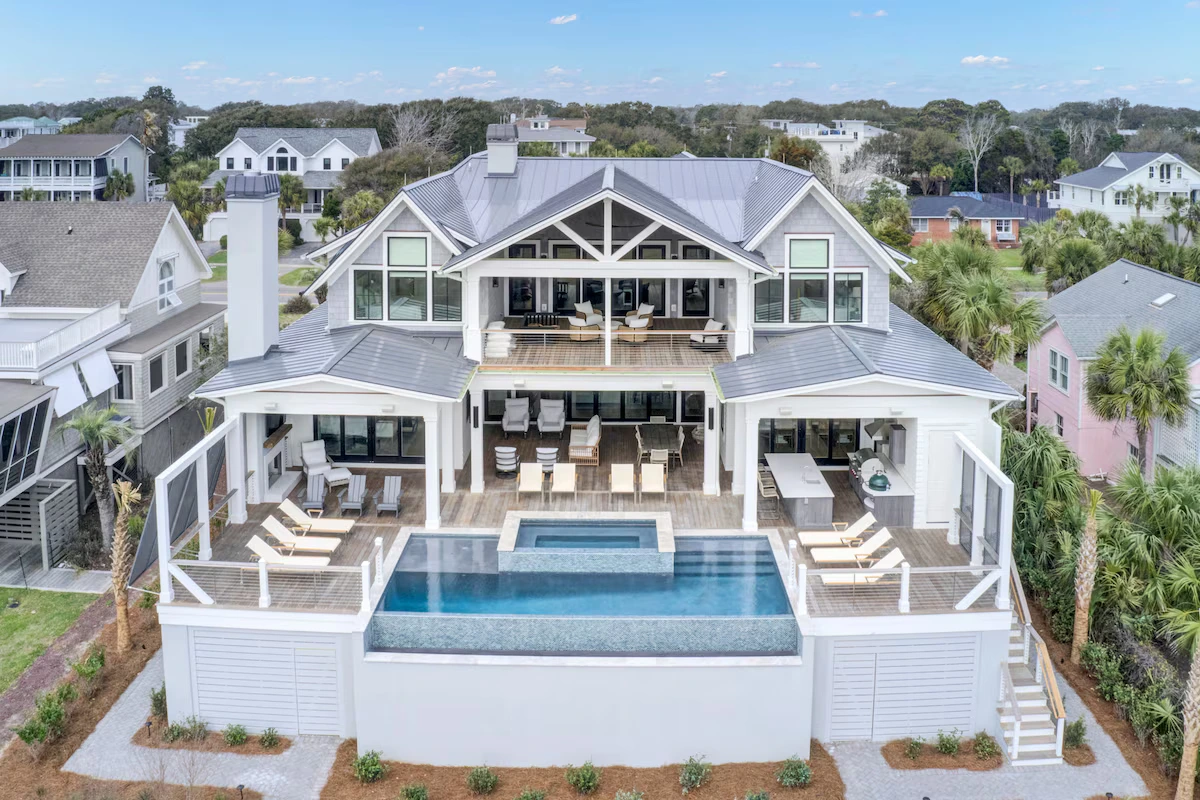
- Tybee Island and Golden Isles coastal STR: frequently $4,500–$10,000+/year, including coastal wind and a separate flood policy
- High-value coastal or large mountain estate: often $10,000+/year
These are program ranges. Inland Georgia avoids the percentage wind deductibles of the coast, but coastal properties carry them, and a separate flood policy on top. We don’t quote off a calculator — Georgia placements run the property’s location, amenity profile, operating model, and construction era through the specialty carrier panel.
Scenario: $550K Mountain Cabin in Blue Ridge
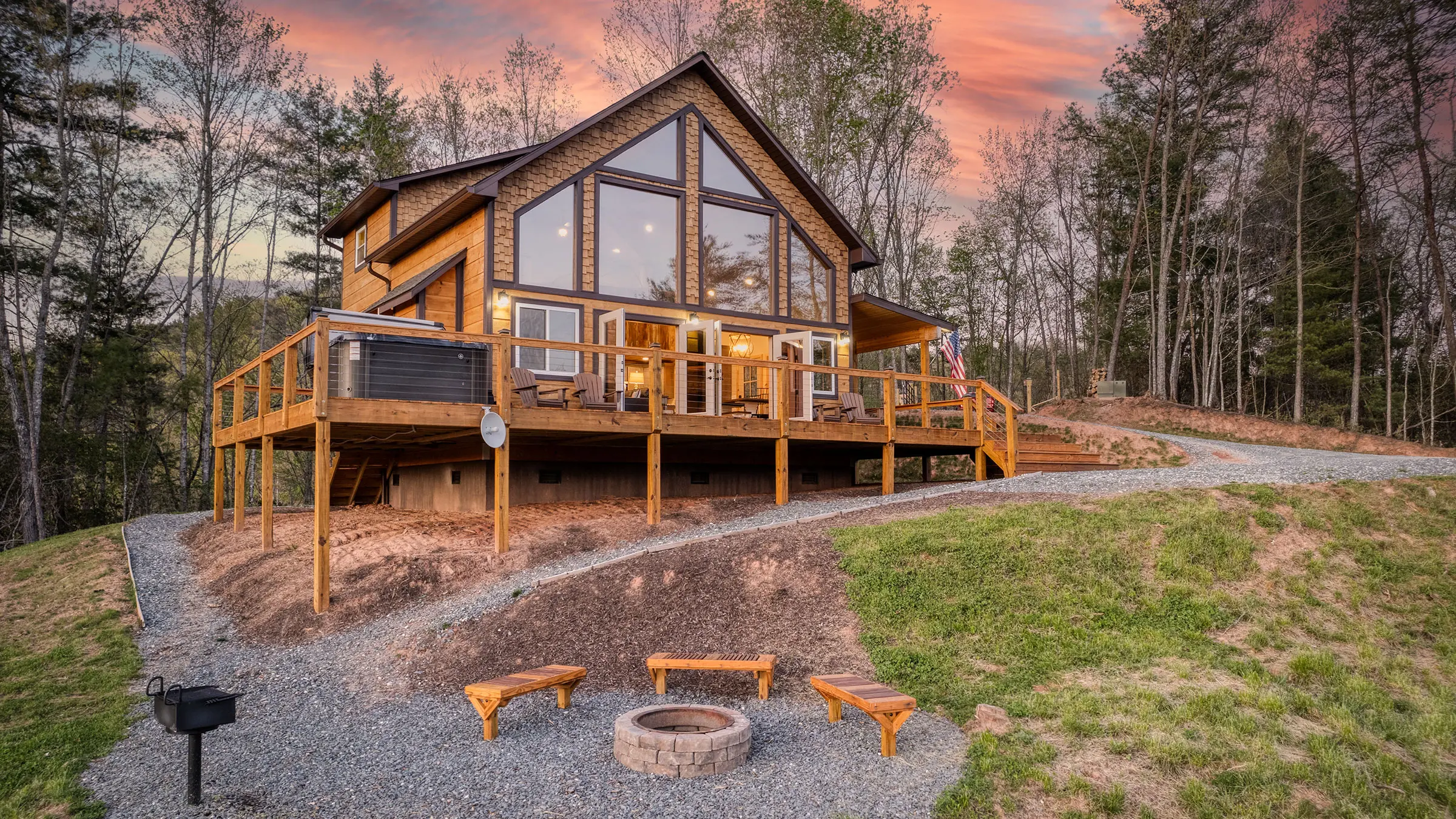
We recently helped a host with a $550K, 3-bedroom cabin in Blue Ridge (Fannin County, North Georgia) — 8-guest capacity, a hot tub, a fire pit, and long-range mountain views. The cabin earns roughly $58K/year on Airbnb and VRBO, heavily concentrated in the October leaf season and the summer months. The owner had insured it on a standard homeowners policy carried over from when the cabin was a family second home, never used for paying guests.
We placed the cabin on a dwelling form built for a non-owner-occupied short-term rental, with general liability sized for the hot-tub and fire-pit amenity profile and a loss-of-rents layer with an extended period of restoration to protect the season-concentrated income. Annual premium across GL, dwelling, loss of rents, and contents came to roughly $3,000 — modestly above the old homeowners policy, and coverage that actually contemplates a cabin hosting eight guests at a time. The seasonal income concentration, not the property value, was what shaped the loss-of-rents sizing.
Cost by Coverage Type in Georgia
A Georgia STR program is built from several coverage lines, each priced on its own logic.
General Liability
General liability covers third-party bodily injury and property damage from guest stays — typically $1M each occurrence / $2M aggregate. In the North Georgia cabin market, GL is the line most sensitive to amenities: hot tubs, fire pits, and large guest capacity push it up. See general liability for short-term rentals.
Property / Dwelling
The dwelling line covers the structure, written on a form matched to the operating model. This is where the owner-occupied versus non-owner-occupied distinction lives — and, in Savannah’s historic district, where the dwelling limit must reflect historic rebuild cost. See property and dwelling coverage.
Loss of Rents
Loss of rents replaces rental income while a covered loss makes the property unrentable. For seasonal mountain cabins, income is concentrated — a loss during leaf season is large. An extended period of restoration is worth pricing. See loss of rents coverage.
Ordinance & Law
Ordinance & Law covers the gap between rebuilding what was there and rebuilding to current code — and, in Savannah’s historic district, to preservation standards. Essential on historic property. See Ordinance & Law coverage.
Flood
Flood is excluded from every property policy and written separately through the NFIP or a private market. Essential on the coast, where storm surge is a flood peril. See flood insurance.
Umbrella / Excess
An umbrella stacks higher limits over primary GL — advisable for amenity-heavy cabins and coastal properties with large guest capacity, and usually one of the most cost-efficient lines. See umbrella and excess liability.
Cost by Major Georgia Market
Georgia STR pricing varies by market more than any single statewide number can show.
Atlanta Metro
Urban single-family and condo STR governed by the city’s licensing ordinance. Pricing is moderate; the owner-occupied versus non-owner-occupied underwriting question matters more here than the premium number.
Savannah
Historic coastal STR. Hurricane exposure plus — in the Historic District — preservation-standard rebuild cost. The dwelling limit and Ordinance & Law coverage deserve careful attention.
Tybee Island
Georgia’s barrier-island beach STR market — hurricane wind and coastal flood. Among the higher-priced Georgia markets; the wind and flood layers drive the premium.
Blue Ridge and North Georgia
The mountain cabin core — Fannin County and the surrounding counties. Amenity-driven GL and seasonal income; moderate pricing that rises with amenity density.
Helen
A concentrated alpine-themed tourist market with seasonal cabin STR. Prices similarly to the broader North Georgia mountain market.
Athens
Inland college-town STR with steady event and game-weekend demand. Low catastrophe exposure; prices toward the bottom of the range.
For the full regulatory and peril picture, see our Georgia short-term rental insurance page.
The Most Common Georgia STR Coverage Gap We See
The most common Georgia STR coverage gap is a property insured on a standard homeowners policy after it went onto a platform — and in Georgia it shows up most often with North Georgia cabins.
The pattern is familiar: a host buys a Blue Ridge or Helen cabin as a family second home, insures it on a homeowners policy, then lists it on Airbnb and VRBO. The homeowners form excludes the commercial lodging activity that defines a short-term rental. Nothing goes wrong for a season or two. Then there’s a claim — a guest injury at the hot tub, a kitchen fire — and the carrier’s investigation reveals the cabin was operating as an STR. The claim is denied.
The metro Atlanta version is more specific: a non-owner-occupied rental insured on an owner-occupied policy form. Atlanta’s licensing ordinance draws the owner-occupancy line clearly, and the two are different underwriting classes. A non-owner-occupied property hosting a steady stream of transient guests is not the risk a standard owner-occupied homeowners form was priced for, and that mismatch can fail at claim time.
On the coast, the gap shifts again: a Tybee or Golden Isles property with a flat wind deductible and no flood policy — a structure that can’t respond to a hurricane. All three gaps share one fix: a dwelling form placed with full knowledge of how and where the property actually operates.
How to Lower Your Georgia STR Insurance Costs
Georgia premium responds to several levers — and they differ by region:
- Confirm and document the operating model. Knowing and stating whether the property is owner-occupied or non-owner-occupied gets it on the right form the first time.
- Right-size the dwelling limit. Insure to replacement cost — and in Savannah’s historic district, to true historic rebuild cost, never below it.
- Document amenity safety. Hot tub covers and locks, posted occupancy rules, and fire-pit clearances can support better GL pricing on amenity-heavy cabins.
- Bundle the program with one carrier. GL, dwelling, loss of rents, and contents written together usually price better than scattered placements.
- On the coast, choose the wind deductible deliberately and keep flood in force. A higher percentage named-storm deductible lowers premium; skipping flood is the costliest mistake.
- Don’t underinsure to chase a lower premium. Cutting the dwelling limit or skipping Ordinance & Law on a historic property isn’t saving money — it moves the cost to claim time.
When You Should Get Georgia Quotes Restructured
Re-shop or restructure your Georgia STR coverage when any of these is true:
- You bought the policy before listing the property as an STR. A carried-over second-home homeowners policy doesn’t contemplate transient guests.
- Your metro Atlanta rental is non-owner-occupied but your policy reads as owner-occupied. That mismatch is the gap to fix before a claim does.
- Your Savannah historic property’s dwelling limit reflects ordinary construction. That limit won’t rebuild a protected historic structure.
- You added hot tubs, a game room, or guest capacity. The GL and umbrella exposure changed.
- Your coastal property carries a flat wind deductible or has no flood policy. Both need attention before hurricane season.
- It’s been more than a year since anyone reviewed the program. Georgia pricing and city ordinances both move.
If any of those apply, submit a quote and we’ll restructure the program around how and where the property actually operates. Georgia’s mountain cabin market shares cost drivers with the Smokies in our Tennessee STR cost guide, Savannah’s historic-rebuild challenge parallels Charleston’s in our South Carolina STR cost guide, and coastal Georgia’s wind picture mirrors the North Carolina STR cost guide.
Frequently Asked Questions
How much does short-term rental insurance cost in Georgia?
Most Georgia STR properties run roughly $2,000–$10,000+ per year for a full program of general liability, dwelling, loss of rents, and contents. Metro Atlanta and Athens urban listings sit at the low end; coastal Tybee Island and Golden Isles properties sit at the high end because of hurricane wind and coastal flood. North Georgia mountain cabins and Savannah historic district properties sit in the middle, each with their own cost drivers — seasonality for the cabins, historic rebuild cost for Savannah.
Why does Georgia STR insurance cost vary so much by region?
Georgia spans three very different STR environments: an inland metro market around Atlanta with low catastrophe exposure, a North Georgia mountain cabin market with seasonal occupancy and amenity-driven liability, and a coastal market — Tybee Island, the Golden Isles, Savannah — with Atlantic hurricane wind and coastal flood. Premium tracks which of those three a property sits in far more than it tracks the rental use itself.
How does Atlanta’s short-term rental ordinance affect insurance?
Atlanta requires a short-term rental license, and eligibility is tied to owner-occupancy — the license framework distinguishes an owner’s primary residence from non-owner-occupied property. That distinction is also an underwriting fact: an owner-occupied STR and a non-owner-occupied STR are different risks that belong on different dwelling forms. The license also classifies the property as a commercial lodging use, which standard homeowners policies exclude.
Do North Georgia mountain cabins need special STR coverage?
Yes. A Blue Ridge or Helen cabin listed on Airbnb or VRBO is a commercial lodging operation, and the homeowners policy a cabin often carried as a family second home excludes that use. Mountain cabins are also amenity-heavy — hot tubs, fire pits, large guest capacity — which drives general liability cost, and their income is highly seasonal, which makes loss-of-rents structuring matter. A dwelling form built for a non-owner-occupied STR is the right fit.
What’s the most common Georgia STR coverage gap?
The most common Georgia STR coverage gap is a property — most often a North Georgia cabin or a metro Atlanta home — insured on a standard homeowners policy after it went onto a platform. The homeowners form excludes the commercial lodging activity, so a guest injury or major property loss can be denied. On the coast, the parallel gap is a Tybee or Golden Isles property with a flat wind deductible and no flood policy.
Are Airbnb’s AirCover and VRBO’s host protection enough for Georgia properties?
No. Airbnb’s AirCover and VRBO’s host liability program are supplemental — they are not a substitute for a property’s own insurance policy, and they exclude major exposures including damage to the structure, loss of rents during a closure, coastal wind and flood, and many third-party liability scenarios. They also do not address the owner-occupied versus non-owner-occupied underwriting question. A Georgia STR needs a dedicated policy that responds where the platform programs end.
How fast can STR Guard quote Georgia short-term rental insurance?
We typically return Georgia STR quote requests within 1–2 hours during business hours. North Georgia cabin placements with multiple amenities, and coastal placements that need wind and a separate flood policy assembled, can take a little longer — but you will hear back the same business day. Submit the property details through the quote form and we structure a program from carriers actively writing Georgia short-term rental coverage.
The Bottom Line on Georgia STR Insurance Cost
Georgia is three STR insurance markets in one state. Metro Atlanta and Athens price moderately, with the owner-occupied versus non-owner-occupied distinction — sharpened by Atlanta’s licensing ordinance — as the question to get right. North Georgia’s Blue Ridge and Helen cabin market prices on amenity density and seasonal income concentration. Coastal Georgia — Tybee Island, the Golden Isles, Savannah — carries hurricane wind and coastal flood, and Savannah’s historic district adds preservation-standard rebuild cost on top. The hosts who match the program to their region get coverage that responds.
If you’re shopping Georgia STR coverage, submit a quote or call 317-942-0549. We respond in 1–2 hours during business hours and place coverage from 17+ carriers writing Georgia short-term rental property — from a North Georgia mountain cabin to an owner-occupied Atlanta STR.