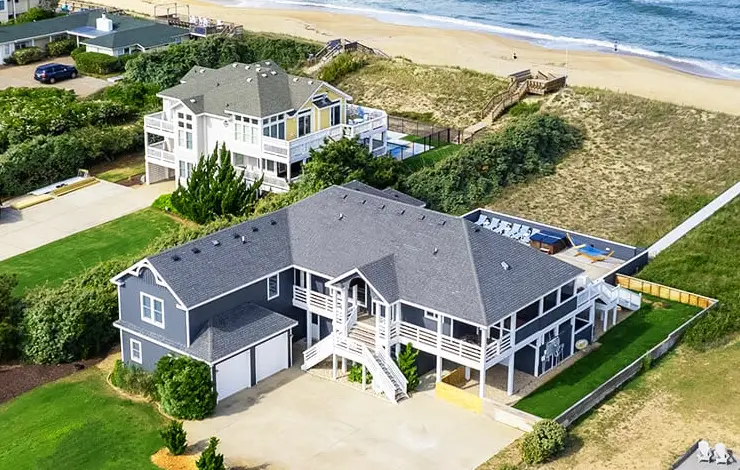
Florida beach condo short-term rental insurance starts with a condo unit owner policy that accepts short-term rental use, layered under the association’s master policy that covers the building. The unit policy covers your interior, your contents, lost rental income, and your liability to guests. Loss assessment coverage matters more in Florida than almost anywhere, because a hurricane can leave the association with a large master policy deductible to split among owners.
Two Policies and an Association
The association. Many Florida associations restrict short-term rentals, set minimum stays, or require registration with the management office. Read the declaration, bylaws, and rules before you buy or list.
The master policy. The association insures the building and common areas. Florida law and the association’s documents decide which parts of the unit fall under the master policy. Get the association’s insurance summary, including its deductibles.
Your unit policy. A standard unit owner policy is written for personal use and may limit or exclude rentals. You need one that accepts short-term rental guests. The Florida Department of Financial Services homeowners insurance overview describes how condo unit policies work in the state.
Loss Assessment After a Hurricane
When a hurricane damages the building, the master policy pays after its deductible. Coastal master policies often carry large hurricane deductibles, and the association can pass that cost to owners through an assessment. Loss assessment coverage on your unit policy helps pay your share.
The Department of Financial Services notes that Florida condo unit policies must include at least $2,000 of loss assessment coverage. On a coastal building with a large hurricane deductible, owners often choose more. Ask your agent how much your policy carries and what triggers it.
Loss assessment is designed for assessments arising from covered losses. Assessments for routine maintenance, reserves, or required structural repairs are generally a different matter. Florida’s condo safety laws, passed after the 2021 collapse in Surfside, require inspections and reserves in many older buildings, which has led to large special assessments that insurance generally does not pay. Ask the association about its inspection status and reserves before buying.
Wind and Flood
Florida unit policies often carry a separate hurricane deductible. Read it. Flood is excluded from most property policies. The association may carry flood on the building, but your interior and contents may need their own flood policy, even on a high floor, since water from a lower-floor surge can still affect elevators, lobbies, and utilities. Our flood insurance page explains the options.
Citizens Property Insurance Corporation, the state’s insurer of last resort, has eligibility rules about use and occupancy that can limit rental properties. Our post on Florida short-term rental insurance for wind, flood, and liability covers the state’s wind market in detail.
Guest Liability
A guest hurt inside your unit, on a slippery bathroom floor or a balcony, is generally your liability. A guest hurt at the pool or in the lobby is generally the association’s. Your unit policy should still defend you if a claim names you. Our post on condo rental guest injuries explains how the layers meet, and an umbrella adds limit above your own.
Scenario: The Assessment After the Storm
A hurricane damages the roof and several balconies of a beachfront condo building. The master policy covers the repairs after a large hurricane deductible, and the association assesses each owner a share. A rental owner’s unit policy carries loss assessment coverage well above the state minimum, chosen when the policy was written, and it pays most of the owner’s share. A neighbor who carried only the minimum pays the rest from savings. Both units lose bookings during repairs, and the owner with loss of rents coverage recovers the lost income.
Licensing and Local Rules
Florida licenses vacation rentals through the Department of Business and Professional Regulation, and counties and cities can add their own registration and tax rules. Check all three layers: state, local, and association. Our guide to short-term rental permits by state explains how they fit together.
Water Damage Inside the Building
In a beach condo, the most common claim is often not a hurricane but water: a failed water heater, a burst supply line, an air conditioner condensate line that clogs and overflows. In a tower, water from one unit can reach several below it.
Florida condo documents and law decide which parts of the unit the association insures and which the owner insures. Your unit policy should cover your interior and your liability for damage that starts in your unit. Fit leak sensors near the water heater, the washing machine, and the air handler, and have the air conditioning drain line cleaned on a schedule.
Comparing Unit Policies
Not all unit policies for rental condos are alike. Compare:
- Whether rental use is accepted without restriction.
- Interior coverage that matches what the master policy leaves to you.
- Contents limit for the furnishings guests use.
- Loss of rents, and how long it pays.
- Loss assessment limit, and whether it applies to both property and liability assessments.
- Hurricane deductible, as a flat amount or a share of the limit.
A policy that costs a little more but covers rental use plainly, with a meaningful loss assessment limit, is usually the better buy for a coastal unit.
A Florida Condo Host’s Checklist
- Read the association’s rental rules.
- Get the master policy summary and deductibles.
- Buy a unit policy that accepts short-term guests.
- Set loss assessment above the minimum.
- Decide on flood for your interior and contents.
- Ask about inspections and reserves before buying.
Our condo rental insurance page and Florida page cover more. Hosts on the Panhandle should also read our guide to Destin and Fort Walton Beach. For a quote, request a quote or call 317-942-0549.
Frequently Asked Questions
What insurance do I need for a Florida beach condo I rent out?
A condo unit owner policy that accepts short-term rental use, with coverage for your interior, your contents, lost rental income, and liability to guests. Add loss assessment coverage and consider flood and an umbrella. The association’s master policy covers the building.
Does the condo association’s policy cover my unit?
The master policy covers the building and common areas, and Florida law and the association’s documents decide which parts of the unit it includes. Your unit policy covers what the master policy leaves to you. Ask the association for its insurance summary.
What is loss assessment coverage in Florida?
It helps pay your share when the association assesses owners for a covered loss, such as a master policy deductible after a hurricane. Florida’s Department of Financial Services says condo unit policies must include at least $2,000 of loss assessment coverage.
Does loss assessment cover special assessments for repairs?
Generally not for routine maintenance, reserves, or required structural repairs. It is designed for assessments arising from covered losses. Read the coverage carefully and keep a reserve of your own for building-required assessments.
Do I need flood insurance for a Florida condo unit?
It is worth considering, even on an upper floor. The association may carry flood on the building, but your interior and contents may need their own flood coverage. Ask what the association’s flood policy includes.
Can Citizens insure my Florida rental condo?
Citizens Property Insurance Corporation is the state’s insurer of last resort and has eligibility rules about use and occupancy that can limit rental properties. Ask your agent whether it fits your unit and rental pattern before relying on it.
Do I need a license to rent a Florida condo short term?
Florida licenses vacation rentals through the Department of Business and Professional Regulation, and counties and cities can add their own registration. Many associations also restrict rentals. Check all three.
The Bottom Line on Florida Beach Condo Insurance
A Florida beach condo rental sits inside the association’s master policy, under your own unit policy, and within the association’s rules. Get a unit policy that accepts short-term guests, carry enough loss assessment coverage, know the wind and flood structure, and read the association documents before you list.
Read our condo rental insurance page and Florida page, then submit a quote or call 317-942-0549.