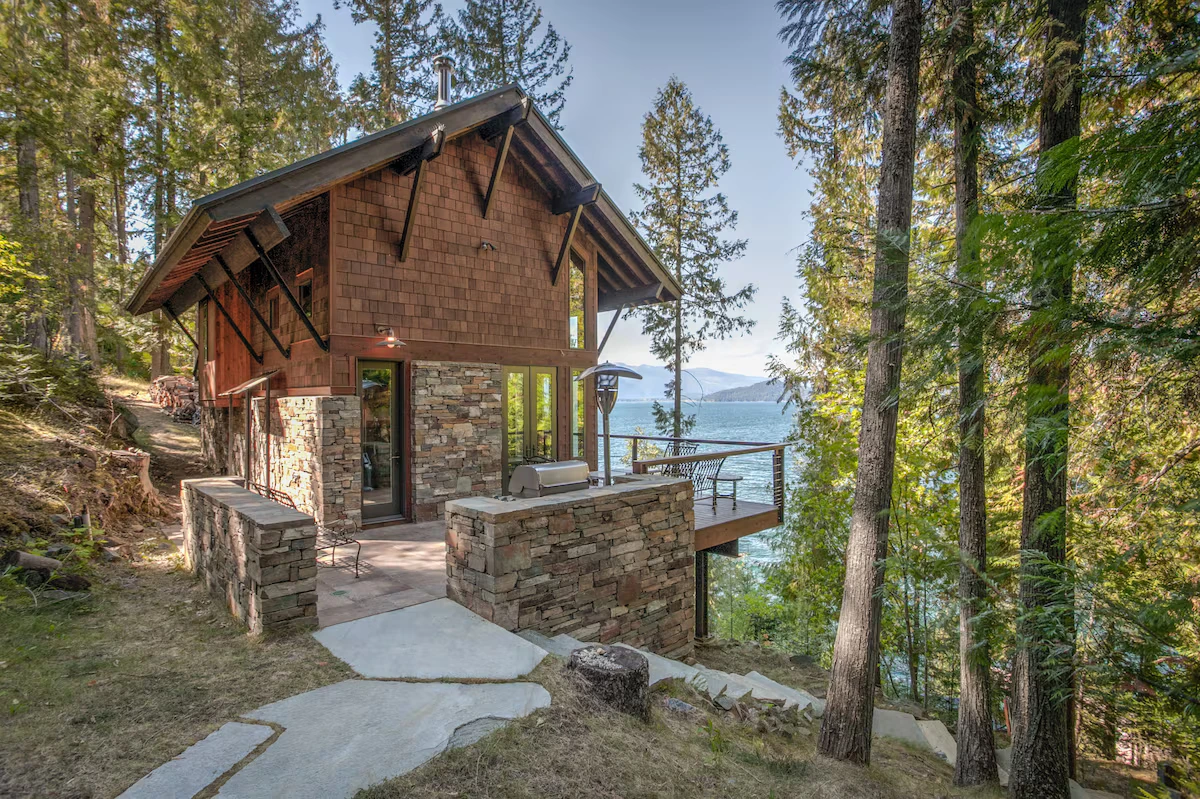
Short-term rental insurance in Pennsylvania has no single price, because Pennsylvania is really two markets wearing one state name. A licensed rowhouse listing in Philadelphia and a game-room cabin in the Poconos are rated on different drivers, sit under different local rules, and belong on different dwelling forms. What ties them together is the peril that shapes nearly every Pennsylvania claim: winter. Freeze losses, burst pipes, ice dams, and snow load do the damage here that hurricanes do on the coast — and the coast is exactly what Pennsylvania does not have. So the honest answer to “what does it cost?” is a quote on your specific property, in your specific market.
This guide walks through what actually moves a Pennsylvania premium, why no one number fits the state, how the major markets price differently, the gap we see most, and how to lower the cost without hollowing out the policy.
What Sets Pennsylvania Short-Term Rental Cost Apart
Pennsylvania underwriting turns on a small set of factors that generic guides flatten into a single rate. Three shape almost every quote.
Start with the urban and rural divide, because it decides everything downstream. On one side sits the city stock — Philadelphia rowhouses and Pittsburgh condos, often older construction, running under local rental-license and limited-lodging rules that classify the listing as a commercial lodging use. On the other sits the mountain and country stock — Monroe and Pike county cabins in the Poconos, Lancaster and Amish-country farmhouses, and lakefront rentals near Lake Wallenpaupack or the city of Erie. A regulated urban listing and a non-owner-occupied mountain cabin are not the same risk, and they do not price alike.
Next comes winter as the dominant property peril. Pennsylvania has no named-storm wind and no coastal flood, which pulls it well below the shore states on catastrophe load. What replaces that exposure is cold. A pipe that freezes and bursts in a cabin left unheated over a slow midweek stretch can flood a structure and shutter it for a season, ice dams back water under roofs, and heavy snow load stresses older framing. For a seasonally occupied Pocono cabin, winterization is not housekeeping — it is the single behavior most tied to whether a freeze claim gets paid, and a vacant-cabin freeze is precisely the commercial-use loss a personal homeowners form was never rated to cover.
Third is the permit and underwriting class. Philadelphia’s limited-lodging and rental-license framework and Pittsburgh’s rental registration both put the property on record as a paid-lodging operation. A licensed city listing carried by an on-site owner and a non-owner-occupied Pocono investment cabin sit in different underwriting classes and call for different dwelling forms. The Pennsylvania Insurance Department, which regulates the carriers writing this coverage, treats short-term lodging as commercial activity — which is exactly why a homeowners form is the wrong instrument.
Why Pennsylvania Has No Single STR Number
Ask a Philadelphia host and a Pocono host what they pay and you will get two answers that share almost nothing, and both are correct for their property.
A statewide average would fold a licensed urban rowhouse, a Pittsburgh condo, and a large amenity cabin into one midpoint that describes none of them. The drivers point in opposite directions: the rowhouse prices on age and a city permit, the cabin on guest capacity, hot tubs, and a high rebuild cost on a wood structure far from a hydrant. Blend them and you erase the very detail a host needs.
There is a second reason the single-number framing fails: carriers do not rate Pennsylvania as a block. They rate Monroe County differently from Philadelphia County, and a lakefront parcel differently from a rowhouse off a transit line. The National Association of Insurance Commissioners points out that most homeowners policies are not designed to cover the accidents that arise from short-term rentals, which is why these placements move to specialty carriers that price the local exposure directly. The useful question is never “what is the Pennsylvania rate” — it is “what does my property, in my county, cost to insure,” which is what a real quote answers and why we run the property through the quote form rather than a calculator.
The Coverage Lines Behind a Pennsylvania Policy
A Pennsylvania short-term rental program is assembled from several lines, each rated on its own logic. Knowing what each does is the difference between a policy that answers a winter claim and a cheap one that does not.
General liability covers third-party bodily injury and property damage from guest stays — a slip on an icy Pocono deck, an injury at the hot tub. In amenity-heavy cabins with game rooms and large group capacity it is the line most sensitive to how many guests the property holds. See general liability for short-term rentals.
Property and dwelling covers the structure, written on a form that expects guest turnover rather than continuous owner occupancy, and rated on replacement cost. On an older Philadelphia rowhouse or a log Pocono cabin, the rebuild figure — and the freeze exposure — drive this line. See property and dwelling coverage.
Loss of rents replaces rental income while a covered loss makes the property unrentable. A freeze that closes a cabin during a booked winter stretch, or a repair that displaces a rowhouse, lands here — and for a seasonally concentrated cabin the timing of the loss matters as much as the loss itself. See loss of rents coverage.
Ordinance and law covers the gap between rebuilding what stood and rebuilding to current code. On Pennsylvania’s older urban stock and aging mountain cabins this is one of the most frequently omitted lines and one of the most consequential. See ordinance and law coverage.
Flood is excluded from essentially every standard property policy and bought separately. Pennsylvania’s exposure is riverine and lakeside rather than coastal — the Delaware and Susquehanna corridors and lakes like Wallenpaupack carry real risk. The National Flood Insurance Program is explicit that most homeowners insurance does not cover flood damage, so a low-lying riverfront cabin needs it addressed on its own. See flood insurance.
Umbrella and excess stacks higher limits over the primary liability layer, and it is usually one of the most cost-efficient lines for a cabin that sleeps a large group. See umbrella and excess liability.
How Pennsylvania Markets Price Differently
Pennsylvania pricing tracks the kind of market a property sits in far more than the fact that it is in Pennsylvania. The archetypes below rate on different dominant drivers.
| PA market archetype | Dominant cost driver | Main property-side concern | Typical loss-of-rents trigger |
|---|---|---|---|
| Philadelphia urban | Rental-license regime and older rowhouse stock | Aging construction and code upgrades | Repair displacement after a covered loss |
| Pittsburgh urban | Rental registration and hillside condo stock | Older systems and shared-wall construction | Displacement during structural repairs |
| Pocono cabin | Guest capacity and amenity density | Winter freeze and high rebuild cost | Freeze closure during a booked season |
| Lancaster and rural | Distance to fire service and outbuildings | Snow load and replacement cost | Loss of a short, concentrated season |
| Lakefront and Erie | Water access and riverine flood exposure | Freeze on unheated shoulder-season stays | A covered loss during the summer window |
Philadelphia and Pittsburgh price on the permit regime and the age of the building, and whether the listing is an owner-occupied rental or a full investment unit. The Poconos price on amenity-driven liability and freeze-sensitive rebuild cost — a mountain cabin with hot tubs and a game room is a liability and winterization story first. Lancaster and the rural counties turn on distance to fire service and outbuildings, while lakefront rentals near Wallenpaupack and the Erie shore rate on water access and shoulder-season freeze risk. The permitting layer sits under all of it — our state permit and licensing guide covers where Pennsylvania’s cities draw the line, and the Pennsylvania short-term rental insurance page has the regulatory picture in full.
The Coverage Gap We See Most Often in Pennsylvania
The most common Pennsylvania gap is the one the diagram above ends in: a Pocono or lakefront cabin insured on a homeowners policy carried over from when it was a family second home, still running that policy after it went onto a booking platform.
The pattern is almost routine. A family buys a mountain or lakeside place, insures it on a homeowners form, then lists it for paid guest stays. The homeowners policy excludes the commercial lodging activity that now defines the property. Nothing goes wrong for a season or two. Then a winter cold snap freezes a line in a week with no guests, the pipe bursts, and the carrier’s investigation finds the cabin was operating as a short-term rental — and the claim is denied.
Scenario: a Pocono cabin left on a second-home policy through a cold snap
We worked with a host who owned a Monroe County cabin that slept a large group, with a hot tub, a game room, and a wood-framed structure set back from the nearest hydrant. It had been insured on the homeowners policy left over from when the family used it as a winter getaway. Once it went onto Airbnb and VRBO, that policy no longer described the property — the use had shifted from a home the family occupied to a commercial rental hosting strangers most weekends, and the homeowners form had never been rated for it.
Nothing had gone wrong yet, which is the only reason the fix was clean. We rewrote the cabin onto a dwelling form built for paid guest occupancy, sized the liability for the hot-tub-and-game-room amenity profile, added ordinance-and-law for the older structure, and layered in rental-income protection for the concentrated winter and summer seasons. Had a supply line frozen and burst during an empty midweek stretch that first winter, the host would likely have been arguing about coverage rather than using it.
The urban version of the gap is more specific: a licensed Philadelphia rowhouse or Pittsburgh condo running paid stays on an owner-occupied form that never contemplated turnover. Both have the same fix — a dwelling form placed with full knowledge of how the property actually operates. That is also why platform programs do not close the gap; our breakdown of what AirCover actually covers walks through where they stop.
Ways to Bring Down Your Pennsylvania STR Premium
Premium is not fixed, and several levers move it without thinning the coverage that matters:
- State the operating model and permit class accurately. Getting a licensed urban listing or a non-owner-occupied cabin on the right form the first time avoids a costly re-rate later.
- Winterize and document it. Freeze losses are Pennsylvania’s signature claim; monitored thermostats, drained or heat-traced lines, and a winterization routine on a vacant cabin support better pricing and a cleaner claim.
- Insure to replacement cost, not above it. A log cabin or an older rowhouse carries a real rebuild figure — match the dwelling limit to it rather than to market value.
- Bundle the program with one carrier. Liability, dwelling, loss of rents, and contents written together usually price better than scattered placements.
- Document amenity safety. Hot tub covers and locks, posted occupancy limits, cleared decks in winter, and guest screening can support better liability pricing on amenity-heavy cabins.
- Do not drop flood on a riverfront or lakeside parcel to chase a lower number. Along the Delaware, the Susquehanna, or a lake shore, that is the largest loss you can have, left uninsured.
When to Restructure Your Pennsylvania Coverage
Re-shop or restructure your Pennsylvania short-term rental coverage when any of these is true:
- You bought the policy before you listed the property. A carried-over second-home or homeowners policy almost certainly does not contemplate paid guests.
- Your operating model or permit class changed. A cabin that shifted from family use to a full investment rental, or an urban listing that moved between owner-occupied and non-owner-occupied, belongs on a different form.
- You added amenities or capacity. New hot tubs, a game room, or a higher guest count move the liability and umbrella exposure and should be reflected.
- You have never priced winter or flood exposure. A vacant-cabin freeze risk that was never winterized, or a riverfront parcel that never carried flood, both warrant a fresh look.
- It has been more than a year since anyone reviewed the program. Rates, carrier appetite, and Pennsylvania city ordinances all shift.
If any of those apply, submit a quote or start with a vacation rental insurance overview, and we will structure the program around how your property actually operates. Pennsylvania’s inland, winter-driven profile is a different cost picture from the coastal hurricane states — for the wider frame, read the national cost guide.
Frequently Asked Questions
How much does short-term rental insurance cost in Pennsylvania?
There is no single Pennsylvania number, because the state holds two very different short-term rental worlds. A licensed rowhouse listing in Philadelphia or a city condo in Pittsburgh prices on older construction and a local permit regime, while an amenity-heavy Pocono cabin that sleeps a large group prices on guest capacity, high rebuild cost, and a concentrated season. Pennsylvania carries no hurricane or coastal-flood load, so its dominant peril is winter — freeze and burst-pipe losses on cabins left vacant in a cold snap. What you pay is whatever your property, market, and coverage lines add up to, which is why the honest answer is a quote on your address.
Why is there no single short-term rental price for Pennsylvania?
Because a national or even statewide average would blend a regulated Philadelphia rowhouse, a Pittsburgh condo, and a multi-amenity Pocono cabin into a midpoint none of those hosts would recognize. Pennsylvania carriers rate a county and often a specific address, not a state line. An owner-occupied city listing and a non-owner-occupied mountain investment cabin belong on different dwelling forms and price on different drivers. Averaging them hides the exact information a host needs, which is why we quote off the property rather than a calculator.
Does Pennsylvania have hurricane or coastal-flood exposure?
No. Pennsylvania sits well inland of the coastal hurricane states, so its short-term rentals avoid the percentage wind deductibles and specialty wind placement that drive premiums along the shore. The trade is winter. Freeze and burst-pipe losses, ice dams, and snow load are the dominant property perils, and they hit hardest on Pocono and lakefront cabins left unheated between bookings. Riverine and lakeside flood exposure exists along the Delaware, the Susquehanna, and lakes such as Wallenpaupack, so flood still warrants a look even without a coast.
How do Philadelphia and Pittsburgh rental rules affect insurance?
Philadelphia licenses short-term rentals through a limited-lodging and rental-license framework, and Pittsburgh runs its own rental registration and permitting. Those rules classify the property as a commercial lodging use, which a standard homeowners form excludes. A licensed urban listing and a Pocono investment cabin are different underwriting classes that call for different dwelling forms, and getting the class right the first time avoids a costly re-rate or a denied claim later.
What is the most common Pennsylvania short-term rental coverage gap?
A Pocono or lakefront cabin insured on a homeowners policy carried over from when it was a family second home, after it went onto a booking platform. The homeowners form excludes the commercial lodging activity, so a guest injury, a kitchen fire, or a winter freeze loss can be denied. The urban version is a licensed rowhouse or condo running paid guest stays on an owner-occupied form that never contemplated turnover. Both are fixed by placing the property on a dwelling form matched to how it actually runs.
Do Airbnb AirCover and VRBO host protection cover a Pennsylvania cabin?
Not fully. AirCover for Hosts and the VRBO host liability program are supplemental platform protections, and the platforms themselves recommend hosts carry their own coverage. They apply only to stays booked through that channel, so direct bookings fall outside them, and they do not insure the structure against a winter freeze or a fire between guests or replace lost rental income during a closure. Treat them as a supplement to a dedicated Pennsylvania policy, never as the policy itself.
How fast can STR Guard quote Pennsylvania short-term rental insurance?
We typically return Pennsylvania quote requests within a couple of hours during business hours, and you will hear back the same business day. Multi-amenity Pocono cabins, lakefront properties where riverine or lake flood needs confirming, and licensed urban listings where the permit class needs verifying can take a little longer. Submit the property details through the quote form and we structure a program from carriers actively writing Pennsylvania short-term rental coverage rather than quoting off a calculator.
The Bottom Line on Pennsylvania STR Insurance Cost
Pennsylvania is not one short-term rental market but two, and the cost story follows the split. On the urban side, Philadelphia and Pittsburgh listings price on older rowhouse and condo construction and a local rental-license regime that sets the underwriting class. On the rural and mountain side, Pocono cabins and lakefront rentals price on amenity density, high rebuild cost, and a concentrated season. Running under both is winter — freeze and burst-pipe losses are the peril that decides Pennsylvania claims, not the hurricanes that drive coastal premiums. Hosts who match the dwelling form to how the property actually operates, and who winterize a cabin they leave vacant, get coverage that responds; hosts who don’t find the gap in a cold snap.
If you want a real number for your property, submit a quote or call 317-942-0549. We respond within a couple of hours during business hours and place coverage from carriers actively writing Pennsylvania short-term rental property — from a Pocono mountain cabin to a licensed city rowhouse.