What Short-Term Rental Insurance Costs in Pennsylvania
Pennsylvania STR insurance pricing reflects three largely independent operating environments. The Pocono Mountains market — concentrated across Monroe, Pike, Wayne, Carbon, and Luzerne counties — operates as one of the most-developed cabin and lakehouse STR ecosystems on the East Coast, with concentrated NYC and Philadelphia weekend demand. The Philadelphia and Pittsburgh urban metros operate under municipal ordinance frameworks with materially different operating-rule structures. The smaller secondary markets — Lancaster Amish Country, Gettysburg, State College, the Lake Erie shore — operate under tourism-driven seasonal cycles.
The drivers that move Pennsylvania STR premium most are property location (Poconos lakehouse vs. urban vs. tourism-secondary), structure type, claims history, amenity profile (especially lake-amenity hot tub and dock features), freeze-prevention controls, and operating model. The typical Pennsylvania STR coverage program runs across five anchored lines:
- General Liability: Guest bodily injury and third-party property damage. Typical limits run $1,000,000 each occurrence / $2,000,000 aggregate; Poconos lakehouse and high-amenity cabin placements pull recommended limits higher. See General Liability for STR.
- Property / Dwelling: Written on DP-3 dwelling or commercial habitational based on operating model. Poconos placements carry concentrated winter freeze and snow-load underwriting; urban placements carry standard wind/hail structures. See Property / Dwelling coverage.
- Loss of Rents: Rental income during a covered loss. Poconos summer-and-ski-season concentration and university-event-week concentration both justify Extended Period of Restoration endorsements where appropriate. See Loss of Rents.
- Ordinance & Law: The gap between rebuild cost and code-compliant rebuild cost. Material on older Poconos lakehouse construction, Philadelphia historic-district structures, and pre-modern-code Lancaster and Bucks County properties. See Ordinance & Law.
- Umbrella / Excess: Higher limits over primary GL. Standard on multi-amenity Poconos lakehouse placements with hot tubs, fire pits, docks, and large guest capacity. See Umbrella coverage.
Premium varies by location, structure type, freeze-prevention controls, claims history, coverage form selection, and operating model. Pennsylvania’s Poconos, urban, and tourism-secondary sub-markets price independently, and we structure quotes through the specialty STR carrier panel against the actual property.
Pennsylvania Short-Term Rental Regulatory Framework
Pennsylvania regulates STR almost entirely at the city, township, and county level. There is no statewide STR registration program. The state regulates the insurance side through the Pennsylvania Insurance Department and collects state and local taxes through the Department of Revenue. Operating rules vary substantially between Philadelphia’s Limited Lodging framework, Pittsburgh’s zoning-based approach, the Poconos’ multi-township and private-community structure, and the tourism-secondary markets.
State-Level Regulation
The Pennsylvania Insurance Department oversees insurance carrier rate filings, market conduct, and consumer protection at the state level. The Pennsylvania Department of Revenue administers state sales tax (6%) and state hotel occupancy tax (6%) that applies to lodging rentals of fewer than 30 days. Counties and cities impose additional local hotel occupancy taxes that vary by jurisdiction — Philadelphia’s combined rate is one of the highest in the country, while many smaller jurisdictions impose materially lower local rates.
City-Level Regulation in Major Markets
Most Pennsylvania STR operating rules sit at the city, township, and county level. The major markets each maintain distinct frameworks:
- Philadelphia: Philadelphia administers a Limited Lodging Operator License through the Department of Licenses and Inspections, requiring hosts to operate the property as their primary residence. Non-primary-residence whole-home STR in most residential zones is restricted; commercial Hotel operations work under a separate license framework. The ordinance language sits in the Philadelphia Code of Ordinances.
- Pittsburgh: Pittsburgh regulates STR through municipal zoning and business-licensing frameworks. The ordinance language sits in the Pittsburgh Code of Ordinances. Operating rules vary across zoning districts and concentrate around university-area, riverfront, and Strip District placements.
- Pocono Mountains townships and counties: The Poconos STR market spans Monroe, Pike, Wayne, Carbon, and Luzerne counties, with operating rules administered at the township level and frequently layered with private-community covenants (Lake Wallenpaupack-area communities, Lake Naomi, Hideout, Pocono Farms, Pocono Mountain Lake Forest, and dozens of other named developments). The Pocono Mountains Visitors Bureau provides regional context.
- Lancaster: Lancaster City and surrounding Lancaster County operate STR under municipal zoning and business-licensing frameworks. The ordinance language sits in the Lancaster Code of Ordinances. Amish Country tourism drives substantial STR activity across the surrounding townships.
- State College: State College and Penn State-area STR operates under municipal zoning with concentrated Penn State football-weekend and Beaver Stadium event-week demand affecting both occupancy and operating-rule scrutiny.
- Erie & Lake Erie shore: Erie and the surrounding North East Borough operate STR under municipal zoning with concentrated summer-tourism demand and lake-effect winter exposure.
Tax and Licensing
Pennsylvania STR operators owe state hotel occupancy tax (6%) plus local hotel occupancy taxes that vary by county and city. Combined hotel occupancy tax commonly runs 9–14% across most markets; Philadelphia’s combined rate runs materially higher with the city hotel tax structure. Airbnb and VRBO collect and remit some — but not all — of these on behalf of hosts; hosts remain responsible for any uncollected portion and for required licensing through local jurisdictions and the Pennsylvania Department of Revenue.
Common Short-Term Rental Risks in Pennsylvania
STR exposure in Pennsylvania is shaped by the state’s mountain-and-river geography, the Poconos concentrated lakehouse market, and the urban Philadelphia regulatory environment. The risks below appear more frequently or with more severity than national norms.
1. Poconos winter freeze and pipe-burst exposure
The Pocono Mountains take long winters with concentrated freeze events from December through March. Most Poconos STR properties operate as second homes with substantial off-season vacancy gaps; pipe-burst loss during shoulder-and-off-season periods is the dominant Poconos STR claim category. The Vacancy Endorsement preserves coverage during off-season gaps; freeze-prevention controls materially affect both loss frequency and carrier underwriting on Poconos placements. The exposure parallels the Michigan and Wisconsin Upper Midwest cabin markets.
2. Poconos snow load and ice damming
The Poconos and the surrounding Endless Mountains and Northern Tier take meaningful seasonal snow load on roof and deck structures. Older Poconos cabin and lakehouse construction often wasn’t built to current snow-load code and carries collapse exposure during heavy winters. Ice dams on roof edges and gutters routinely produce interior water-intrusion claims. Ordinance & Law coverage addresses rebuild-to-current-code gaps; carriers underwrite specifically for structure age and roof framing on Poconos placements.
3. Lakehouse and amenity-driven liability concentration
Poconos and Lake Erie shore STR properties concentrate amenity-driven liability — hot tubs, fire pits, docks, watercraft, and large outdoor decks all produce premises-liability claim activity. Properties marketed for large guest capacity or "lakehouse" use carry materially higher liability exposure. Umbrella over primary GL is standard on multi-amenity Poconos and Lake Erie lakehouse placements.
4. Philadelphia primary-residence ordinance and operating-model compliance
Philadelphia’s Limited Lodging program restricts most operation to the primary residence. The compliance question affects underwriting class — a Limited Lodging operator running a Hotel/Hotels Booking Agent-style operation outside the residential framework faces both city enforcement and insurance-coverage risk because the policy form may not match the actual operating model. Operators caught operating outside their permitted category can face material exposure.
5. University-event-week party damage and over-occupancy
Penn State football weekends in State College, Pitt and Carnegie Mellon weekends in Pittsburgh, and concentrated college-event weeks in other Pennsylvania university markets produce concentrated party-damage and over-occupancy claim activity. Property damage from unauthorized events, broken furnishings, and guest injury during over-occupancy stays show up at elevated rates during event-week bookings. Underwriters specifically rate occupancy controls, party-prevention rules, and screening on university-market STR placements.
Common Pennsylvania STR Claims We See
Poconos off-season pipe burst
A January or February freeze cracks a supply pipe at a Lake Wallenpaupack or Pocono Lake VRBO during a 14-day shoulder gap between bookings. Structural water damage, dry-out, and contents loss can add up quickly. Property responds; the Vacancy Endorsement preserves coverage during the off-season gap. Properties with monitored freeze sensors experience materially lower claim severity.
Poconos ice dam and interior water damage
An exceptional snow-and-freeze cycle produces an ice dam on the roof of a Poconos VRBO cabin. Interior water intrusion, ceiling and wall damage, and contents loss can add up quickly. Property responds; required repairs (additional roof insulation, eave heat cable) may be a condition of continued coverage.
Lake Wallenpaupack hot-tub and dock-area injury
A guest at a Lake Wallenpaupack VRBO lakehouse falls from a dock and suffers a head injury. The claim alleges inadequate dock safety, posted rules, and lighting. General Liability responds to this kind of claim, and defense costs on contested claims can be material. Multi-amenity lakehouse properties almost always carry an umbrella over primary GL.
Penn State football-weekend party damage
A Penn State football weekend booking at a State College single-family Airbnb turns into an unauthorized 40-person event. Interior damage, broken furnishings, exterior landscape damage, and neighbor noise complaints produce combined property damage plus a separate liability claim. Property and General Liability respond, with material defense costs on the liability side.
Philadelphia historic-district pipe burst with code-upgrade rebuild
A January freeze cracks a supply pipe in a Philadelphia historic-district Limited Lodging property. Structural water damage to original heart pine flooring, plaster walls, and historic finishes can add up quickly. Property responds; reconstruction in historically designated areas may trigger preservation review and modern code requirements, and Ordinance & Law closes the resulting code-upgrade gap.
Why Pennsylvania Short-Term Rental Owners Choose STR Guard
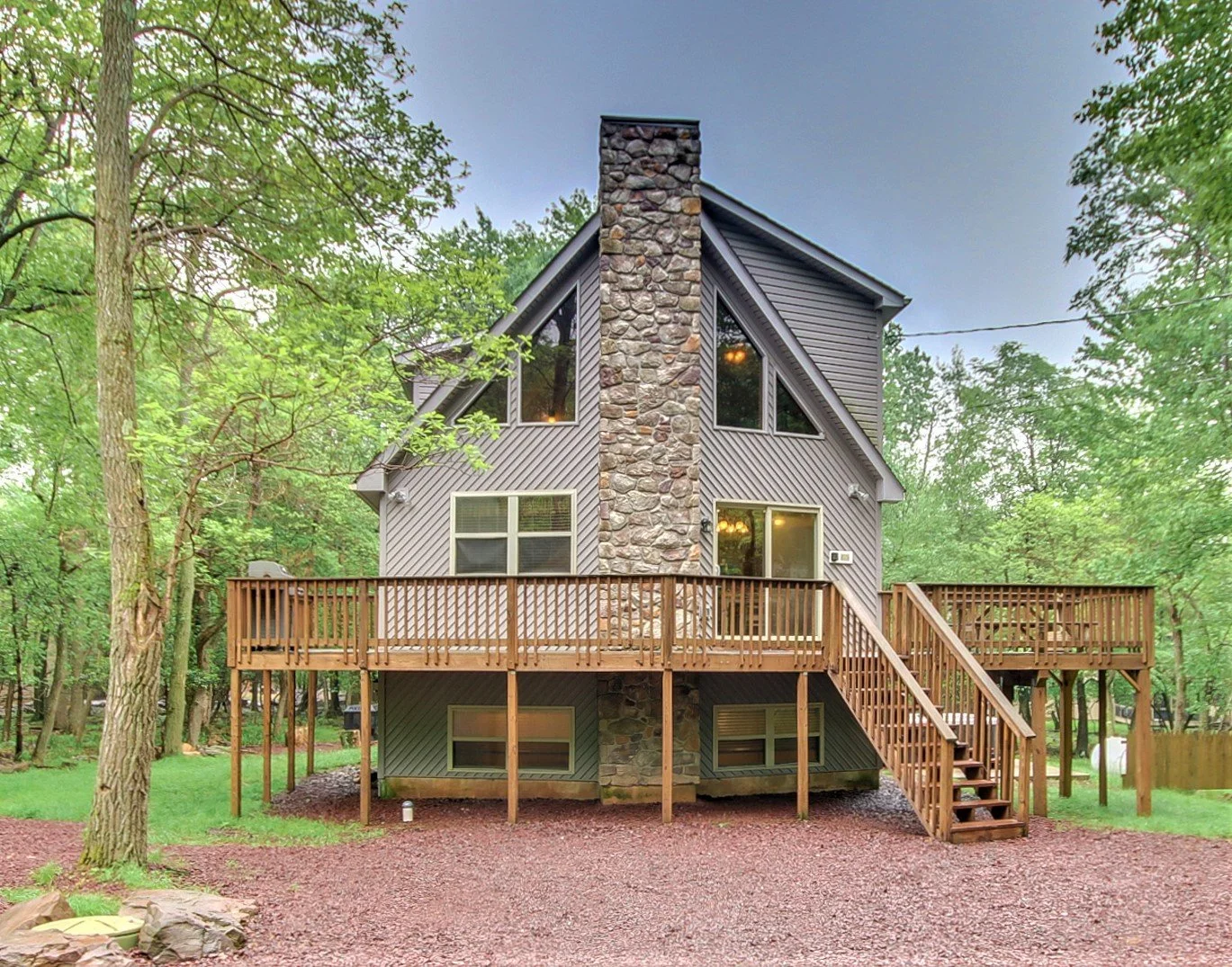
We know Poconos lakehouse and cabin underwriting. Lake Wallenpaupack, Lake Naomi, Pocono Lake, Big Bass Lake, and the broader Poconos lakehouse-and-cabin market are central to our Pennsylvania book. We work freeze-prevention controls, Vacancy Endorsements, lake-amenity liability structure, and the private-community covenant questions on every Poconos placement.
We know Philadelphia Limited Lodging underwriting. The Limited Lodging Operator framework creates an operating-model question that affects both compliance and insurance underwriting. We work the question through with each Philadelphia owner at policy bind, including whether the policy form aligns with the license category.
We know university-market and event-week underwriting. State College, Pittsburgh, and Lancaster university-event-week STR placements need occupancy-control structure, party-prevention rules, and umbrella limits aligned with the high-occupancy guest profile.
We work with carriers actively writing Pennsylvania STR. The Pennsylvania STR specialty market includes carriers that have priced for Poconos lakehouse exposure, Philadelphia primary-residence operating models, and Pittsburgh and State College university-event-driven liability — not the standard admitted-market panel that often restricts these placements.
We respond in 1–2 hours during business hours. Pennsylvania placement timelines often run against an already-populated booking calendar. Quote requests are typically returned within 1–2 hours during business hours (Mon–Fri 9 AM – 5 PM Eastern).
Major Pennsylvania Short-Term Rental Markets We Serve
STR Guard places coverage across Pennsylvania’s Poconos, urban, university, and tourism-secondary STR markets. The state’s STR map clusters around the Pocono Mountains lakehouse corridor, Philadelphia and Pittsburgh urban metros, Lancaster County Amish Country, Gettysburg and South Central PA, the State College Penn State market, the Lake Erie shore, and Bucks County and the Brandywine Valley.
Pocono Mountains (Lake Wallenpaupack, Pocono Lake, Big Bass Lake)
Premier Northeast cabin and lakehouse STR market with concentrated NYC and Philadelphia weekend demand and four-season operations.
Philadelphia
Urban historic-district STR market with a Limited Lodging program, Center City and university-area demand, and active municipal regulation.
Pittsburgh
Three-rivers urban STR market with sports-event and university-area demand cycles and zoning-based STR eligibility.
Lancaster County & Amish Country
Tourism-driven STR market across Lancaster City and the surrounding Amish Country with concentrated weekend and event demand.
Gettysburg & South Central PA
Civil War battlefield tourism STR market with concentrated weekend and battle-anniversary demand cycles.
Lake Erie shore (Erie, North East)
Western PA freshwater coastal STR market with concentrated summer-tourism demand and lake-effect winter exposure.
State College & Penn State
University-driven STR market with concentrated Penn State football and Beaver Stadium event-week demand.
Bucks County & Brandywine Valley
Philadelphia-adjacent rural-and-historic STR market with weekend tourism and concentrated wine-country demand.