Short-term rental insurance in Knoxville is a policy written for paid guest occupancy — liability, property, and loss of rents — rather than the homeowners form most hosts start with. Two local facts shape it: the city permits short-term rental units in two distinct categories, and much of the surrounding inventory is wood-built cabin stock with hot tubs and decks.
Those two facts explain most of the pricing spread between properties that look similar on a listing page.
What Short-Term Rental Insurance Covers for a Knoxville Host
A homeowners policy assumes the owner lives there. A short-term rental hands keys to strangers on a nightly cycle, and most homeowners forms either exclude that use or limit it until the coverage stops being meaningful. The failure usually shows up at claim time, not at purchase.
Most Knoxville placements have three moving parts. General liability responds to guest bodily injury and third-party property damage. A property form built for turnover insures the structure while accepting that the occupants change weekly. Loss of rents replaces booking income when a covered loss makes the unit unrentable, which matters in a market with sharp seasonal peaks around fall color and summer travel.
Furnished rentals also carry more owner-owned property than a long-term rental does. Contents coverage is what answers when guest use, theft, or a covered loss takes out the furniture, linens, and appliances you supplied.
The failure mode worth naming is the undisclosed one. A carrier that learns about hosting after a loss may deny the claim, non-renew the policy, or both — and that outcome has nothing to do with Knoxville specifically. It is simply the most common way short-term rental coverage fails anywhere, and it is entirely preventable.
Knoxville STRU Permit Types and What They Signal
The City of Knoxville requires a permit to operate a short-term rental, defines short-term rentals as properties or a portion of a property rented for less than thirty days at a time, and issues short-term rental unit permits and annual renewals through its Business Tax Office. The city publishes its permitted units in two categories: Type 1 permits, described as owner-occupied in residential areas, and Type 2 permits, described as non-owner-occupied in non-residential areas.
That split is the single most useful piece of information an underwriter can get about a Knoxville property, because it answers the occupancy question directly. A host living in the home and renting part of it is a different risk than an investor operating a whole house nobody occupies, and the two are usually written on different forms — owner-occupied STR coverage for the first, a single-family STR placement for the second.
The city also notes that it contracts with a compliance vendor that compares observed listing activity against permitted properties. Permitting rules and zoning limits change, so confirm the current requirements with the city before relying on any summary, including this one.
Cabin Rental Insurance Near Knoxville and the Smokies Gateway Market
Search demand around this market splits between in-city phrasing and cabin phrasing, and that reflects a real difference in the properties.
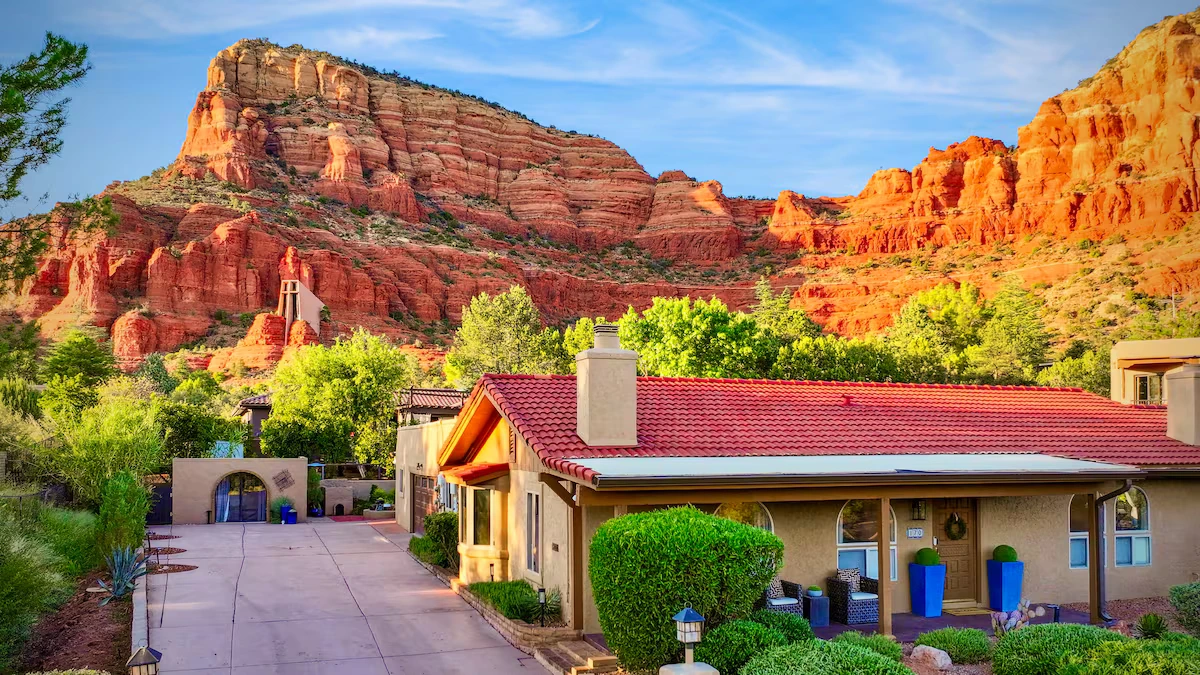
In-city Knoxville inventory is largely conventional residential stock: bungalows, brick ranches, and downtown units serving game weekends, campus visitors, and business travel. It underwrites much like short-term rental property anywhere in a mid-size city.
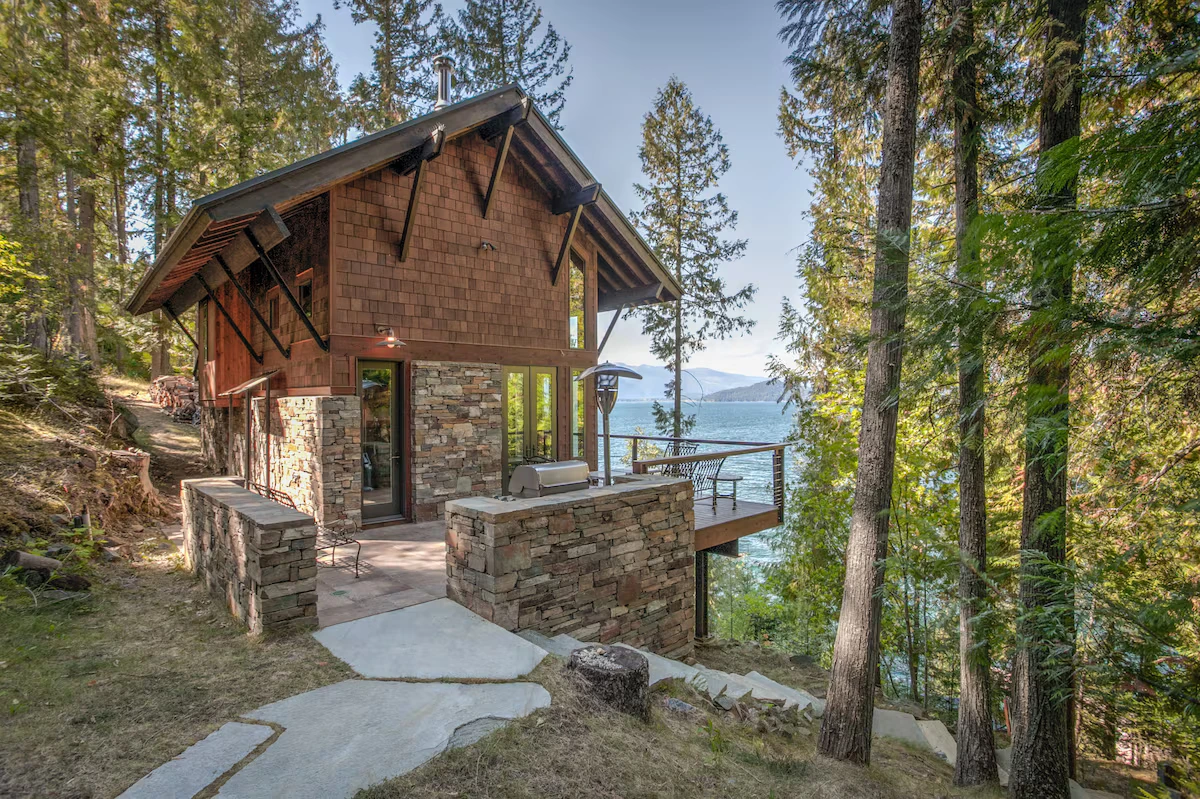
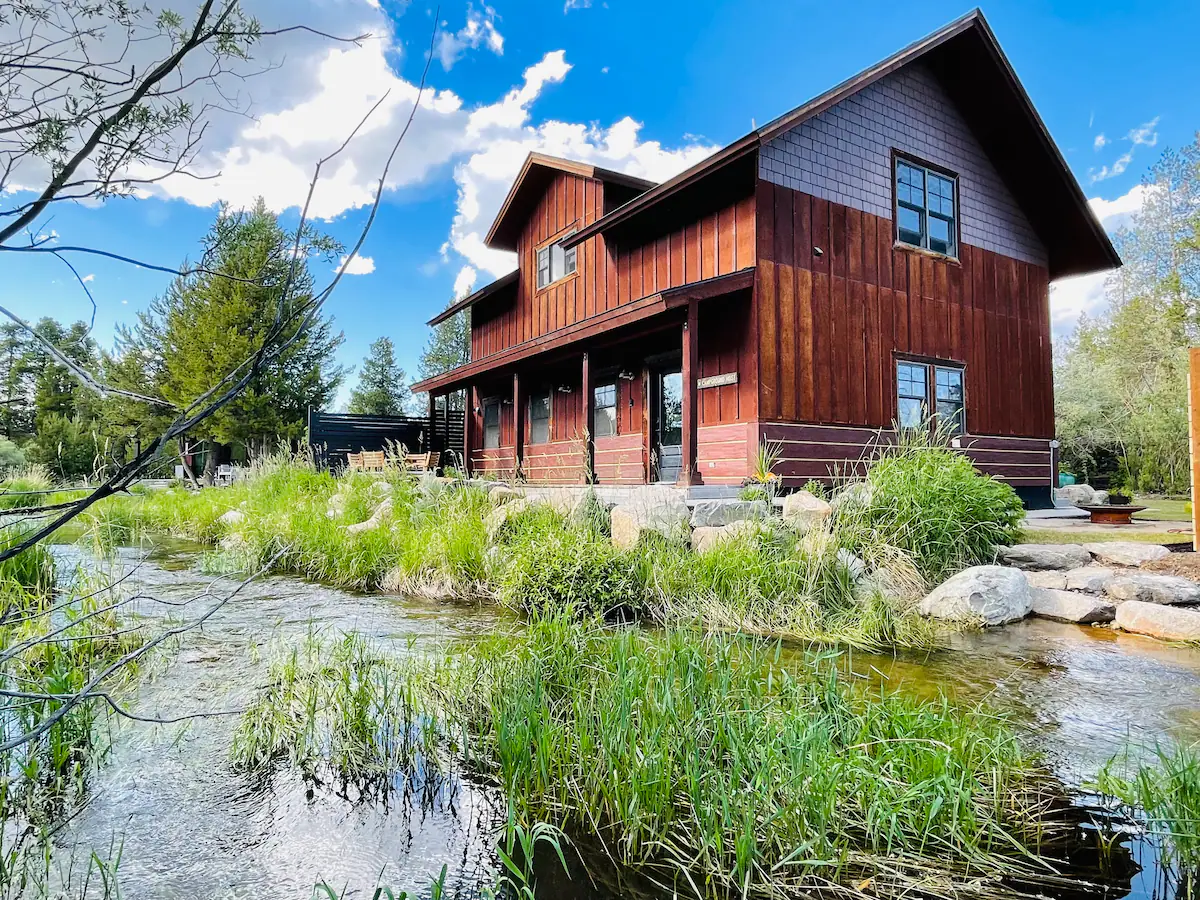
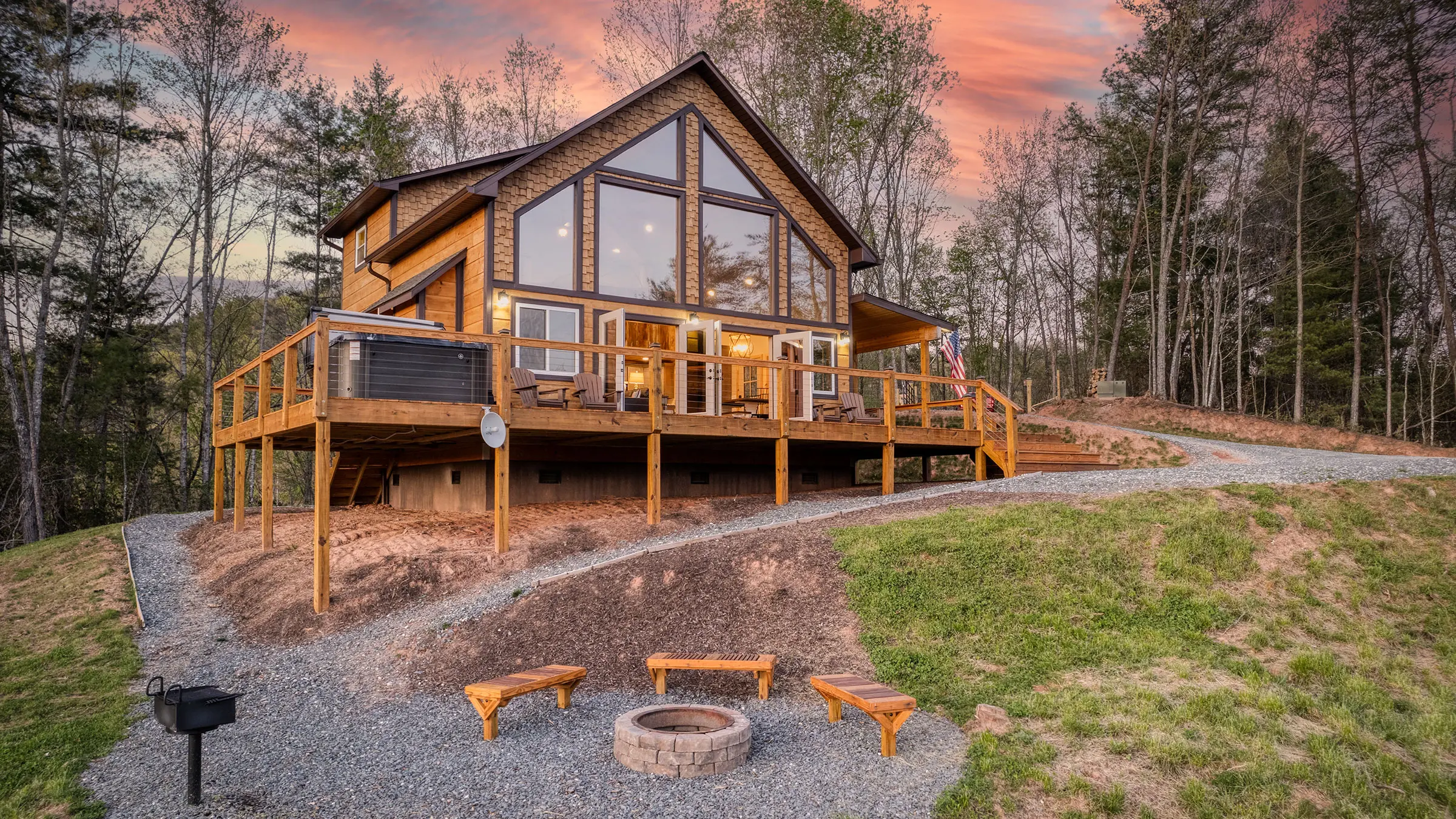
The gateway cabin inventory east and south toward the Smokies is a different risk. Those properties sit on wooded slopes, often at the end of steep gravel drives, with hot tubs on elevated decks and fire pits below them. Distance to a responding fire department, water supply for firefighting, and access for apparatus all move the property side of the placement, while the amenities move the liability side. That inventory belongs in cabin and mountain STR coverage rather than a standard suburban placement.
Log and Heavy-Timber Construction and Replacement Cost
Wood and log construction is the quiet underwriting variable in this market. A log or heavy-timber structure is not rebuilt the way a stick-framed house is rebuilt — the materials are specialized, the trades are narrower, and matching an existing profile after a partial loss can be harder than replacing an entire wall of siding.
The consequence is that a valuation figure carried over from a purchase price or a tax assessment is frequently wrong for this construction type. Hosts should be asking whether the policy settles on a replacement-cost basis and whether the insured value reflects what rebuilding this specific structure would take.
Older cabins add a code dimension. When a damaged building must be repaired to current standards — egress, stair geometry, deck attachment, electrical — ordinance and law coverage is what answers for the difference between what was there and what is now required.
Hot Tubs, Decks, and the Liability That Follows Them
If cabin inventory has a signature claim, it involves a deck or a hot tub, and often both together.
Decks are the structural half. Ledger attachment, guardrail height and spacing, stair treads, and the effect of years of weather on fasteners all matter more when the people using them change weekly and arrive after dark carrying luggage. Elevation multiplies the consequence of a failure.
Hot tubs are the behavioral half. They concentrate guests in one place, often at night, frequently after drinking, and they introduce chemical handling and sanitation questions on top of the injury exposure. Markets differ on what they require — covers that latch, posted rules, fencing, documented service intervals — and those conditions are part of the policy rather than suggestions. A property with a hot tub and meaningful guest capacity is a strong candidate for an umbrella layer above the underlying limit.
Scenario: a foothill cabin with an upper-deck hot tub
We worked with a host whose cabin had a hot tub on a second-level deck reached by an exterior stair. A guest group arrived late in a rainstorm, and one guest slipped on the wet stair treads coming down from the tub after dark. The injury was moderate but the claim was not simple, because the guest alleged the railing was loose and the lighting inadequate.
The host had liability coverage, and it responded. What made the difference was documentation — service records for the tub, a photo log of the deck inspection done that spring, and posted rules in the listing and inside the unit. That record turned a contested question into a defensible one. Hosts who cannot produce that history end up litigating the condition of the property rather than the facts of the fall.
Wildfire and Slope Exposure in the Foothills
Wildfire is a real underwriting question in the Tennessee foothills, and hosts sometimes discount it because the region reads as green rather than arid. Dry autumn stretches, leaf litter, steep terrain that carries fire uphill quickly, and single-access roads are all part of how a carrier evaluates a wooded cabin lot.
Expect questions about defensible space around the structure, whether the deck is enclosed underneath, what the roof is made of, and how far the property sits from a fire hydrant or drafting source. Hosts who clear brush, keep leaf litter off decks and roofs, and can describe access honestly tend to see more placement options than hosts who cannot.
Slope matters on its own terms as well. Steep lots move water fast, and a cabin cut into a hillside can take surface water and debris through a lower level during a heavy storm even though nothing about the event looks like flooding. Surface water is excluded from standard property forms, so hosts on graded lots should understand where that line sits before the first summer downpour rather than after it.
How Knoxville Compares to the Rest of Tennessee
Tennessee is not one short-term rental market, and Knoxville sits between two of its poles.
| Consideration | Knoxville in-city | Smokies gateway cabin market | Nashville and Memphis urban markets |
|---|---|---|---|
| Primary regulatory gate | City permit tied to occupancy category | County or city rules that vary by jurisdiction | City permit programs with their own categories |
| Dominant liability driver | Stairs, driveways, event-weekend capacity | Hot tubs, elevated decks, fire pits, terrain | Dense stock, shared entries, guest turnover |
| Main property concern | Roof age, older residential construction | Log construction, replacement cost, access | Older multi-family stock and code upgrades |
| Wildfire posture | Modest, lot dependent | A genuine underwriting input on wooded slope | Generally minimal |
For the statewide view, see the Tennessee STR insurance cost guide and our Tennessee location page.
Getting Knoxville Coverage Placed
Work the sequence in order. Confirm which permit category applies to your property and keep it current and in your name. Disclose the short-term rental use to whoever writes the policy, in writing, at every renewal. Check that the insured value reflects what rebuilding your specific construction type would cost rather than what you paid.
Then handle the amenities deliberately. Document deck inspections and hot tub service, post the rules guests are expected to follow, and price a liability limit against the capacity you actually advertise.
Rules and requirements change, so treat the Tennessee Department of Commerce and Insurance and the city’s own short-term rental pages as the authorities over any summary, including this one. Our state-by-state STR permit and licensing guide is a useful next read.
Frequently Asked Questions
Do I need special insurance for a short-term rental in Knoxville?
Typically yes. A homeowners policy is written for a home you live in, and most forms exclude or sharply limit the paid guest occupancy that defines a short-term rental. Knoxville hosts usually need a policy pairing liability for guest injury with a property form that expects turnover. What responds at claim time depends on how your form is written, so read the exclusions before the first booking rather than after a guest is hurt.
Does homeowners insurance cover an Airbnb in Knoxville?
Often it does not. Once a property is listed for paid stays of less than thirty days, many carriers treat it as a business use the homeowners form was never priced for, and some will deny a claim or non-renew when they learn about undisclosed hosting. Because Knoxville permits short-term rental units and publishes permit lists, the activity is not difficult to discover. Disclose it in writing instead.
What permit do I need for a short-term rental in Knoxville?
The City of Knoxville requires a permit to operate a short-term rental and issues permits through its Business Tax Office. The city distinguishes owner-occupied units in residential areas from non-owner-occupied units in non-residential areas. Requirements and zoning limits change, so confirm the current rules directly with the city before you list. Your permit type also affects which policy form fits the property.
Is cabin rental insurance different from regular short-term rental insurance?
The structure is similar but the inputs differ. Cabins tend to be wood or log construction on sloped, wooded lots with hot tubs, multi-level decks, fire pits, and longer distances to a responding fire department. Each of those shifts either the property or the liability side of the placement, which is why cabin inventory is usually quoted on its own merits rather than alongside in-city houses.
Do I need extra liability coverage for a hot tub at my Knoxville rental?
Often it is worth pricing. A hot tub raises the injury profile of a property and some markets apply specific conditions around fencing, covers, posted rules, and chemical handling. Hosts with hot tubs, elevated decks, or large guest capacity frequently add an umbrella layer above the underlying liability limit, not because a claim is likely but because the underlying limit is where coverage stops.
How much does short-term rental insurance cost in Knoxville?
There is no single Knoxville number, and any guide quoting one is guessing. Pricing moves with construction type, roof age and condition, guest capacity, whether a hot tub or pool is on site, distance to fire service, wildfire and slope characteristics of the lot, prior claims, and how much of the year the property rents. An in-city bungalow and a foothill cabin may price very differently.
The Bottom Line on Knoxville STR Insurance
Knoxville is really two short-term rental markets sharing a permit office. In-city inventory serves game weekends, campus traffic, and downtown visitors, and it looks like ordinary residential property with guest occupancy layered on. The gateway cabin inventory east and south of the city is a different underwriting animal: wood construction, hot tubs, elevated decks, wooded slope, and longer response distances.
Whichever one you own, the sequence is the same. Confirm which permit type applies and keep it current, disclose the short-term rental use to whoever writes the policy, insure the structure on a basis that reflects what it would actually cost to rebuild it, and set liability limits against the features guests actually use. Verify the current city rules directly rather than relying on a summary, and we are happy to look at your property through the quote form.