What Short-Term Rental Insurance Costs in South Dakota
South Dakota STR insurance pricing reflects two largely independent operating environments. The Black Hills market — Hill City, Custer, Keystone, Deadwood, Spearfish, Rapid City — operates under cabin-and-lodge amenity liability, concentrated summer-tourism demand, the Sturgis Rally event spike, and extended-winter exposure. The eastern South Dakota market — Sioux Falls and the agricultural-belt urban centers — operates under Plains tornado-corridor exposure and lower-volume year-round demand.
The drivers that move South Dakota STR premium most are property location (Black Hills cabin vs. Sturgis-area vs. urban), structure type, claims history, amenity profile, and operating model. The typical South Dakota STR coverage program runs across five anchored lines:
- General Liability: Guest bodily injury and third-party property damage. Typical limits run $1,000,000 each occurrence / $2,000,000 aggregate; Black Hills multi-amenity cabin and Sturgis-area rally-week placements pull recommended limits higher. See General Liability for STR.
- Property / Dwelling: Written on DP-3 dwelling or commercial habitational based on operating model. South Dakota placements carry separate wind/hail percentage deductibles for tornado-corridor and severe-hailstorm exposure. See Property / Dwelling coverage.
- Loss of Rents: Rental income during a covered loss. Black Hills summer-season concentration and the Sturgis Rally event spike justify Extended Period of Restoration endorsements where appropriate. See Loss of Rents.
- Ordinance & Law: The gap between rebuild cost and code-compliant rebuild cost. Material on Deadwood National Historic Landmark properties and older Black Hills cabin construction. See Ordinance & Law.
- Umbrella / Excess: Higher limits over primary GL. Standard on Black Hills multi-amenity cabins and Sturgis-area rally-week high-capacity placements. See Umbrella coverage.
Premium varies by location, structure type, claims history, coverage form selection, and operating model. South Dakota’s Black Hills and eastern-urban sub-markets price independently, and we structure quotes through the specialty STR carrier panel against the actual property.
South Dakota Short-Term Rental Regulatory Framework
South Dakota regulates STR primarily at the city and county level, with state-level insurance and tax oversight. There is no comprehensive statewide STR registration program. Operating rules vary substantially between the Black Hills tourism-community frameworks and the eastern South Dakota urban rules.
State-Level Regulation
The South Dakota Division of Insurance, within the Department of Labor and Regulation, oversees insurance carrier rate filings, market conduct, and consumer protection at the state level. The South Dakota Department of Revenue administers state sales tax (4.2%) plus the state tourism tax and municipal lodging taxes that apply to STR rentals. South Dakota does not levy a state income tax.
City-Level Regulation in Major Markets
Most South Dakota STR operating rules sit at the city and county level. The major markets each maintain distinct frameworks:
- Deadwood: Deadwood regulates STR through municipal zoning with National Historic Landmark preservation considerations affecting most properties in the historic core. The ordinance language sits in the Deadwood Code of Ordinances.
- Custer & Hill City: Custer and Hill City regulate STR through municipal zoning supporting the Mount Rushmore and Custer State Park gateway markets. See the Custer Code of Ordinances.
- Sturgis: Sturgis regulates STR through municipal zoning, with operating rules shaped by the concentrated Sturgis Motorcycle Rally event-week demand.
- Sioux Falls: Sioux Falls regulates STR through municipal zoning. The ordinance language sits in the Sioux Falls Code of Ordinances.
- Black Hills counties (Pennington, Lawrence, Custer): The Black Hills counties administer STR rules for unincorporated cabin-and-lodge areas outside the incorporated towns.
Tax and Licensing
South Dakota STR operators owe state sales tax (4.2%) plus the state tourism tax (1.5%) and municipal lodging taxes (commonly 1–6%). Combined transient lodging tax commonly runs 8–13% across major markets — South Dakota’s overall tax burden is comparatively lower than most states given the absence of a state income tax. Airbnb and VRBO collect and remit some — but not all — of these on behalf of hosts; hosts remain responsible for any uncollected portion and for registration with the South Dakota Department of Revenue.
Common Short-Term Rental Risks in South Dakota
STR exposure in South Dakota is shaped by the Sturgis Rally event spike, Black Hills cabin operations, and Plains severe weather. The risks below appear more frequently or with more severity than national norms.
1. Sturgis Rally event-week party damage and over-occupancy
The August Sturgis Motorcycle Rally produces one of the most-concentrated single-event STR demand spikes in the United States. Rally-week bookings concentrate party-house and over-occupancy liability exposure across Sturgis, Rapid City, Deadwood, and the broader Black Hills. Property damage from unauthorized events, broken furnishings, and guest injury during over-occupancy show up at elevated rates during rally-week bookings. Underwriters specifically rate occupancy controls, party-prevention rules, and screening on Sturgis-area placements.
2. Black Hills cabin amenity-driven liability
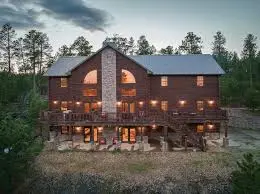
Black Hills cabin STR properties concentrate amenity-driven liability — hot tubs, fire pits, decks, and outdoor amenities all produce premises-liability claim activity. Concentrated summer-tourism occupancy drives elevated claim activity around hot-tub injuries and deck slip-and-falls. Umbrella over primary GL is standard on multi-amenity Black Hills cabin placements.
3. Plains tornado-and-hailstorm severe weather
Eastern South Dakota sits in the northern reach of Tornado Alley, with recurring spring and summer tornado and severe-hailstorm activity. Standard property forms cover tornado, wind, and hail damage, but deductible structures and roof age and condition limits affect what gets paid. See III.org tornado and thunderstorm statistics and the NWS Rapid City office for the climatological pattern.
4. Extended-winter freeze and snow-load exposure
The Black Hills and western South Dakota take heavy winter snow and concentrated freeze events. Pipe-burst loss during off-season vacancy is a recurring claim category on Black Hills cabin properties operated seasonally. The Vacancy Endorsement preserves coverage during off-season gaps; freeze-prevention controls materially affect both loss frequency and carrier underwriting acceptance.
5. Deadwood historic-preservation rebuild exposure
Deadwood is a National Historic Landmark, and substantial damage to a Deadwood historic-district STR property frequently triggers historic-preservation review and modern code requirements on rebuild, materially increasing reconstruction cost above pre-loss replacement value. Ordinance & Law coverage is often necessary to close the gap on Deadwood placements.
Common South Dakota STR Claims We See
Sturgis Rally-week party damage
A Sturgis Rally-week booking at a Black Hills-area single-family Airbnb turns into an unauthorized large-group event. Interior damage, broken furnishings, exterior landscape damage, and neighbor noise complaints produce a combined claim totaling $15,000–$50,000 in property damage plus a separate liability claim from a guest injury. Property and General Liability respond, with material defense costs on the liability side.
Black Hills cabin hot-tub injury
A guest at a Hill City or Custer-area VRBO cabin slips exiting a deck-mounted hot tub and fractures a wrist. The claim alleges inadequate posted warnings, non-slip surfacing, and de-icing. General Liability responds; severity in this category typically runs $20,000–$95,000.
Tornado or severe-hailstorm wind damage
A severe storm produces tornado-spawning rotation or severe hail that damages the roof, siding, and exterior of a Sioux Falls or eastern South Dakota Airbnb listing. Claim severity in this category typically runs $20,000–$80,000. Property responds subject to wind/hail deductibles; cosmetic-damage exclusions affect paid loss on aged shingle roofs.
Black Hills cabin off-season pipe burst
A January or February freeze cracks a supply pipe at a Black Hills VRBO cabin during the off-season. Structural water damage, dry-out, and contents loss total $25,000–$65,000. Property responds; the Vacancy Endorsement preserves coverage during the off-season gap.
Deadwood historic-property water damage with rebuild review
A pipe burst or storm event damages a Deadwood historic-district Airbnb. Structural water damage to historic finishes totals $25,000–$70,000. Property responds; reconstruction triggers historic-preservation review and modern code requirements, and Ordinance & Law closes the resulting code-upgrade gap.
Why South Dakota Short-Term Rental Owners Choose STR Guard
We know Sturgis Rally event-week underwriting. Rally-week occupancy controls, party-prevention rules, and umbrella limit selection aligned with the high-occupancy event-week guest profile shape Sturgis-area STR placement.
We know Black Hills cabin underwriting. Multi-amenity cabin liability structuring, hot-tub-and-fire-pit underwriting, freeze-prevention controls, and umbrella limit selection are central to Black Hills STR placement.
We work with carriers actively writing South Dakota STR. The South Dakota STR specialty market includes carriers that have priced for Sturgis Rally event exposure, Black Hills cabin amenity liability, Deadwood historic-preservation rebuild, and Plains severe-weather underwriting — not the standard admitted-market panel. The exposure parallels the Wyoming Yellowstone-gateway and North Dakota Theodore Roosevelt-gateway markets.
We respond in 1–2 hours during business hours. South Dakota placement timelines often run against an already-populated event-week or seasonal booking calendar. Quote requests are typically returned within 1–2 hours during business hours (Mon–Fri 9 AM – 5 PM Eastern).
Major South Dakota Short-Term Rental Markets We Serve
STR Guard places coverage across South Dakota’s Black Hills cabin, gateway-tourism, and urban STR markets. The state’s STR map clusters around the Black Hills (Hill City, Custer, Keystone, Spearfish, Rapid City), Deadwood, the Sturgis-area rally market, the Badlands National Park gateway, and the Sioux Falls eastern urban market.
Black Hills (Hill City, Custer, Keystone)
Mount Rushmore and Custer State Park gateway STR market — cabin and lodge rentals with concentrated summer-tourism demand and extended-winter exposure.
Deadwood
Historic Wild West gambling-tourism STR market with year-round casino demand and National Historic Landmark preservation considerations.
Sturgis
STR market defined by the August Sturgis Motorcycle Rally — one of the largest single-event STR demand spikes in the country.
Badlands gateway (Wall, Interior)
Badlands National Park gateway STR market with concentrated summer-tourism demand and remote-property considerations.
Rapid City
Western South Dakota urban STR market and Black Hills hub with year-round business-travel and tourism demand.
Spearfish & Spearfish Canyon
Northern Black Hills STR market with canyon scenery, four-season tourism, and outdoor-recreation demand.
Sioux Falls
Eastern South Dakota urban STR market with business-travel and event-driven demand and Plains tornado-corridor exposure.
Custer State Park corridor
Custer State Park-adjacent STR market with wildlife-tourism demand and concentrated summer-season revenue.