
What Short-Term Rental Insurance Costs in Minnesota
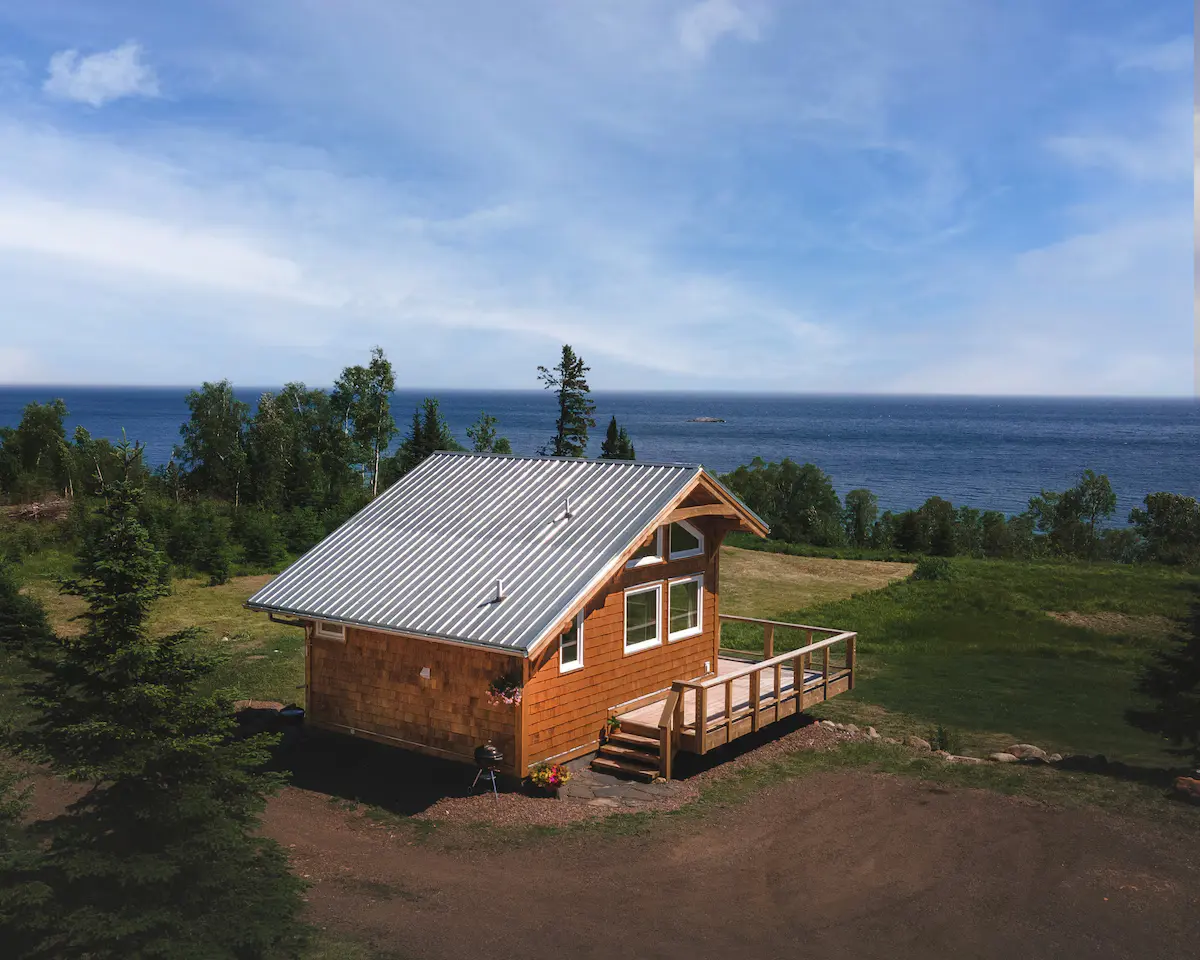
Minnesota STR insurance pricing reflects three largely independent operating environments. The Lake Superior North Shore — Duluth, Two Harbors, Grand Marais, Lutsen, Tofte — operates as Minnesota’s premier freshwater coastal STR market with concentrated four-season demand and extended-winter exposure. The Boundary Waters, Brainerd Lakes, and northern lake-country markets operate under cabin-and-lake amenity liability, off-grid remote-property considerations, and concentrated June–September summer revenue. The Minneapolis-Saint Paul urban metro operates under event-driven occupancy and year-round demand.
The drivers that move Minnesota STR premium most are property location (North Shore vs. Boundary Waters vs. lake-country vs. Twin Cities urban), structure type, freeze-prevention controls, claims history, amenity profile, and operating model. The typical Minnesota STR coverage program runs across five anchored lines:
- General Liability: Guest bodily injury and third-party property damage. Typical limits run $1,000,000 each occurrence / $2,000,000 aggregate; North Shore high-amenity and Brainerd Lakes dock-and-watercraft placements pull recommended limits higher. See General Liability for STR.
- Property / Dwelling: Written on DP-3 dwelling or commercial habitational based on operating model. Minnesota placements carry concentrated extended-winter snow-load underwriting; North Shore placements carry Lake Superior ice-shove and freshwater coastal considerations. See Property / Dwelling coverage.
- Loss of Rents: Rental income during a covered loss. North Shore four-season concentration, Brainerd Lakes summer-season concentration, and Boundary Waters peak-season concentration all justify Extended Period of Restoration endorsements where appropriate. See Loss of Rents.
- Ordinance & Law: The gap between rebuild cost and code-compliant rebuild cost. Material on older North Shore and lake-cottage construction, Stillwater historic-district properties, and pre-modern-code Boundary Waters cabin construction. See Ordinance & Law.
- Umbrella / Excess: Higher limits over primary GL. Standard on Brainerd Lakes dock-and-watercraft placements and North Shore high-amenity placements. See Umbrella coverage.
Premium varies by location, structure type, freeze-prevention controls, claims history, coverage form selection, and operating model. Minnesota’s North Shore, Boundary Waters, lake-country, and Twin Cities sub-markets price independently, and we structure quotes through the specialty STR carrier panel against the actual property.
Minnesota Short-Term Rental Regulatory Framework
Minnesota regulates STR primarily at the city and county level, with state-level insurance and tax oversight. There is no comprehensive statewide STR registration program. Operating rules vary substantially between the Minneapolis and Saint Paul urban frameworks, the Duluth and North Shore community rules, and the lake-country county frameworks.
State-Level Regulation
The Minnesota Department of Commerce oversees insurance carrier rate filings, market conduct, and consumer protection through its insurance division at the state level. The Minnesota Department of Revenue administers state sales tax (6.875% baseline plus local options) plus state and local lodging taxes that apply to STR rentals. The Minnesota Department of Natural Resources coordinates state natural-resource policy and works alongside the US Forest Service on the Boundary Waters Canoe Area Wilderness within Superior National Forest; Voyageurs National Park anchors the far-northern Minnesota wilderness-tourism economy.
City-Level Regulation in Major Markets
Most Minnesota STR operating rules sit at the city and county level. The major markets each maintain distinct frameworks:
- Minneapolis: Minneapolis regulates STR through a short-term rental registration and licensing framework supporting Twin Cities event-driven and convention demand. The ordinance language sits in the Minneapolis Code of Ordinances.
- Saint Paul: Saint Paul regulates STR through municipal licensing and zoning. The ordinance language sits in the Saint Paul Legislative Code.
- Duluth: Duluth regulates STR through a vacation dwelling unit (VDU) framework with concentrated attention to the Lake Superior North Shore tourism market. The ordinance language sits in the Duluth Legislative Code.
- North Shore communities (Two Harbors, Grand Marais, Lutsen, Tofte): The Lake County and Cook County North Shore communities operate STR under municipal and county zoning frameworks supporting the concentrated Lake Superior four-season tourism market.
- Boundary Waters area (Ely, Gunflint Trail): Boundary Waters-gateway cabin STR operates under St. Louis County and Cook County zoning frameworks supporting the wilderness-access tourism market.
- Brainerd Lakes & northern lake country: The Brainerd Lakes-area and northern Minnesota lake counties (Crow Wing, Cass, Itasca) administer STR through county zoning frameworks supporting the concentrated 10,000-lakes cabin economy.
Tax and Licensing
Minnesota STR operators owe state sales tax (6.875% baseline plus local options) plus state and local lodging taxes that vary by jurisdiction (local lodging taxes commonly 3%). Combined transient lodging tax commonly runs 11–14% across major markets. Minneapolis, Saint Paul, Duluth, and the resort-area jurisdictions impose distinct local rates supporting tourism authority operations. Airbnb and VRBO collect and remit some — but not all — of these on behalf of hosts; hosts remain responsible for any uncollected portion and for registration with the Minnesota Department of Revenue.
Common Short-Term Rental Risks in Minnesota
STR exposure in Minnesota is shaped by the extended northern-Midwest winter, Lake Superior freshwater coastal exposure, and remote-cabin geography. The risks below appear more frequently or with more severity than national norms.
1. Extended winter freeze and pipe-burst exposure
Minnesota winters are among the longest and coldest in the contiguous United States, with sustained sub-zero temperatures across the northern half of the state. Pipe-burst loss during off-season vacancy is among the most common Minnesota STR claim categories — North Shore, Boundary Waters, and lake-country properties operated seasonally concentrate the exposure. Standard vacancy provisions can exclude losses on properties left unattended beyond 30 or 60 days; the Vacancy Endorsement preserves coverage during off-season gaps. Freeze-prevention controls materially affect both loss frequency and carrier underwriting acceptance.
2. Exceptional snow load and ice damming
Minnesota takes exceptional seasonal snow load — Duluth and the North Shore receive 80+ inches annually, and lake-effect snow off Lake Superior adds further accumulation. Older North Shore and lake-cottage construction often wasn’t built to current snow-load code and carries collapse exposure during heavy winters. Ice dams on roof edges and gutters routinely produce interior water-intrusion claims. Ordinance & Law coverage addresses rebuild-to-current-code gaps.
3. Boundary Waters off-grid and remote-property exposure
Boundary Waters-gateway cabin STR properties — particularly around Ely and the Gunflint Trail — frequently operate off-grid or partially off-grid at significant distance from contractors and emergency response. Off-season vacancy concentrates pipe-burst and unattended-loss exposure; period of restoration on a loss runs materially longer than urban Minnesota properties. Extended Period of Restoration endorsements address the slower rebuild cycle; remote-property monitoring is central to Boundary Waters placement.
4. Lake-country dock-and-watercraft liability concentration
Brainerd Lakes-area and northern lake-country STR properties concentrate amenity-driven liability — docks, watercraft, swimming areas, pontoon-rental injuries, and lakefront slip-and-falls all produce premises-liability claim activity. Lakefront properties also carry ice-shove damage exposure during the freeze-and-thaw cycle. Umbrella over primary GL is standard on Minnesota lake-country placements with dock-and-watercraft amenities.
5. Lake Superior freshwater coastal storm exposure
Lake Superior North Shore STR properties carry freshwater coastal exposure including lake-effect winter wind, dramatic North Shore storm events, and ice-shove damage during freeze-and-thaw cycles. The November "gales of November" storm season on Lake Superior produces sustained high winds that can damage lakefront structures and shoreline elements. Property coverage responds to wind and ice-related damage; shoreline-structure damage may require separate coverage structures.
Common Minnesota STR Claims We See
Off-season pipe burst on a North Shore or lake-country property
A January or February freeze cracks a supply pipe at a Lake Superior North Shore or Brainerd Lakes VRBO during an extended off-season gap. Structural water damage, dry-out, and contents loss total $30,000–$90,000. Property responds; the Vacancy Endorsement preserves coverage during the off-season gap. Properties with monitored freeze sensors experience materially lower claim severity.
Ice dam and interior water damage
An exceptional snow-and-freeze cycle produces an ice dam on the roof of a Duluth or North Shore VRBO. Interior water intrusion, ceiling and wall damage, and contents loss total $20,000–$65,000. Property responds; required repairs (additional roof insulation, eave heat cable) may be a condition of continued coverage.
Boundary Waters off-grid cabin extended-restoration loss
A loss at an Ely-area or Gunflint Trail off-grid VRBO cabin requires structural repair that, in an urban setting, would take 30–60 days. The remote-access supply chain extends the period of restoration to 90+ days. Lost-rent exposure across the concentrated peak season is material; Extended Period of Restoration coverage closes the gap.
Brainerd Lakes dock and watercraft injury
A guest at a Brainerd Lakes-area VRBO lakefront falls from a dock or suffers a personal-watercraft injury during a summer booking. The claim alleges inadequate dock safety, posted rules, and watercraft-use guidance. General Liability responds; severity in this category typically runs $30,000–$150,000.
Lake Superior winter-storm wind and shoreline damage
A November Lake Superior storm produces sustained high winds and shoreline-impact damage at a Two Harbors or Grand Marais VRBO lakefront property. Roof, exterior, and shoreline-structure damage total $20,000–$80,000. Property responds for the structural damage subject to wind/hail deductibles; shoreline-structure damage may require separate coverage structures.
Why Minnesota Short-Term Rental Owners Choose STR Guard
We know Minnesota winter underwriting. Freeze-prevention controls (heat tape, freeze sensors, monitored heating), Vacancy Endorsements, and the policy-form alignment that preserves coverage on off-season North Shore, lake-country, and Boundary Waters placements are central to Minnesota STR coverage. We work them on every placement.
We know Lake Superior North Shore underwriting. Freshwater coastal exposure, exceptional snow load on older construction, ice-shove and shoreline-structure considerations, and four-season operating cycles shape North Shore STR placement.
We know Boundary Waters off-grid cabin placement. Off-grid and remote-property realities affect both underwriting and period-of-restoration math. We structure Extended Period of Restoration endorsements, remote-property monitoring requirements, and freeze-prevention controls on every Boundary Waters and Ely-area placement.
We work with carriers actively writing Minnesota STR. The Minnesota STR specialty market includes carriers that have priced for Lake Superior freshwater coastal exposure, Boundary Waters remote-cabin considerations, lake-country dock-and-watercraft amenity liability, and extended-winter snow-load underwriting — not the standard admitted-market panel.
We respond in 1–2 hours during business hours. Minnesota placement timelines often run against an already-populated seasonal booking calendar. Quote requests are typically returned within 1–2 hours during business hours (Mon–Fri 9 AM – 5 PM Eastern).
Major Minnesota Short-Term Rental Markets We Serve
STR Guard places coverage across Minnesota’s Lake Superior North Shore, Boundary Waters, lake-country, and Twin Cities urban STR markets. The state’s STR map clusters around the Lake Superior North Shore (Duluth, Two Harbors, Grand Marais, Lutsen, Tofte), the Boundary Waters and Ely wilderness corridor, the Brainerd Lakes 10,000-lakes region, the Minneapolis-Saint Paul metro, the Bemidji northern lake country, the Stillwater St. Croix Valley, and the Rochester Mayo Clinic market.
Lake Superior North Shore (Duluth, Two Harbors, Grand Marais)
Minnesota's premier freshwater coastal STR market with concentrated four-season demand, dramatic Lake Superior scenery, and extended-winter exposure.
Boundary Waters & Ely
Off-grid wilderness-gateway STR market — cabin and lodge rentals serving Boundary Waters Canoe Area Wilderness access with remote-property considerations.
Brainerd Lakes area
Premier Minnesota recreational-lake STR market — the heart of the 10,000-lakes cabin economy with concentrated June–September summer revenue.
Minneapolis & Saint Paul
Twin Cities urban STR market with concentrated event-driven occupancy, convention demand, and Mall of America-area tourism.
Bemidji & northern lake country
North-central Minnesota lake STR market with concentrated summer-cabin and four-season fishing-and-snowmobile demand.
Lutsen & Tofte (North Shore ski)
Lake Superior North Shore ski STR market with Lutsen Mountains ski operations and concentrated winter-and-summer demand.
Stillwater & St. Croix Valley
Historic St. Croix River valley STR market with concentrated weekend cultural-tourism demand near the Twin Cities.
Rochester
Southeastern Minnesota STR market with concentrated Mayo Clinic medical-travel demand and year-round operations.