What Short-Term Rental Insurance Costs in Kansas
Kansas STR insurance pricing reflects three largely independent operating environments. The Kansas City suburbs — Overland Park, Olathe, Lenexa, and the Johnson County corridor — operate under business-travel and convention demand spilling over from the Missouri-side urban core. The Lawrence and Manhattan university markets operate under concentrated Jayhawks and Wildcats game-week cycles. The Wichita urban metro operates under aviation-industry business travel and event-driven occupancy. All Kansas sub-markets carry among the most-concentrated tornado-and-hailstorm severe-weather exposure in the country.
The drivers that move Kansas STR premium most are property location (KC suburbs vs. university vs. Wichita urban vs. rural-lake), structure type, claims history, amenity profile, and operating model. The typical Kansas STR coverage program runs across five anchored lines:
- General Liability: Guest bodily injury and third-party property damage. Typical limits run $1,000,000 each occurrence / $2,000,000 aggregate; Lawrence and Manhattan game-week and recreational-lake dock-amenity placements pull recommended limits higher. See General Liability for STR.
- Property / Dwelling: Written on DP-3 dwelling or commercial habitational based on operating model. Kansas placements universally carry separate wind/hail percentage deductibles for tornado-corridor and severe-hailstorm exposure. See Property / Dwelling coverage.
- Loss of Rents: Rental income during a covered loss. University game-week concentration and recreational-lake summer-season concentration both justify Extended Period of Restoration endorsements where appropriate. See Loss of Rents.
- Ordinance & Law: The gap between rebuild cost and code-compliant rebuild cost. Material on older Wichita, Topeka, and Lawrence historic-neighborhood properties. See Ordinance & Law.
- Umbrella / Excess: Higher limits over primary GL. Standard on Lawrence and Manhattan high-capacity game-day placements and recreational-lake dock-amenity placements. See Umbrella coverage.
Premium varies by location, structure type, claims history, coverage form selection, and operating model. Kansas’s KC-suburb, university, Wichita urban, and rural-lake sub-markets price independently, and we structure quotes through the specialty STR carrier panel against the actual property.
Kansas Short-Term Rental Regulatory Framework
Kansas regulates STR primarily at the city and county level, with state-level insurance and tax oversight. There is no comprehensive statewide STR registration program. Operating rules vary substantially between Overland Park’s and Wichita’s urban frameworks, Lawrence’s and Manhattan’s university-area municipal rules, and the more-permissive Flint Hills and rural-lake communities.
State-Level Regulation
The Kansas Insurance Department oversees insurance carrier rate filings, market conduct, and consumer protection at the state level. The Kansas Department of Revenue administers state sales tax (6.5%) plus state transient guest tax and local transient guest taxes that apply to lodging rentals of fewer than 28 consecutive days. The Kansas Forest Service coordinates state wildfire prevention; Kansas’s wildfire exposure is comparatively low, but tornado, derecho, and hailstorm severe-weather exposure is among the most concentrated in the United States.
City-Level Regulation in Major Markets
Most Kansas STR operating rules sit at the city and county level. The major markets each maintain distinct frameworks:
- Overland Park: Overland Park regulates STR through municipal zoning supporting Kansas City metro business-travel and convention demand. The ordinance language sits in the Overland Park Municipal Code.
- Lawrence: Lawrence regulates STR through municipal registration and zoning supporting University of Kansas Jayhawks game-week demand. The ordinance language sits in the Lawrence Code of Ordinances. Lawrence has tightened STR rules in recent years given housing-affordability pressure.
- Wichita: Wichita regulates STR through municipal zoning supporting the state’s largest urban STR market. The ordinance language sits in the Wichita Code of Ordinances.
- Manhattan: Manhattan regulates STR through municipal zoning supporting Kansas State University Wildcats game-week and Flint Hills gateway demand. The ordinance language sits in the Manhattan Code of Ordinances.
- Flint Hills (Chase, Morris counties): Flint Hills communities (Cottonwood Falls, Council Grove, Strong City) operate STR under municipal and county zoning frameworks supporting tallgrass prairie cultural-and-scenic tourism.
- Kansas lake communities: Recreational-lake STR around Milford Lake, Wilson Lake, and Cheney Reservoir operates under county zoning frameworks supporting concentrated summer-tourism markets.
Tax and Licensing
Kansas STR operators owe state sales tax (6.5%) plus local sales taxes and state-and-local transient guest taxes that vary by jurisdiction (transient guest tax commonly 5–9%). Combined transient lodging tax commonly runs 12–16% across major markets. Overland Park, Lawrence, Wichita, and Manhattan impose distinct local rates supporting tourism authority operations. Airbnb and VRBO collect and remit some — but not all — of these on behalf of hosts; hosts remain responsible for any uncollected portion and for registration with the Kansas Department of Revenue.
Common Short-Term Rental Risks in Kansas
STR exposure in Kansas is shaped by among the most-concentrated tornado activity in the country, severe-hailstorm exposure, university football tourism, and recreational-lake amenity concentration. The risks below appear more frequently or with more severity than national norms.
1. Tornado-corridor wind exposure (statewide)
Kansas sits at the heart of Tornado Alley and faces among the most-concentrated tornado activity in the United States. The May 2007 Greensburg EF5 tornado destroyed roughly 95% of the town; recurring April–June tornado activity defines the wind underwriting environment statewide. The NWS Wichita office covers much of south-central Kansas. Standard property forms cover tornado-driven wind damage, but deductible structures and roof age and condition limits affect what gets paid. See III.org tornado and thunderstorm statistics for the climatological pattern — the parallel exposure exists in Oklahoma, Missouri, and Texas Tornado Alley markets.
2. Severe hailstorm exposure
Kansas takes among the most-concentrated severe-hailstorm activity in the United States during the April–September convective season. Severe hailstorms produce roof, siding, vehicle, and HVAC damage routinely; many Kansas property forms carry separate wind/hail percentage deductibles, cosmetic-damage exclusions, and roof age and condition limitations. The deductible structure and exclusion language materially affect what gets paid — we verify these at placement on every Kansas property.
3. University game-day party damage and over-occupancy
Lawrence (Jayhawks) and Manhattan (Wildcats) STR placements concentrate game-week occupancy. Lawrence concentrates demand across both basketball and football seasons given the national-marquee status of Kansas basketball. Property damage from unauthorized events, broken furnishings, exterior landscape damage, and guest injury during over-occupancy show up at elevated rates during home-game bookings. Underwriters specifically rate occupancy controls, party-prevention rules, and screening on Lawrence and Manhattan game-day STR placements.
4. Recreational-lake dock-and-amenity liability
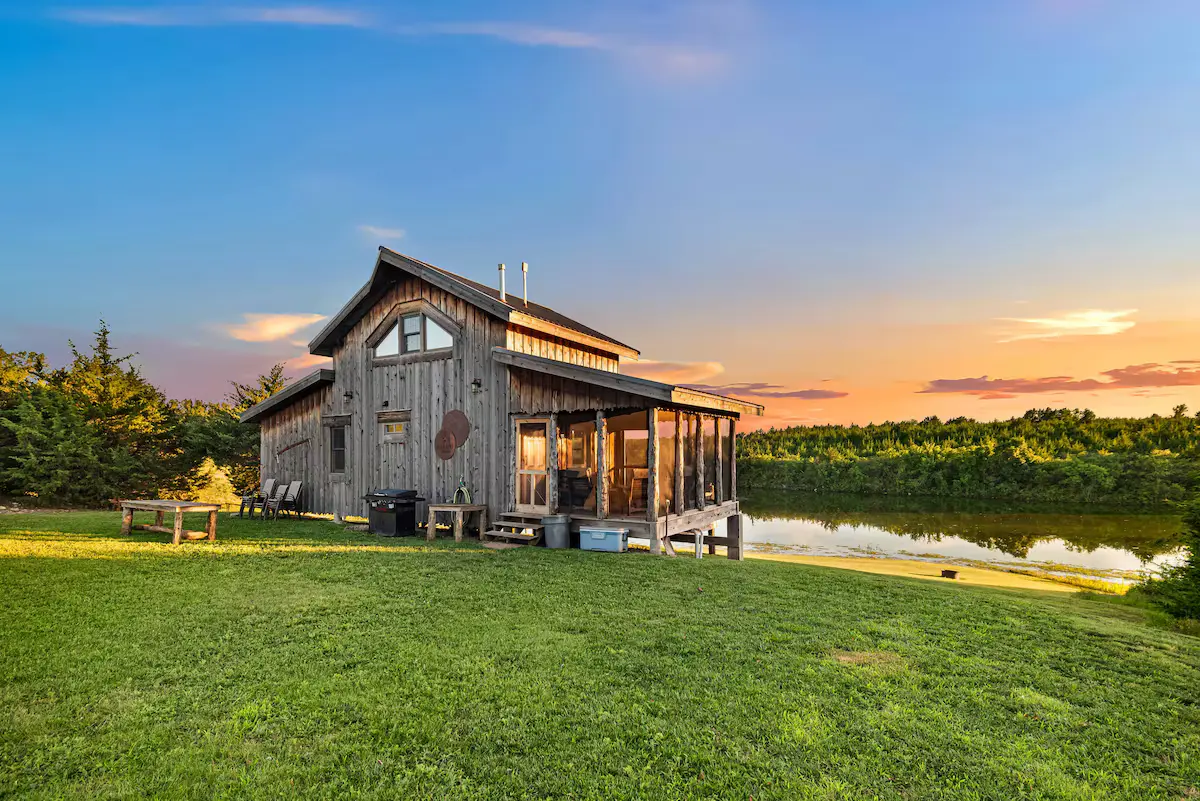
Kansas recreational-lake STR properties around Milford Lake, Wilson Lake, Cheney Reservoir, and the state’s other reservoirs concentrate amenity-driven liability — docks, swimming areas, watercraft injury claims, and lakefront slip-and-falls all produce premises-liability claim activity. Properties marketed for large guest capacity or watercraft access carry materially higher liability exposure. Umbrella over primary GL is standard on Kansas recreational-lake placements with dock amenities.
5. Winter ice-storm and freeze exposure
Kansas winters produce concentrated ice-storm and freeze events that damage roof structures, exterior elements, and trees adjacent to STR properties. Pipe-burst loss during off-season vacancy is a recurring claim category, particularly on rural-lake and Flint Hills seasonal properties. The Vacancy Endorsement preserves coverage during off-season gaps; freeze-prevention controls materially affect both loss frequency and carrier underwriting acceptance.
Common Kansas STR Claims We See
Tornado wind and hail damage
A severe storm produces tornado-spawning rotation that damages the roof, siding, and exterior decks of a Wichita or central-Kansas Airbnb listing. Claim severity in this category typically runs $25,000–$110,000 with material variation based on tornado track, structure type, and roof age. Property responds subject to wind/hail deductibles; cosmetic-damage exclusions affect paid loss on aluminum siding and aged shingle roofs.
Severe hailstorm roof and HVAC damage
A severe hailstorm crosses south-central Kansas and damages the roof, siding, gutters, and HVAC condenser at a Wichita-area Airbnb listing. Claim severity in this category typically runs $20,000–$80,000. Property responds subject to wind/hail percentage deductibles; cosmetic-damage exclusions can materially reduce paid loss.
Lawrence Jayhawks game-weekend party damage
A KU basketball or football game weekend booking at a Lawrence single-family Airbnb turns into an unauthorized 40-person event. Interior damage, broken furnishings, exterior landscape damage, and neighbor noise complaints produce a combined claim totaling $12,000–$45,000 in property damage plus a separate liability claim from a guest injury. Property and General Liability respond, with material defense costs on the liability side.
Kansas lake dock injury
A guest at a Milford Lake or Wilson Lake VRBO lakefront falls from a dock during a summer booking and suffers an injury. The claim alleges inadequate dock safety, posted rules, and lighting. General Liability responds; severity in this category typically runs $25,000–$120,000.
Ice-storm and off-season pipe burst
A January ice storm and concentrated freeze event crack a supply pipe at a Flint Hills or Kansas-lake VRBO during an off-season gap. Structural water damage, dry-out, and contents loss total $25,000–$65,000. Property responds; the Vacancy Endorsement preserves coverage during the off-season gap.
Why Kansas Short-Term Rental Owners Choose STR Guard
We know Kansas tornado-and-hail underwriting. Wind/hail percentage deductibles, cosmetic-damage exclusion language, and roof-age limits are the questions that decide what gets paid after a Kansas severe-weather event. We verify them at placement on every Kansas property — Kansas underwriting is among the most stringent in the country given the concentrated tornado-and-hailstorm activity.
We know Lawrence and Manhattan game-day underwriting. Jayhawks and Wildcats game-week placements need occupancy-control structure, party-prevention rules, and umbrella limits aligned with the high-occupancy game-weekend guest profile.
We know Kansas recreational-lake underwriting. Dock-and-amenity liability structuring, summer-tourism occupancy controls, and umbrella limit selection aligned with the recreational-lake guest profile shape Kansas lake-market STR placement.
We work with carriers actively writing Kansas STR. The Kansas STR specialty market includes carriers that have priced for the extraordinarily concentrated tornado-and-hailstorm exposure, university game-driven occupancy, and recreational-lake amenity liability — not the standard admitted-market panel.
We respond in 1–2 hours during business hours. Kansas placement timelines often run against an already-populated event-week or seasonal booking calendar. Quote requests are typically returned within 1–2 hours during business hours (Mon–Fri 9 AM – 5 PM Eastern).
Major Kansas Short-Term Rental Markets We Serve
STR Guard places coverage across Kansas’s Kansas City suburb, university, Wichita urban, Flint Hills, and recreational-lake STR markets. The state’s STR map clusters around the Overland Park and Johnson County corridor, Lawrence and Manhattan university markets, the Wichita metro, the Topeka state-capital market, the Flint Hills tallgrass prairie region, and the Kansas recreational-lake communities.
Overland Park & Kansas City suburbs
Kansas City metro STR market with concentrated business-travel, convention, and sports-event demand spilling over from the Missouri-side urban core.
Lawrence (University of Kansas)
University-driven STR market with concentrated Jayhawks basketball and football game-week demand and downtown Massachusetts Street cultural-tourism cycles.
Wichita
Largest Kansas city — urban STR market with aviation-industry business travel, event-driven occupancy, and concentrated tornado-corridor exposure.
Manhattan (Kansas State University)
University-driven STR market with concentrated K-State Wildcats football game-week demand and Flint Hills gateway tourism.
Topeka
State-capital urban STR market with legislative-session and government-travel demand and lower-volume year-round operations.
Flint Hills (Cottonwood Falls, Council Grove)
Tallgrass prairie tourism STR market with concentrated cultural-and-scenic-tourism demand and rural operating profile.
Dodge City & Western Kansas
Western Kansas STR market with frontier-heritage tourism and concentrated travel-corridor demand on the historic Santa Fe Trail.
Lake markets (Milford Lake, Wilson Lake, Cheney Reservoir)
Kansas recreational-lake STR market with concentrated June–September summer demand and dock-amenity liability exposure.