What Short-Term Rental Insurance Costs in Illinois
Illinois STR insurance pricing reflects three largely independent operating environments. The Chicago urban market operates under the Shared Housing Ordinance — one of the most-developed urban STR regulatory frameworks in the Midwest — with concentrated event-driven and convention-cycle demand. The Galena historic-district market operates under 19th-century-preservation rebuild considerations and concentrated cultural-tourism and fall-foliage demand. The Starved Rock, Southern Illinois, and university markets operate under cabin-amenity liability and game-week demand cycles.
The drivers that move Illinois STR premium most are property location (Chicago urban vs. Galena historic vs. cabin-market vs. university), structure type, claims history, amenity profile, and operating model. The typical Illinois STR coverage program runs across five anchored lines:
- General Liability: Guest bodily injury and third-party property damage. Typical limits run $1,000,000 each occurrence / $2,000,000 aggregate; Starved Rock and Southern Illinois multi-amenity cabin and Champaign-Urbana game-week placements pull recommended limits higher. See General Liability for STR.
- Property / Dwelling: Written on DP-3 dwelling or commercial habitational based on operating model. Illinois placements carry separate wind/hail percentage deductibles for tornado-and-hailstorm exposure. See Property / Dwelling coverage.
- Loss of Rents: Rental income during a covered loss. Galena fall-foliage concentration, Starved Rock April–October concentration, and university game-week concentration all justify Extended Period of Restoration endorsements where appropriate. See Loss of Rents.
- Ordinance & Law: The gap between rebuild cost and code-compliant rebuild cost. Material on Galena 19th-century historic-district properties, older Chicago historic-neighborhood structures, and Springfield Lincoln-era historic properties. See Ordinance & Law.
- Umbrella / Excess: Higher limits over primary GL. Standard on Starved Rock and Southern Illinois multi-amenity cabins and Chicago high-capacity urban placements. See Umbrella coverage.
In our experience, typical Illinois STR premiums vary substantially by submarket: Chicago urban single-family runs $1,800–$3,800 annually; Galena historic-district runs $2,200–$5,500; Starved Rock cabin runs $1,600–$3,400; and Champaign-Urbana single-family runs $1,300–$2,800. Across all Illinois markets, premium drivers include the Shared Housing Ordinance compliance posture in Chicago, severe weather and tornado exposure, and the seasonal nature of Galena and cabin operations.
Premium varies by location, structure type, claims history, coverage form selection, and operating model. Illinois’s Chicago urban, Galena historic, cabin-market, and university sub-markets price independently, and we structure quotes through the specialty STR carrier panel against the actual property.
Illinois Short-Term Rental Regulatory Framework
Illinois regulates STR primarily at the city and county level, with state-level insurance and tax oversight. There is no comprehensive statewide STR registration program. Chicago operates the state’s most-developed urban STR framework — the Shared Housing Ordinance — while Galena, the university markets, and the cabin-market communities operate under their own municipal and county frameworks.
State-Level Regulation
The Illinois Department of Insurance oversees insurance carrier rate filings, market conduct, and consumer protection at the state level. The Illinois Department of Revenue administers state sales tax plus the state Hotel Operators’ Occupation Tax that applies to lodging rentals, with local hotel taxes layered on top. STR operators must register and remit applicable state and local lodging taxes.
City-Level Regulation in Major Markets
Most Illinois STR operating rules sit at the city and county level. The major markets each maintain distinct frameworks:
- Chicago: Chicago regulates STR through the Shared Housing Ordinance, which requires host registration, shared-housing licensing or listing through a registered intermediary, registration and per-night fees, and compliance with occupancy, noise, and prohibited-buildings rules. The ordinance language sits in the Chicago Municipal Code.
- Galena: Galena regulates STR through municipal zoning with historic-preservation considerations affecting most properties — roughly 85% of Galena buildings are on the National Register of Historic Places. The ordinance language sits in the Galena Code of Ordinances.
- Champaign: Champaign regulates STR through municipal zoning supporting University of Illinois Fighting Illini game-week demand. The ordinance language sits in the Champaign Municipal Code; Urbana maintains a parallel framework.
- Starved Rock area (Utica, Ottawa, LaSalle County): Starved Rock cabin-and-lodge STR operates under LaSalle County and town-of-Utica zoning frameworks supporting Starved Rock State Park and Illinois River corridor tourism.
- Quad Cities (Moline, Rock Island): The Illinois-side Quad Cities communities operate STR under municipal zoning supporting Mississippi River corridor tourism.
- Southern Illinois (Shawnee National Forest area): Southern Illinois cabin STR operates under county zoning frameworks supporting Shawnee National Forest, Garden of the Gods, and Southern Illinois wine-trail tourism.
Tax and Licensing
Illinois STR operators owe state sales tax plus the state Hotel Operators’ Occupation Tax and local hotel taxes that vary by jurisdiction. Combined transient lodging tax in Chicago runs materially higher than most Illinois markets given the city hotel-tax structure (Chicago’s combined lodging tax is among the highest in the country). Airbnb and VRBO collect and remit some — but not all — of these on behalf of hosts; hosts remain responsible for any uncollected portion and for proper registration with the Illinois Department of Revenue and, in Chicago, the Shared Housing registration framework.
Common Short-Term Rental Risks in Illinois
STR exposure in Illinois is shaped by Chicago’s regulatory environment, Galena historic-property concentration, cabin-market amenity liability, and Midwest severe weather. The risks below appear more frequently or with more severity than national norms.
1. Chicago Shared Housing Ordinance compliance risk
Chicago’s Shared Housing Ordinance creates a compliance layer that affects both city enforcement and insurance underwriting. A registered, compliant Chicago STR is a materially different exposure than an unregistered operation. Operators caught operating outside the ordinance — listing on a prohibited-buildings-list property, exceeding occupancy rules, or operating without registration — face both city enforcement and insurance-coverage risk because the policy form may not match the actual (non-compliant) operating model.
2. Galena historic-district rebuild exposure
Galena hosts one of the most-completely preserved collections of 19th-century architecture in the United States. Substantial damage to a Galena historic-district STR property frequently triggers historic-preservation review and modern code requirements on rebuild, materially increasing reconstruction cost above pre-loss replacement value. Ordinance & Law coverage at 25% or 50% of dwelling is often necessary to close the gap.
3. Tornado-and-hailstorm severe-weather exposure
Illinois sits in the eastern reach of Tornado Alley. Recurring spring and summer tornado activity, severe hailstorms, and occasional derechos define the wind underwriting environment statewide. Standard property forms cover tornado, wind, and hail damage, but deductible structures, cosmetic-damage exclusions, and roof age and condition limits affect what gets paid. See III.org tornado and thunderstorm statistics and the NWS Chicago office for the climatological pattern.
4. Cabin-market amenity-driven liability
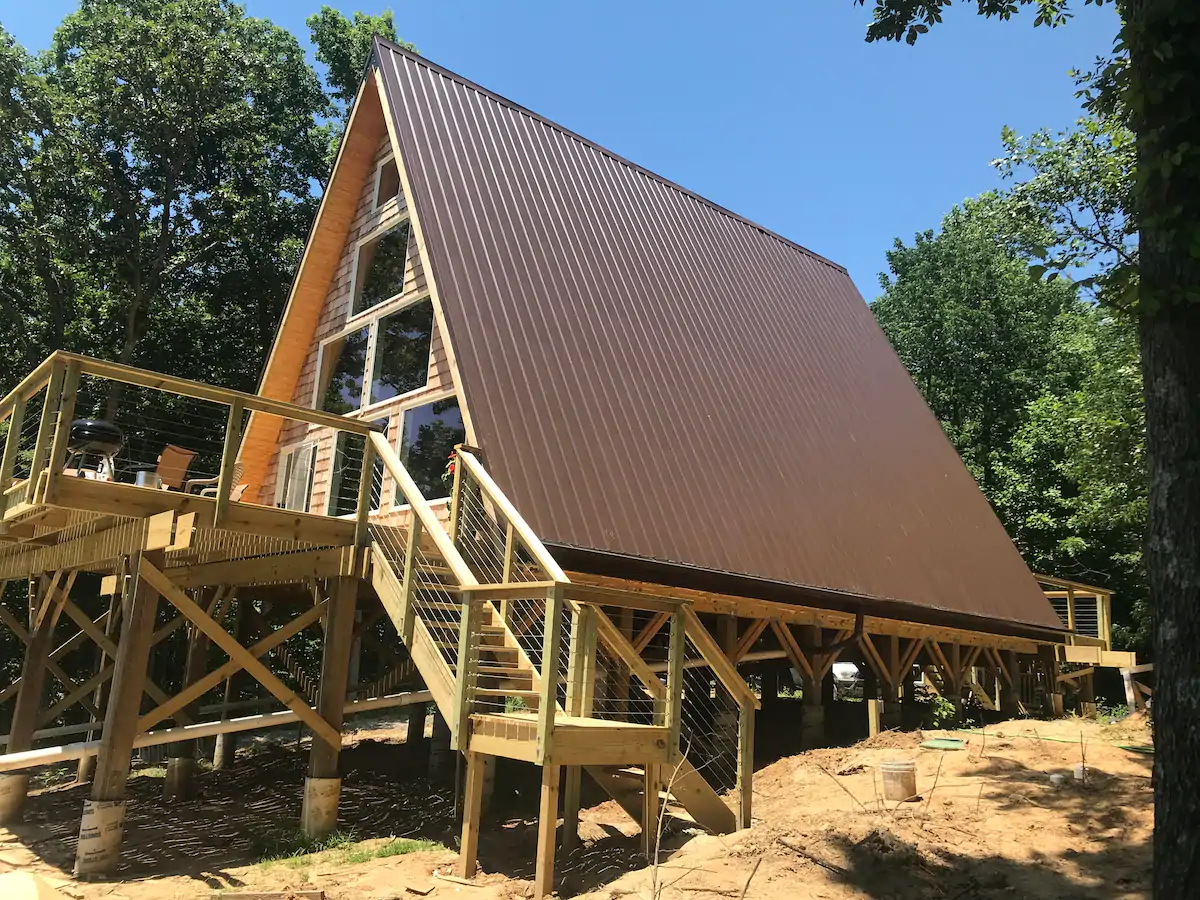
Starved Rock-area and Southern Illinois cabin STR properties concentrate amenity-driven liability — hot tubs, fire pits, decks above ravines, and outdoor amenities all produce premises-liability claim activity. Properties marketed for large guest groups carry materially higher liability exposure. Umbrella over primary GL is standard on multi-amenity Illinois cabin placements.
5. Urban event-driven liability and over-occupancy
Chicago STR placements concentrate event-driven liability during convention, sports-event, and festival weekends. Champaign-Urbana concentrates University of Illinois game-week demand. Property damage from unauthorized events, broken furnishings, and guest injury during over-occupancy show up at elevated rates during event-week bookings. Underwriters specifically rate occupancy controls and party-prevention rules on Illinois urban and university STR placements.
Common Illinois STR Claims We See
Chicago urban guest-damage and over-occupancy claim
A convention or event weekend booking at a Chicago Shared-Housing-registered STR produces over-occupancy property damage and a contested liability claim from a guest injury. Combined property and liability claim severity typically runs $15,000–$55,000. Property and General Liability respond; the Shared Housing Ordinance compliance status of the property becomes material in the claim review.
Galena historic-district pipe burst with preservation rebuild
A January freeze cracks a supply pipe in a Galena 19th-century historic-district Airbnb. Structural water damage to original heart pine flooring, plaster walls, and historic finishes totals $30,000–$85,000. Property responds; reconstruction triggers historic-preservation review and modern code requirements, and Ordinance & Law closes the resulting code-upgrade gap.
Tornado or severe-storm wind damage
A severe storm produces tornado-spawning rotation or straight-line winds that damage the roof, siding, and exterior decks of an Illinois Airbnb listing. Claim severity in this category typically runs $25,000–$95,000 with material variation based on wind intensity, structure type, and roof age. Property responds subject to wind/hail deductibles.
Starved Rock cabin hot-tub injury
A guest at a Starved Rock-area or Southern Illinois VRBO cabin slips exiting a deck-mounted hot tub or falls on an icy deck and fractures a wrist. The claim alleges inadequate posted warnings, non-slip surfacing, and de-icing. General Liability responds; severity in this category typically runs $20,000–$95,000.
Champaign-Urbana Fighting Illini game-weekend party damage
An Illinois football or basketball game weekend booking at a Champaign-Urbana single-family Airbnb turns into an unauthorized 35-person event. Interior damage, broken furnishings, exterior landscape damage, and neighbor noise complaints produce a combined claim totaling $12,000–$45,000 in property damage plus a separate liability claim from a guest injury. Property and General Liability respond.
Why Illinois Short-Term Rental Owners Choose STR Guard
We know Chicago Shared Housing Ordinance underwriting. The ordinance creates a registration-and-compliance question that affects both city enforcement and insurance underwriting. We work the question through with each Chicago owner at policy bind — including whether the policy form aligns with the registered, compliant operating model.
We know Galena historic-district underwriting. Galena’s 19th-century historic-property rebuild processes materially affect reconstruction cost after a loss. We structure Ordinance & Law at the right percentage of dwelling on every Galena historic-district placement.
We know Illinois cabin and university underwriting. Starved Rock and Southern Illinois cabin multi-amenity liability structuring, and Champaign-Urbana game-week occupancy controls, are central to non-Chicago Illinois STR placement.
We work with carriers actively writing Illinois STR. The Illinois STR specialty market includes carriers that have priced for Chicago Shared Housing Ordinance compliance, Galena historic-district rebuild, cabin-market amenity liability, and Midwest severe-weather exposure — not the standard admitted-market panel.
We respond in 1–2 hours during business hours. Illinois placement timelines often run against an already-populated event-week or seasonal booking calendar. Quote requests are typically returned within 1–2 hours during business hours (Mon–Fri 9 AM – 5 PM Eastern).
Major Illinois Short-Term Rental Markets We Serve
STR Guard places coverage across Illinois’s Chicago urban, Galena historic, cabin-market, and university STR markets. The state’s STR map clusters around Chicago and the Lake Michigan North Shore, Galena and the northwest Illinois historic corridor, the Starved Rock and Illinois River cabin markets, Champaign-Urbana, the Quad Cities, Springfield, and the Southern Illinois Shawnee National Forest region.
Chicago
Heavily regulated urban STR market — the Shared Housing Ordinance requires registration, license fees, and operating-rule compliance, with primary-residence emphasis in much of the city.
Galena
Premier Illinois historic STR market — a preserved 19th-century riverboat-era town with concentrated cultural-tourism and fall-foliage demand.
Starved Rock & Illinois River corridor (Utica, Ottawa)
Illinois River cabin and lodge STR market with Starved Rock State Park tourism and concentrated April–October peak demand.
Champaign-Urbana
University of Illinois STR market with concentrated Fighting Illini football and basketball game-week demand.
Quad Cities (Moline, Rock Island)
Mississippi River corridor STR market straddling Illinois and Iowa with river-tourism and event-driven demand.
Lake Michigan North Shore
Chicago-adjacent affluent suburban STR market with concentrated event-driven and business-travel demand.
Springfield
State-capital urban STR market with Abraham Lincoln historic-tourism and legislative-session demand cycles.
Southern Illinois (Shawnee National Forest, Garden of the Gods)
Southern Illinois cabin STR market with Shawnee National Forest and wine-trail tourism and concentrated weekend demand.