AirCover has two exclusion lists, not one, because it is two programs with a shared name. Host damage protection publishes a plain-language list of what it does not cover; Host liability insurance publishes formal policy exclusions in its program summary. Put together, they come to twelve things Airbnb will not pay for — and four of the twelve account for nearly all the money hosts actually lose. This guide is the complete list, in one place, with the four flagged.
How AirCover’s Exclusions Are Organized
Almost every misunderstanding about AirCover’s gaps comes from reading one list and assuming it is the whole picture.
Host damage protection is not insurance — Airbnb states that directly — and its exclusions are written as a short, readable list of what the reimbursement program does not address. Host liability insurance is insurance, underwritten by third party insurers, and its exclusions read like the policy exclusions they are.
One more thing to note before the list. Airbnb states that the Host Liability Insurance Program Summary does not contain the full terms, conditions, and exclusions. The published list is the floor of what is excluded, not the ceiling — which is a meaningful difference from a policy form a host can actually obtain and read in full.
What Host Damage Protection Will Not Pay For
Five exclusions, drawn from Airbnb’s published list and from the structure of the program itself.
1. The structure against fire, weather, or water damage. Host damage protection addresses damage caused by guests. A fire, a windstorm, hail, smoke, or a supply line that lets go between stays had no guest behind it, so nothing in the program responds. This is the exclusion that turns a recoverable loss into a financial event, and it is the reason a host relying on AirCover alone has an uninsured building.
2. Normal wear and tear. Airbnb lists this explicitly. Carpets that flatten, finishes that dull, hinges that loosen under turnover volume — the ordinary cost of running a property is not a reimbursable loss anywhere, on any program or policy.
3. Loss due to acts of nature. Airbnb names earthquakes and hurricanes as examples. This is the same boundary as the first exclusion approached from the other side: catastrophe perils belong to a property policy, and a host in a wind, wildfire, or quake-exposed market has to solve it there.
4. Cleaning that belongs to a normal check-out. Laundry, dishes, and trash removal are named as not covered. The program addresses cleaning made necessary by something a guest did — stains, pet accidents, smoke odor, unapproved additional guests — not the turnover itself.
5. Lost income from anything other than guest-caused damage. Income replacement exists inside Host damage protection, but only when covered guest damage forces the cancellation of confirmed Airbnb bookings. A four-month closure after a fire produces no income replacement from the program. That is what loss of rents is for.
What Host Liability Insurance Will Not Pay For
Six exclusions, from Airbnb’s published program summary.
6. Assault and battery. Any loss or expense arising out of assault or battery committed by, or alleged to have been committed by, the insured is excluded. Note the phrasing: an allegation is enough to engage the exclusion, which is a harsher trigger than most hosts assume.
7. Communicable disease. Any bodily injury, property damage, or other loss arising out of the actual or alleged transmission of a communicable disease is excluded. Worth checking against your own liability form, because many carry a version of the same exclusion — and two documents excluding the same thing leaves nothing underneath.
8. Aircraft, autos, and mobile equipment. Bodily injury or property damage connected to aircraft, autos, and mobile equipment is excluded, with narrow carve-outs where those items are themselves listed on Airbnb as the accommodation and parked, or where the auto is used in connection with host-related services during a relevant stay.
9. Liability assumed under a contract. Damages the insured is obligated to pay because they assumed them in a contract or agreement are excluded, other than liability they would have had anyway and certain specific contracts identified in the policy. This is ordinary in liability forms and worth knowing before signing anything that shifts a third party’s risk onto the host.
10. Loss of, or damage to, electronic data. Damages arising from loss of, loss of use of, damage to, corruption of, or inability to access or manipulate electronic data are excluded. For a host running smart locks, cameras, and a booking system, the exposure is real and belongs with a cyber liability discussion instead.
11. Chinese-manufactured drywall. A specific construction exclusion covering bodily injury or property damage connected to drywall, plasterboard, sheetrock, or gypsum board manufactured in, originating from, or exported from China. Narrow, and relevant mainly to properties built or renovated in a particular window.
The Exclusion That Applies to Both
12. Any stay that was not an actual Airbnb stay. This is the one that swallows the most calendar.
Airbnb’s program summary is explicit that there must be an actual Airbnb stay for the liability coverage to apply, and that cancelled stays and no-show situations are not entitled to coverage. Host damage protection carries the same booking boundary from the other direction — it applies to damage during an Airbnb stay.
So a direct booking, a stay booked on another platform, an owner stay, a friend staying free, a cancelled reservation, a no-show — none of it is inside either program. For a host who has diversified away from platform fees, the share of the year sitting outside AirCover can be substantial, and the VRBO liability program has the identical structure on its own side. Only the host’s own general liability policy responds regardless of where the booking came from.
Which of the Twelve Actually Cost Hosts Money
Twelve exclusions is a long list, and treating them as equally important is a mistake. Four of them produce nearly all the real loss.
Exclusion 1, the structure. Nothing else on the list is capable of producing a total loss. A host without a dwelling policy is one fire away from an uninsurable outcome, and every other item on this page is a rounding error next to it.
Exclusion 5, the income. Income stops for months after a serious property loss, and the mortgage and operating costs do not. Hosts consistently underestimate this one because it is invisible until it happens.
Exclusion 6, assault and battery. Because an allegation engages it, this exclusion can remove the platform layer at precisely the moment a host most needs a defense — and defense cost is where liability claims do their damage.
Exclusion 12, the booking boundary. It is not a gap in the coverage so much as a gap in the calendar, and it grows every time a host adds a channel.
The other eight are genuine but narrow. If you have addressed these four, you have addressed the practical exposure.
Scenario: An Excluded Cause and a Second Excluded Cause
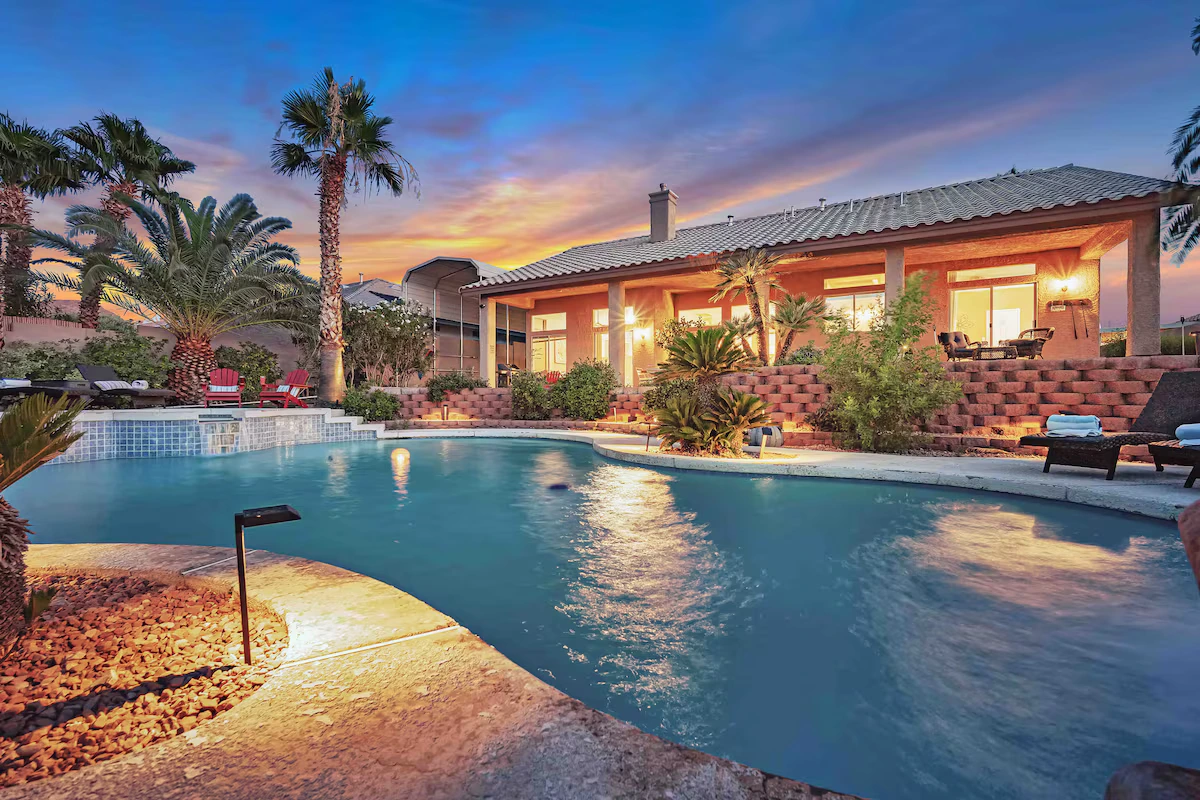
We recently reviewed a program for a host with a pool property that slept twelve. They had read AirCover’s headline figures, concluded they had a liability layer, and were carrying a homeowners policy that predated the listing. Two exposures were sitting on the property at once, and both landed in exclusions.
The first was the structure. The home was in a wind-exposed market, and nothing in Host damage protection reaches storm damage — Airbnb names acts of nature on its exclusion list. The second was subtler: a property that sleeps twelve with a pool and a hot tub is a group-gathering property, and the liability program excludes any loss arising out of alleged assault or battery. The single most likely serious-injury scenario on that property had a decent chance of engaging an exclusion in the only liability layer the host had.
Neither problem was AirCover’s fault; both were published. We placed an open-perils dwelling policy at replacement cost, general liability responding across every booking channel, loss of rents, and an umbrella above the primary layer. AirCover stayed in place for what it does — guest-caused damage — with nothing important resting on it.
What Closes Each Gap
The exclusions sort neatly into four fixes.
The structure, acts of nature, and wear-and-tear boundary are a property and dwelling policy question — open perils, written to true replacement cost, on a form that knows the home is a short-term rental. The reason a homeowners policy is not the substitute is covered in STR insurance vs. landlord insurance, and the dwelling form choice itself in DP-3 vs. commercial habitational.
The income gap is loss of rents, which pays through any covered closure rather than only a guest-damage cancellation.
The liability exclusions and the single-layer ceiling are a general liability program with an umbrella above it — and worth reading your own form for the same assault-and-battery and communicable-disease language, because a gap that appears on both documents has nothing underneath it.
The booking boundary is closed by carrying liability that responds regardless of booking source, which is the single most valuable difference between a policy and a platform program. For the fuller argument about how much weight the program deserves in the first place, see whether AirCover is worth it; for the process side when something does happen, how to file an AirCover claim.
Frequently Asked Questions
What does AirCover not cover?
Twelve things, drawn from Airbnb’s two published exclusion lists. Host damage protection will not pay for the structure itself, normal wear and tear, loss due to acts of nature, cleaning that belongs to a normal check-out, or lost income from anything but guest-caused damage. Host liability insurance excludes assault and battery, communicable disease, aircraft and autos and mobile equipment, contractual liability, electronic data, and Chinese-manufactured drywall. And neither responds to a stay that was not an actual Airbnb stay.
Does AirCover cover fire, storm, or water damage?
No, and this is the largest gap by a wide margin. Host damage protection covers damage caused by guests. A fire, a windstorm, hail, or a supply line that fails between stays was not caused by a guest, so the program does not reach it — and Airbnb’s published exclusions name loss due to acts of nature, including earthquakes and hurricanes, directly. The structure needs a [property and dwelling policy](/coverage/property/); nothing in AirCover substitutes for one.
Is guest injury excluded from AirCover?
It is excluded from Host damage protection, which lists injury or property damage to guests or others among the things it does not cover — but that is a routing rule rather than a gap. Injury goes to Host liability insurance, the other half of AirCover, at a stated $1 million per Airbnb stay. The real liability gaps are the published exclusions on that side, and the fact that a single $1 million layer can fall short on a serious claim.
Does AirCover cover damage from a party or vandalism?
Guest-caused damage is what Host damage protection is for, so damage done by guests or their invitees during a stay is within its scope. Where it gets complicated is the liability side, which excludes any loss arising out of assault or battery committed by or alleged against the insured. A party that produces broken furniture is a damage question; a party that produces an altercation and an injury claim can land squarely in an exclusion.
Does AirCover cover a communicable disease claim?
No. Airbnb’s Host Liability Insurance Program Summary excludes any bodily injury, property damage, or other loss arising out of the actual or alleged transmission of a communicable disease. It is one of the exclusions hosts are least likely to know about and least likely to have thought through, and it is worth checking whether the same exclusion sits on the host’s own [general liability](/coverage/general-liability/) policy, because many liability forms carry a version of it.
Which AirCover exclusions actually cost hosts money?
Four of the twelve do nearly all the damage: no coverage for the structure, no income replacement outside guest-caused damage, the assault and battery exclusion, and the requirement that there be an actual Airbnb stay. The other eight are real but narrow. A host who closes those four with a dwelling policy, loss of rents, a properly written liability program, and coverage that responds across every booking channel has addressed essentially all of the practical exposure.
Where does Airbnb publish these exclusions?
In two places, and they do not overlap. The Host damage protection help article carries a plain-language list of what that program does not cover, and the Host Liability Insurance Program Summary carries the formal policy exclusions. Airbnb also states that the program summary does not contain the full terms, conditions, and exclusions — so the published list is the floor of what is excluded, not the ceiling.
The Bottom Line on What AirCover Excludes
Twelve exclusions, two lists, one pattern: AirCover pays when a guest causes something during an Airbnb stay, and stops everywhere else. The structure, the income, the non-Airbnb calendar, and several named liability scenarios sit outside it — and Airbnb is straightforward about all of it in its own documents, which is more than most hosts realize.
Four of the twelve are worth acting on. A property and dwelling policy closes the structure gap. Loss of rents closes the income gap. General liability that responds regardless of booking source closes the booking gap, and an umbrella sits above the platform’s single layer. To find out which of the four are already covered on your program and which are open, submit a quote or call 317-942-0549 — we respond in 1–2 hours during business hours.